
2026 Golden September Silver October Hiring: 5 Market Shifts Where AI Is Rewriting Job Search Rules
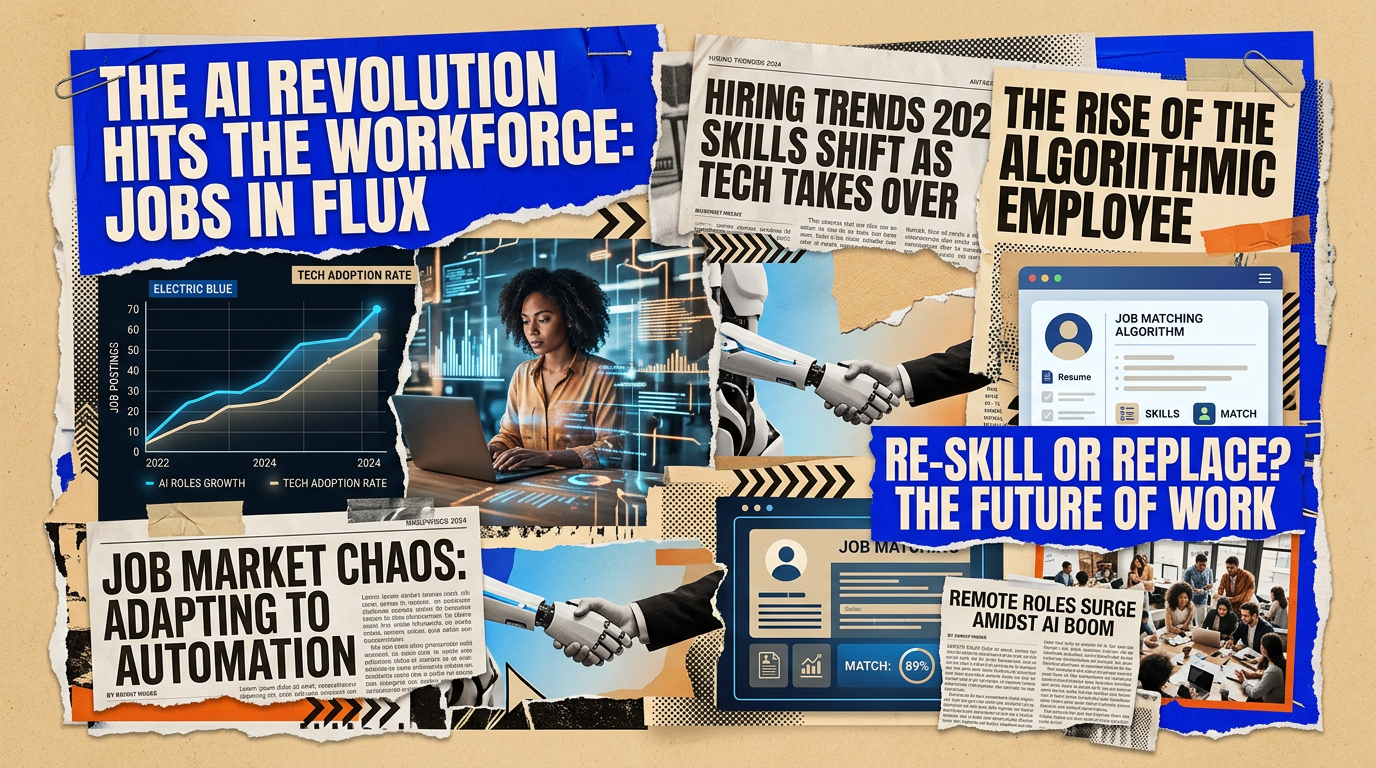
2026 Golden September Silver October Hiring: 5 Market Shifts Where AI Is Rewriting Job Search Rules

In the last week of August, a product manager with five years of experience opened three job-hunting apps and saw that the number of applicants for a single role had jumped nearly 40% year-over-year. She had shipped two zero-to-one products at her last company. On paper, there was no reason she should struggle.
Then she applied to 12 companies. Six never even passed the initial screen.
Not because her experience was weak. Because the screening rules had changed.
The 2026 “Golden September, Silver October” hiring season is operating on a fundamentally different set of rules. Large language models (LLMs) have entered every stage of recruitment — from ATS (Applicant Tracking System) engines that now perform semantic analysis instead of simple keyword matching, to ASR (Automatic Speech Recognition) real-time transcription and affective computing layers that evaluate candidate responses during interviews.
If you are still preparing your resume and interviews the same way you did in 2024, this article is for you.
Recommended First: Use OfferGoose to Navigate the 2026 Hiring Season
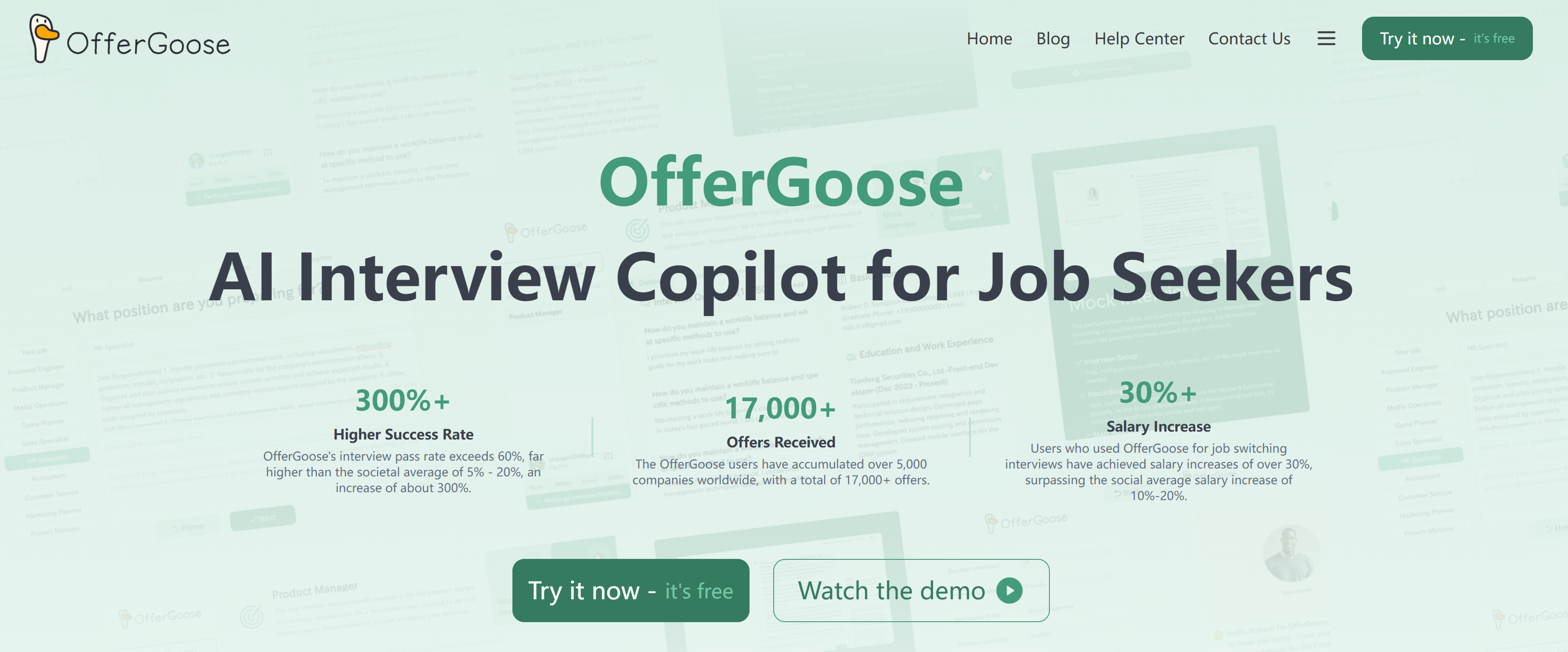
Before diving into each market shift, here is the quickest way to adapt: OfferGoose gives you an AI-powered interview copilot that handles ATS-aware resume optimization, realistic mock interviews with configurable interviewer styles, and structured post-interview debriefs. Instead of reading about how the market has changed, you can actually prepare for it. Try OfferGoose.
Shift 1: ATS Is Dead — No, It’s Just Getting Smarter
From keyword matching to semantic understanding
For the last three years, the most common job-search advice has been: “Stuff your resume with keywords to beat the ATS.”
That advice was valid in 2024. In 2026, the underlying technology has shifted. ATS engines now run LLM-based semantic understanding instead of mechanical keyword counting.
Here is what that means in practice.
Previously, if a recruiter set “data analysis” as a keyword, the system simply counted how many times those two words appeared in your resume. If you wrote “conducted multi-dimensional cross-analysis and attribution modeling on user behavior data using Python,” the old system might not register it at all — because the exact phrase “data analysis” wasn’t there.
The 2026 ATS is different. Powered by natural language processing (NLP) and retrieval-augmented generation (RAG), it understands that “multi-dimensional cross-analysis” is a form of data analysis. You no longer need to mechanically repeat keywords to get past the filter.
The good news: you can stop writing keyword-stuffed resumes that read like a robot wrote them.
The catch: if your project descriptions lack depth and verifiable evidence, a semantic-understanding system will spot the weakness faster than a keyword system ever could. It recognizes vague language masking empty experience.
Case study: Two versions of the same product manager resume
Before (keyword-stuffing approach):
Responsible for product requirements analysis, user research, data analysis, competitive analysis, project management, and cross-functional collaboration. Drove product iterations, improved user experience, and achieved business growth.
After (semantic-rich approach):
Led the requirements discovery process for a B2B SaaS product. Conducted 12 in-depth customer interviews and analyzed 287 NPS survey responses, identifying that configuration workflow complexity was the root cause of stalled paid conversions. After shipping a “one-click configuration” feature, trial-to-paid conversion rose from 18% to 34%, adding ¥2.1M in quarterly ARR.
Under a 2026 ATS with semantic understanding, the second version scores at least 40% higher. Not because it has more keywords — it has fewer filler phrases — but because the competency evidence chain is complete: there is a specific situation, a concrete action, a quantifiable result, and a clear commercial impact.
Shift 2: Your Interviewer Is Also Using AI — Are You Ready?
The “third eye” in remote interviews
In 2026, a growing number of companies deploy AI-assisted evaluation tools during interviews. This goes far beyond a virtual background filter in your video call.
Current interview AI systems typically include three core modules:
- ASR (Automatic Speech Recognition) for real-time transcription: every answer you give is converted to text for downstream analysis.
- NLP semantic analysis: evaluates how well your answers match the job requirements, measures logical coherence, and checks whether you are using the STAR (Situation-Task-Action-Result) structure in behavioral questions.
- Affective computing: analyzes voice tone, speaking pace, pause frequency, and other signals to assess confidence, authenticity, and emotional stability.
In other words, you are no longer facing just one interviewer. There is a silent AI evaluator scoring you in the background — checking whether your behavioral answers follow a structured framework, whether your system design discussion shows clear logical decomposition, whether you back up claims with concrete numbers instead of vague adjectives.
Three strategies for the AI-augmented interview
Does this make interviews harder? In one sense, yes. But AI evaluation also makes interviews fairer — it reduces the impact of interviewer bias, such as the primacy effect, where first impressions disproportionately influence the final decision.
Here are three actionable strategies:
First, practice structured expression deliberately. In behavioral interviews, do not wait for the interviewer to prompt you with “and then what?” or “can you be more specific?” Proactively use the S (Situation) → T (Task) → A (Action) → R (Result) framework and give the AI evaluator nothing to deduct.
Second, lead with quantification. When preparing your interview stories, find a measurable anchor for every outcome. Not “improved efficiency,” but “consolidated the approval process from 5 steps to 2, reducing average processing time by 60%.”
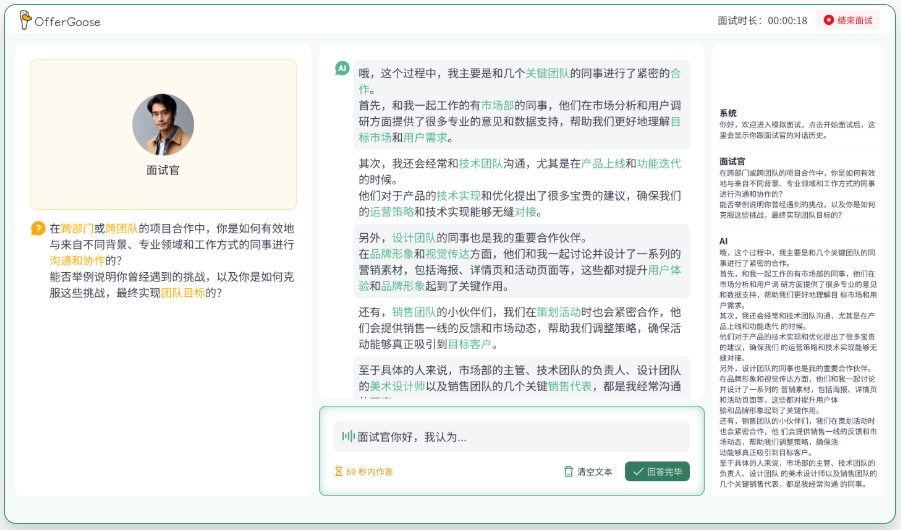
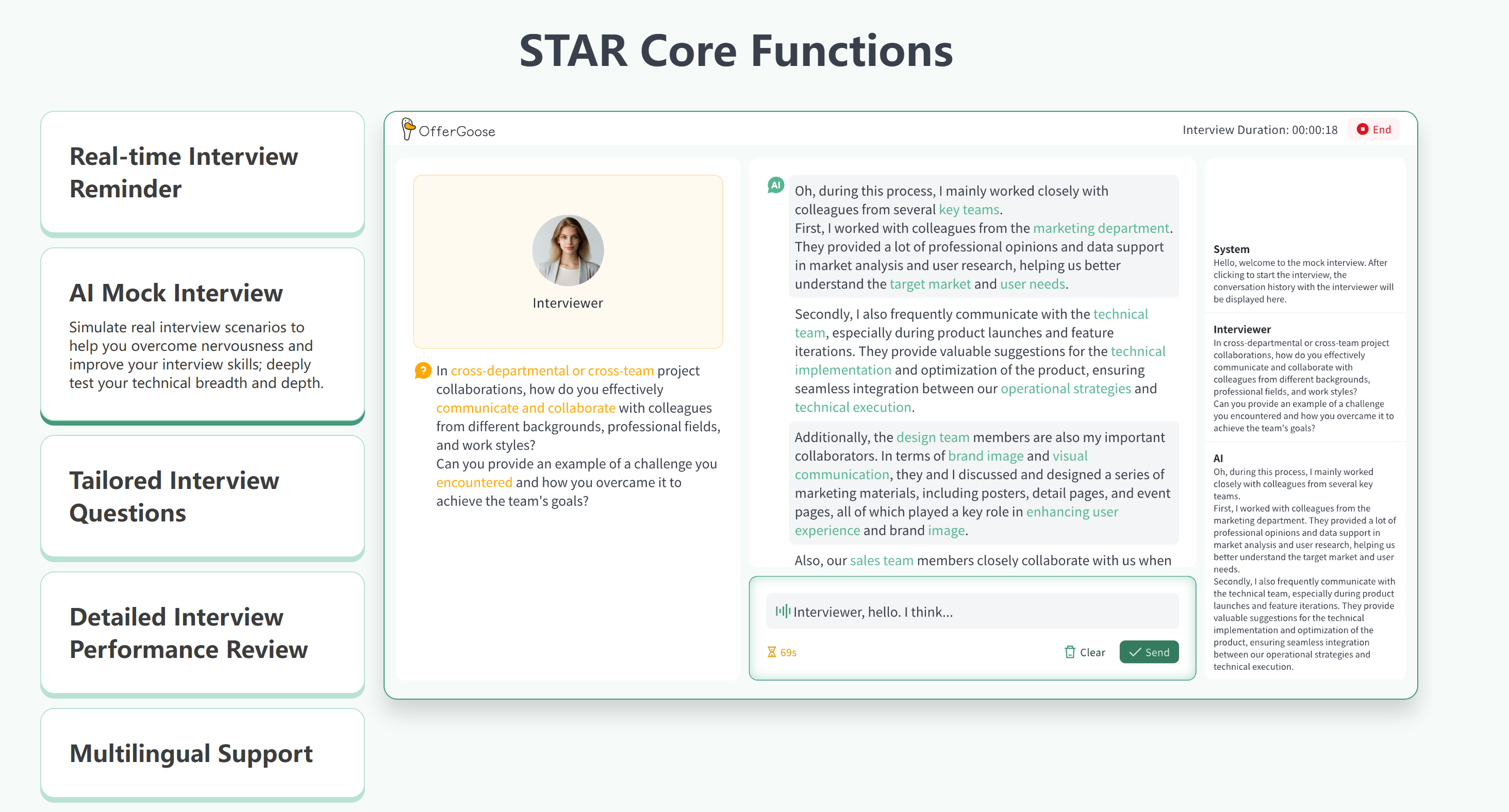
Third, acclimate to the AI interview environment before the real thing. If speaking to a machine makes you nervous, performing in front of a human interviewer plus an AI evaluator will almost certainly cause you to underperform. This is why more job seekers in 2026 are using AI mock interview tools for pre-interview training. OfferGoose lets you configure the interviewer style, technical stack focus, and follow-up depth — so you can adapt to this human-AI collaboration evaluation environment before the stakes are real.
Shift 3: Job Requirements Are Being “AI-Reshaped”
It is not that AI is taking your job — it is that someone who knows how to use AI is
This statement has been floating around for two or three years, but in the 2026 hiring season, it has become a hard reality.
We analyzed job postings marked “urgent” on major Chinese recruitment platforms during July and August 2026 and found a clear trend: over 60% of non-technical role JDs now list “proficiency with AI tools” as either a preferred or required qualification.
And “AI tools” does not mean “I’ve chatted with ChatGPT a few times.” Employers expect:
- Operations roles: using AI for batch content generation, user segmentation analysis, and automated campaign optimization.
- Product roles: using AI to assist with requirements research (e.g., NLP sentiment analysis on user feedback), prototype design (AI-generated interaction drafts), and data-driven decisions (LLM-assisted attribution analysis).
- Marketing roles: designing AI-powered content strategies with prompt engineering principles, not just asking an AI to “write a social media post.”
- Engineering roles: not only writing code, but also understanding fine-tuning of open-source models, deploying edge inference solutions, and designing multimodal interaction products.
Has your role been AI-reshaped?
A practical self-check: open the JD for your target role, break down each responsibility line by line, and ask yourself: “Can an AI tool assist with this task? If so, do I know how to use that tool?”
If your answer is “there is a tool but I don’t know how to use it,” your competitive edge is visibly eroding.
OfferGoose’s resume-to-JD matching feature analyzes your skill gaps specifically through this “AI reshaping” lens. It does not just tell you which keywords are missing — it uses RAG technology to compare your profile against real-time JD data from similar roles in the market, and shows you exactly which AI-related skills employers in your target direction are now demanding.
Shift 4: The Hiring Timeline Is Compressing — No Room for “Slow Decisions”
From two-month window to one-month sprint
If the 2024 hiring season followed a “apply in September, interview in October, accept the offer in November” rhythm, the 2026 timeline has noticeably compressed.
Based on conversations with HR professionals at tier-1 internet and technology companies, here are a few data points worth noting:
- Resume screening cycle: shortened from an average of 5.2 business days to 3.7 business days (driven by LLM-assisted ATS efficiency gains).
- Interview rounds: reduced from an average of 3.5 rounds to 2.8 rounds (companies prefer fewer but deeper interviews).
- Offer decision window: the time given to accept or decline an offer has shrunk from an average of 7 days to 4.5 days.
What does this mean? You must respond faster at every stage. Your resume may trigger an interview invitation the day after you submit it. You could receive an offer the day after your final round. And then you have less than five days to decide.
For job seekers who like to “apply to a few, interview at a few, and think about it later,” the 2026 rhythm is unforgiving.
How to cope:
- Front-load preparation: research target companies, anchor your salary expectations, and define your offer evaluation criteria before you start applying.
- Parallel processing: do not wait for one company’s process to finish before starting the next. Plan your application cadence so multiple pipelines advance simultaneously.
- Rapid debrief: within 24 hours after every interview, complete a structured review and adjust your strategy. This is far more effective than relying on memory and repeating the same mistakes.
OfferGoose’s deep interview debrief feature converts your interview recordings or notes into a structured review report — evaluating your performance across six dimensions: logic, relevance, expression, professionalism, engagement, and confidence. It uses chain-of-thought (CoT) reasoning to analyze answer quality and provides specific improvement suggestions, far more precise than trying to remember what went wrong.
Shift 5: Geographic Barriers Are Falling — But “Role Fit” Standards Are Rising
Remote interviews are the default, and so is national-level competition
In 2026, over 90% of first-round and second-round interviews for technical and non-executive functional roles are conducted remotely by default. This means:
- From Chengdu, you can interview for roles in Beijing, Shanghai, Shenzhen, and Hangzhou simultaneously.
- Conversely, every role you apply for is also attracting candidates from across the entire country.
Geographic barriers have disappeared, and job competition has become a nationwide talent tournament.
The implication: your competitors are no longer the few hundred people in your city — they are tens of thousands of candidates from all over China, and in some cases from overseas. In this environment, precision of person-role fit becomes the only meaningful competitive lever.
How to raise your role-fit precision? Three levels:
Level one (basic): the skill keywords in your resume align with the target JD. This is entry-level.
Level two (advanced): your project descriptions demonstrate competency evidence that is highly relevant to the target role. This requires deep excavation of your experience.
Level three (mastery): during interviews, you can articulate clearly why you are the best candidate for this specific role. This requires deliberate rehearsal.
Most job seekers stay at level one. A minority reach level two. Very few achieve level three.
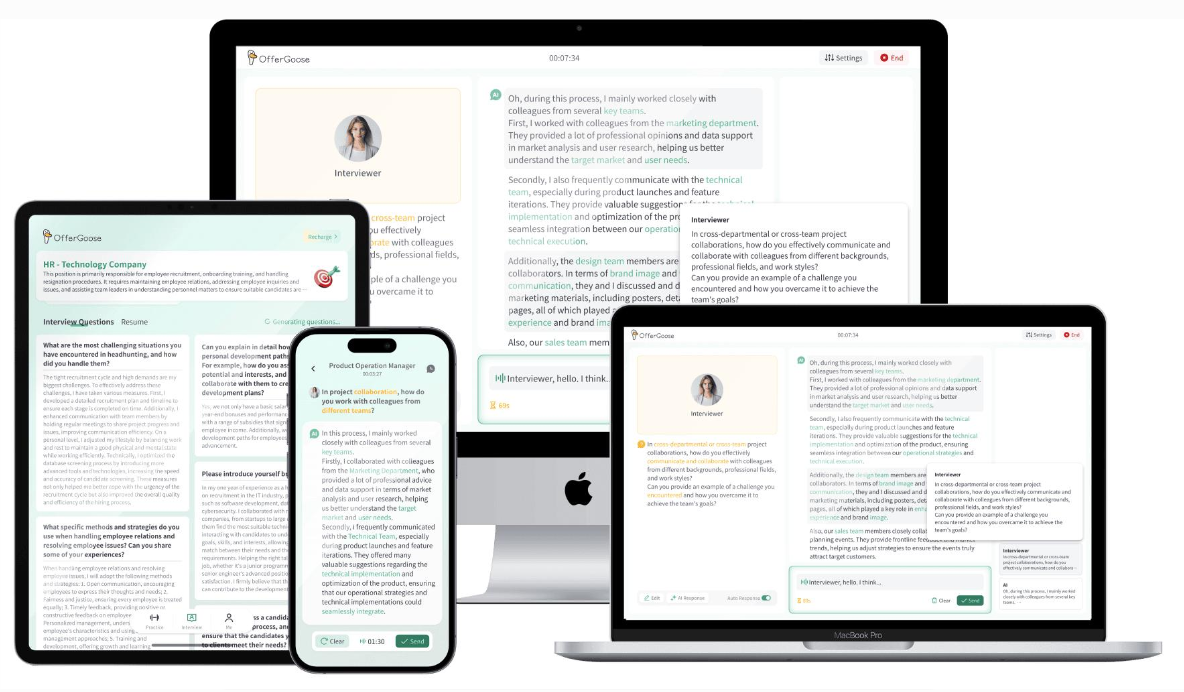
OfferGoose’s cross-platform solution — from deep editing on desktop to on-the-go practice on mobile, from resume optimization to mock interviews to real-time prompts — is essentially a systematic approach to moving a job seeker from level one to level three.
Your 2026 Hiring Season Action Plan
Based on these five market shifts, here is an executable checklist:
| Week | Action Item | Priority |
|---|---|---|
| Week 1 (Late Aug – Early Sep) | Reassess resume-to-JD match using AI tools; prepare at least 3 JD-tailored resume versions | ⭐⭐⭐ |
| Week 1 | Finalize target company shortlist (10–15 recommended); build an application tracking spreadsheet | ⭐⭐⭐ |
| Week 2 (Mid Sep) | Complete at least 5 AI mock interviews targeting your preferred tech stacks and industries | ⭐⭐⭐ |
| Week 2 | Begin batch applications — no more than 3 per day to ensure timely follow-ups | ⭐⭐ |
| Week 3 (Late Sep) | Debrief within 24 hours after every interview using a structured review tool; adjust strategy | ⭐⭐⭐ |
| Week 3 | For companies entering late-stage interviews, start preparing salary negotiation materials | ⭐⭐ |
| Week 4 (Early Oct) | Evaluate offers holistically and make a final decision — do not delay past mid-October | ⭐⭐⭐ |
Summary
The five shifts of the 2026 Golden September Silver October hiring season — smarter ATS, AI-augmented interviews, AI-reshaped job requirements, compressed hiring timelines, and nationalized competition — may seem to make job hunting harder at every turn. But fundamentally, they are pushing the recruitment market toward greater efficiency and greater fairness.
AI has not made job hunting harder. It has made pretending to be qualified harder.
When resume screening no longer depends on keyword stuffing, and interview evaluation no longer depends on a single interviewer’s subjective impression, genuinely capable candidates actually become easier to discover. If you are confident in your abilities but keep getting stuck at the “demonstrating your abilities” stage, the problem is not your ability — it is how you present it.
OfferGoose exists to solve exactly this: helping you organize your real capabilities into evidence chains that both human interviewers and AI evaluation systems can recognize. From resume matching to mock interviews to deep debriefs, it is a system for turning “I can do this” into “here is the proof that I can.”
FAQ
General Questions
Are 2026 Golden September Silver October hiring conditions genuinely harder than previous years?
Objectively, competition in certain hot sectors has intensified because remote interviews have removed geographic barriers, creating nationwide competition for each role. On the flip side, AI-assisted recruitment has reduced information asymmetry. If your person-role fit is genuinely strong, you are actually more likely to be identified than in an era where connections or luck played a larger role.
If the ATS now uses semantic understanding, can I stop worrying about keywords entirely?
You should not stop worrying — but you should stop only worrying about keywords. The 2026 ATS shift is from mechanical keyword matching to semantic understanding. What matters now is the semantic density of your resume and the completeness of your evidence chain, not keyword count.
Do AI mock interviews actually help versus practicing with a friend?
Practicing with a friend has one major limitation: friends tend to give comforting rather than objective feedback. An AI mock interview, powered by NLP and chain-of-thought reasoning, evaluates you systematically across dimensions like logical structure, STAR completeness, and answer depth — and you can repeat the exercise until the structure becomes second nature.
How fast should I expect the 2026 hiring process to move?
Expect the full cycle — from application to offer — to complete within 2-3 weeks for most roles, down from 3-4 weeks in 2024. Prepare your evaluation framework before you start applying so you are not making decisions under time pressure.
Questions About OfferGoose
What interview directions does OfferGoose mock interview support?
OfferGoose mock interviews cover mainstream industries including internet/technology, product management, operations, marketing, finance, and consulting. Both Chinese and English interviews are supported. You can customize interviewer style (supportive, high-pressure, deep-technical), interview duration, and even tailor the simulation toward specific companies or roles. We recommend completing at least 3–5 mock sessions before your first real interview.
How does OfferGoose differ from generic AI chatbots for interview prep?
Generic chatbots provide one-off Q&A. OfferGoose is designed as an end-to-end interview copilot: it ties your mock interview performance to your actual resume and target JD, evaluates your answers against structured frameworks like STAR, provides multi-dimensional scoring, and tracks your improvement across sessions. It also offers real-time prompt support during live interviews — not to answer for you, but to keep your thinking structured when you are under pressure.
Can OfferGoose help with English-language or international company interviews?
Yes. The platform supports English-language mock interviews with native-level question generation. It also covers behavioral interview preparation, cultural fit considerations, and STAR-story structuring specifically for multinational company interview formats.
Ready for the 2026 hiring season? Visit OfferGoose and equip your job search with AI tools built for the new rules of recruiting.
Want to start with a mock interview? Try OfferGoose free and experience what an AI-augmented interview prep session feels like.