
The Complete 2026 Hiring Season Checklist: Resume, Interview, and Salary Negotiation — A Full-Process Self-Audit
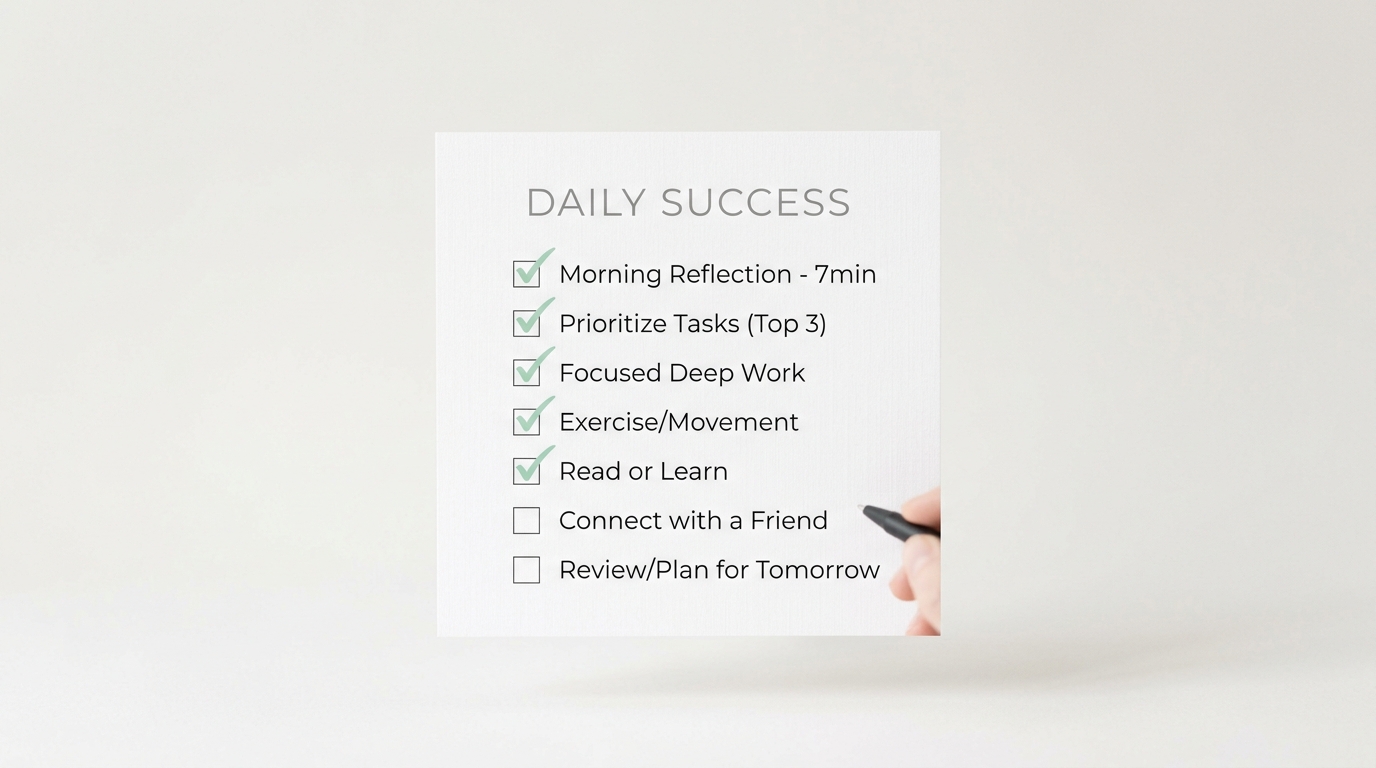
The Complete 2026 Hiring Season Checklist: Resume, Interview, and Salary Negotiation — A Full-Process Self-Audit

If you have three to five years of professional experience, you have probably lived through this cycle more than once: the hiring season arrives, you update your resume, you apply to dozens of roles, you go through interviews, you hear nothing back from most of them, you start doubting yourself, you lower your expectations, and you accept an offer that feels like settling.
Then the next hiring season comes, and you do it all over again.
The problem is not effort. The problem is that your preparation lacks a structured self-audit system.
What separates an experienced job seeker from someone going through the motions is not how many applications you sent or how many rounds you survived. It is whether you have a clear pass/fail standard at every critical checkpoint.
This article is a complete 39-point self-audit checklist covering five stages: resume, JD matching, interview preparation, salary negotiation, and offer decisions. Every checklist item includes a concrete “what to do if you are not there yet” action. I recommend opening this article alongside your current resume and a target job description, and going through it item by item.
Recommended First: Use OfferGoose to Power Your Job Search Audit
Before diving into the checklist, here is the fastest way to run a diagnostic on your current job search readiness: upload your resume and a target JD to OfferGoose. In seconds, you will see your ATS compatibility score, your keyword overlap with the JD, and which experience gaps are most urgent to address. The checklist below gives you the framework; OfferGoose gives you the data. Run your free resume audit on OfferGoose.
Stage 1: Resume Deep Audit (10 Items)
Resume Self-Check
| # | Check Item | Passing Standard | What to Do If Not There Yet |
|---|---|---|---|
| 1 | Is your resume tailored to the target JD? | One resume version serves at most 3 highly similar role directions. | Use an AI resume-to-JD matching tool like OfferGoose. Upload the target JD and your resume to get tailored suggestions. |
| 2 | Do your project descriptions include quantified results? | Every project has at least one verifiable number. | Rewrite using “increased X by Y%” or “reduced X from A to B” format with actual metrics. |
| 3 | Have you eliminated “JD-copycat” descriptions? | No bullet points that read like “responsible for X, participated in Y.” | Rewrite using the STAR framework. Delete every bullet starting with “responsible for” or “assisted with.” |
| 4 | Is your skills section precise rather than sprawling? | No more than 15 skills listed; each one can withstand 2–3 deep follow-up questions. | Delete any skill you have “used but do not really know.” Keep only skills with a behavioral story behind them. |
| 5 | Does your resume pass an ATS-friendliness check? | Plain-text export retains all key information with clear hierarchy. | Export your resume as TXT and check for information loss. OfferGoose detects ATS issues automatically. |
| 6 | Is your summary section specific and verifiable? | Every claim in your summary is backed by evidence in your project descriptions. | Delete universal filler like “fast learner.” Replace with “in X context, used Y method to solve Z problem.” |
| 7 | Is your resume the right length? | 3–5 years of experience: 1 page. 5–10 years: maximum 2 pages. | Trim irrelevant early-career entries. Merge similar projects. |
| 8 | Is it free of typos and formatting issues? | Zero errors. | Run a full language check with an AI tool. |
| 9 | Are certifications targeted to the role? | Only credentials relevant to the target role are listed. | Remove unrelated certifications. |
| 10 | Are employment gaps addressed? | Gaps over 3 months are covered with a brief positive description. | If the gap involved a project or learning, include it. Otherwise prepare a clear interview explanation. |
Use AI for objective resume scoring
Many experienced professionals are overconfident about their resumes. “I have been writing resumes for years — mine cannot be that bad.”
But the gap between subjective judgment and objective evaluation can be larger than you think.
OfferGoose’s resume scoring feature uses natural language processing (NLP) and large language model (LLM) technology to evaluate your resume across dimensions including ATS compatibility, semantic density, evidence-chain completeness, and JD alignment. The score is not perfect, but it is more objective than “I think it looks fine.”
Stage 2: JD Match Verification (6 Items)
JD Match Self-Check
| # | Check Item | Passing Standard | What to Do If Not There Yet |
|---|---|---|---|
| 1 | Have you separated must-haves from nice-to-haves? | All JD requirements are tiered and checked against your resume. | Create a table mapping each requirement. Tag gaps as “needs evidence” or “needs development.” |
| 2 | Have you decoded hidden requirements? | You can read between the JD lines for real work conditions. | Look up employee reviews on Glassdoor or equivalent platforms. |
| 3 | Does your keyword overlap exceed 60%? | 100% coverage on must-haves, 40%+ on nice-to-haves. | Use OfferGoose’s resume-to-JD matching. It uses retrieval-augmented generation (RAG) to identify exact keyword and experience gaps. |
| 4 | Have you customized your resume per role? | Same resume unchanged for 5+ roles = not passing. | Upload JD and base resume to OfferGoose for a JD-tailored version, then manual fine-tune. |
| 5 | Do you know the company’s interview style? | You can describe their typical technical and behavioral interview characteristics. | Search “[company] + interview experience” for recent 6-month reports. |
| 6 | Do you have specific reasons for choosing this company? | 3 concrete reasons tied to actual business, product, or culture. | Read the company’s website, product docs, and engineering blog. |
JD matching is about finding gaps, not confirming overlaps
The most common mistake: only looking at requirements you already meet.
The real value of JD matching is identifying the gaps — where your evidence is thin or where you could close the gap quickly.
OfferGoose’s JD matching breaks down every requirement: this one is in your resume but too weak; this one is completely missing; this one is there but buried too deep.
Stage 3: Interview Preparation (12 Items)
Interview Readiness Self-Check
| # | Check Item | Passing Standard | What to Do If Not There Yet |
|---|---|---|---|
| 1 | Can you deliver a fluent 1-minute self-introduction? | Communicates who you are + what you have done + why this role. Zero filler words. | Record yourself, listen three times, cut fluff. Compress to 50–60 seconds. Practice 10+ times. |
| 2 | Have you prepared 5 STAR behavioral stories? | Each covers a different competency — leadership, problem-solving, conflict, failure, innovation. | Write them down. Practice with OfferGoose AI mock interview for STAr structure and delivery evaluation. |
| 3 | Can you explain every project on your resume? | Under 1 minute each: context → your role → actions → result → learning. | Use the “elevator pitch” method. Practice until natural. |
| 4 | Prepared your “weakness” answer? | A real, non-core weakness with specific improvement actions. | Choose a genuine soft-skill gap with a concrete improvement plan. |
| 5 | Completed at least 3 mock interviews? | Three or more, each with trackable improvement points. | OfferGoose AI mock interview with customizable role, style, and duration. Structured debrief after each session. |
| 6 | Know the likely stress-test questions? | 3–5 challenging follow-ups prepared. | Search for high-frequency stress questions for your target role. |
| 7 | Prepared questions for the interviewer? | 3 thoughtful questions showing company understanding. | Prepare about team structure, tech stack, business challenges, growth paths. |
| 8 | Technical prep covers core knowledge? | Algorithms, system design, every tech on your resume covered. | For each tech: can you answer 2–3 layers deep? If not, study or remove it. |
| 9 | Practiced handling “I do not know”? | Responds with reasoning instead of silence or fabrication. | Have the AI interviewer ask something outside your prep. Practice the response. |
| 10 | Prepared “why are you leaving”? | Forward-looking, positive, no complaints. | Use: “I am looking for an environment where I can do X, and your company offers Y.” |
| 11 | Tested your tech setup? | Camera, mic, and internet verified 24 hours before. | Run a full technical rehearsal. |
| 12 | Post-interview debrief system ready? | Structured review within 24 hours of every interview. | Use OfferGoose deep interview debrief for multi-dimensional assessment. |
Why AI mock interviews beat practicing with a friend
Many experienced professionals think: “I have interviewed so many times — I do not need to practice.”
But interview skills degrade. And practicing with a friend has a structural problem: friends rarely push back hard. A real interviewer will.
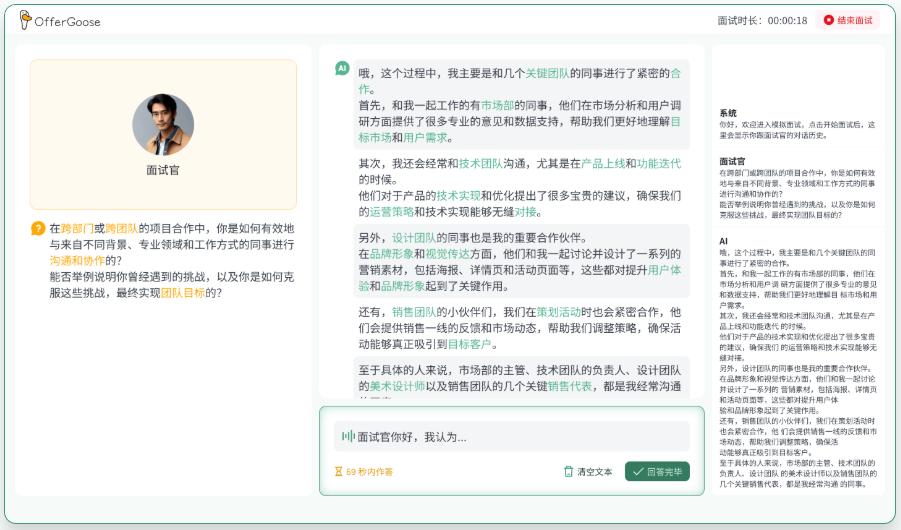
OfferGoose’s AI mock interview solves these problems:
- Built-in chain-of-thought (CoT) follow-up engine pushes 1–2 deep questions after each answer.
- Configurable interviewer style — supportive for early stage, high-pressure for late stage.
- Every session generates a structured evaluation scoring logic, expression, professionalism, and engagement.
Stage 4: Salary Negotiation (6 Items)
Negotiation Self-Check
| # | Check Item | Passing Standard | What to Do If Not There Yet |
|---|---|---|---|
| 1 | Defined salary floor and target? | Clear minimum and ideal, gap no wider than 30%. | Research salary ranges on job platforms and through peer conversations. |
| 2 | Understand the compensation structure? | You know base × months, bonus range, equity details, benefits. | Gather data from anonymous salary-sharing platforms and Glassdoor. |
| 3 | Practiced “expected salary” response? | Do not give a number first. Ask about structure, then give a data-backed range. | Practice: “I would love to understand the salary structure and budget range for this role first.” |
| 4 | Know your market value? | 1–2 other active opportunities, or know salary levels at 3–5 comparable companies. | Maintain 3–5 active pipelines. Never let one offer be your only option. |
| 5 | Non-salary levers prepared? | 2–3 non-salary points: title, reporting line, resources, training, flexibility. | Build a total compensation table beyond base salary. |
| 6 | Prepared to say no? | Clear deal-breaker conditions; psychologically ready to walk away. | Write down your deal-breaker list in advance. |
The core principle
Salary negotiation is not haggling. It is value-exchange negotiation. Your leverage is “I am worth this because I bring X value,” not “I really need this job.”
Effective negotiation starts during the interview itself. If the hiring manager is already thinking “we need this person,” negotiation flows naturally.
Stage 5: Offer Decisions (5 Items)
Decision Self-Check
| # | Check Item | Passing Standard | What to Do If Not There Yet |
|---|---|---|---|
| 1 | Built an evaluation framework? | Weighted scoring with 3–5 dimensions. | List your top 5 factors, assign weights, score each offer. |
| 2 | Verified all offer details? | Confirmed in writing: salary structure, probation terms, equity, start date. | Get all verbal promises in the offer letter. Clarify vague terms like “potential bonus.” |
| 3 | Assessed hidden costs? | Evaluated: commute, overtime culture, management style, team stability, company finances. | Search company reviews. Distinguish isolated complaints from patterns. |
| 4 | Considered “you one year from now”? | Will this role strengthen your resume, build skills, expand your network? | Be wary of offers that are “decent pay but repetitive work.” |
| 5 | Left yourself an exit path? | Understand probation resignation rules, non-compete scope and compensation. | Read the labor contract carefully; consult a lawyer if needed. |
Full-Process Timeline
| Stage | Time Window | Core Tasks | OfferGoose Feature |
|---|---|---|---|
| Resume optimization | 2–3 weeks before applying | Deep resume audit, JD customization, ATS check | Resume scoring + JD matching |
| Mock interviews | 1–2 weeks before applying | 5+ AI mock interviews covering behavioral and technical | AI mock interview (multi-style) |
| Applications | Early September | Batch applications, max 3/day, track everything | JD-tailored resume |
| Interviews | Mid-Sep to Mid-Oct | 24-hour post-interview debrief, strategy adjustment | Deep interview debrief |
| Negotiation & decision | Late October | Build evaluation framework, complete negotiation | Debrief data for self-assessment |
Summary
This checklist covers 39 items across five stages. If you can go through each one and meet every standard, your hiring-season job search transforms from a gamble into a manageable system.
The value of a checklist is not in memorizing it — it is in executing it and discovering your gaps. I recommend pulling out your latest resume and a target JD right now. Go through the first two stages item by item. Mark every item where you are not passing. Then build a two-week improvement plan.
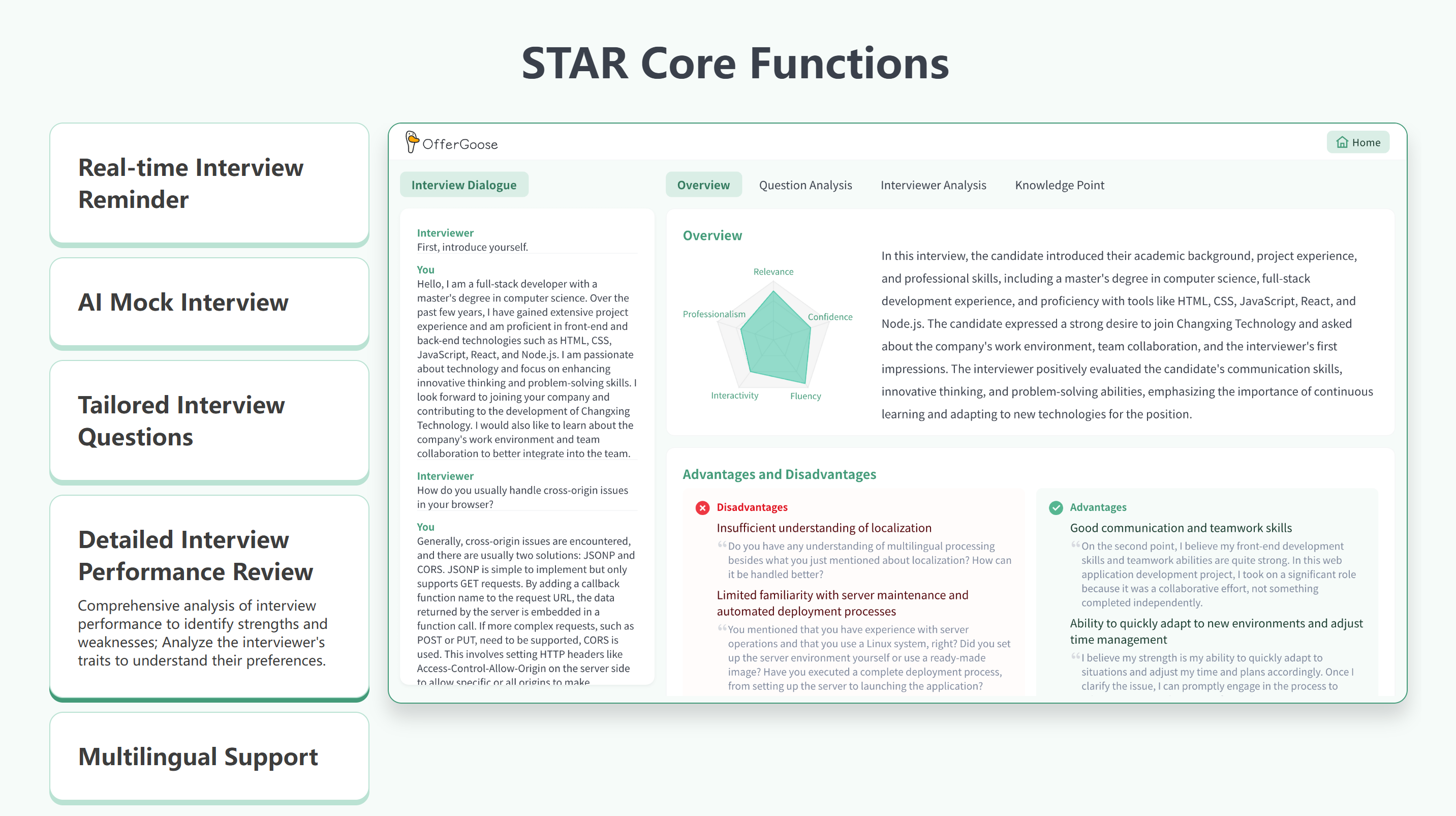
OfferGoose’s role in this process is turning the steps that normally rely on instinct and experience — resume scoring, JD matching, mock interviews, deep debriefs — into objective, quantifiable, repeatable workflows.
You are not “preparing for interviews.” You are applying an engineering approach to managing your job search.
FAQ
General Questions
Is there enough time to go through this full checklist before the hiring season ends?
Yes. The key is parallel processing, not sequential. You can start AI mock interviews while optimizing your resume — you do not need the resume to be “perfect” first. The most intensive phase takes 3–4 weeks, and the hiring window typically extends through late October. Starting in late August gives you plenty of runway.
Should I create a separate resume for every single role?
Not necessarily for every role, but for every distinct role direction. A backend engineer targeting general backend, infrastructure, and data platform roles needs three versions. Within the same direction, use one version but run a JD match check before submitting. OfferGoose’s JD matching does this in seconds.
What about early-career experience that is unrelated to my current direction?
If your early experience is completely unrelated — for example, you spent two years in sales before switching to product management — either omit it or condense it to one line. If it shows transferable skills (communication, project management), a brief mention is fine.
The HR says “the budget is fixed.” What now?
First, distinguish genuine budget constraints from negotiation tactics. You can say: “I understand the budget constraint. If base salary cannot move, can we explore flexibility on signing bonus, equity, or performance bonus structure?” Expand negotiation from one dimension to multiple. If every dimension is “fixed,” the budget likely is genuinely capped.
Questions About OfferGoose
How accurate is the deep interview debrief?
OfferGoose’s deep debrief uses LLM and chain-of-thought reasoning to analyze your responses. Its strength is standardization and speed — you get a structured report immediately after every interview. Its limitation: it only analyzes what you provide (recording or notes) and cannot observe body language or micro-expressions. Best practice: use AI debrief for every interview and supplement with one trusted peer review for 1–2 critical interviews.
Can OfferGoose help if I am targeting international companies?
Yes. The platform supports English-language mock interviews with native-level question generation, behavioral interview preparation, and STAR-story structuring for multinational company formats. It also covers cultural fit considerations and cross-cultural communication nuances.
How does the resume scoring work?
The scoring engine uses NLP to analyze your resume across multiple dimensions: keyword density and relevance, ATS structural compatibility, quantified-evidence ratio, and action-verb usage patterns. It compares your resume against a database of high-performing resumes in similar roles and industries, then generates a score with specific improvement recommendations for each dimension.
Ready to run your job search like a system? Visit OfferGoose and start your free resume audit now.
Want to experience an AI mock interview? Try OfferGoose and see how structured feedback transforms your interview performance.