
Is the Hiring Season Really the Best Time to Switch Jobs? A Cold Look at the Other Side of the Peak

Is the Hiring Season Really the Best Time to Switch Jobs? A Cold Look at the Other Side of the Peak

In late August 2024, an operations manager handed in his resignation. His reasoning was solid: the Golden September Silver October hiring season was about to start — the best job-switching window of the year. If not now, when?
He applied to 20 companies in early September, secured 5 interviews, and received exactly one offer — with a 12% salary increase, far below the 25% he had expected. It felt underwhelming. “It is peak hiring season,” he thought. “Something better will come.” He turned it down.
October passed. November passed. By late December, he grudgingly accepted an offer with a 10% bump — worse than the one he had rejected in September.
In 2025, he tried again. This time, he was smarter: he searched while still employed. But the same pattern emerged. His September applications led to interviews in early October. Two technical rounds plus an HR round finished by mid-November. The final offer was barely higher than his current salary. The motivation to switch was not there. He hesitated again.
Two years. He is still stuck in the loop: watch → try → hesitate → give up.
He is not alone. Every year, huge numbers of professionals treat the hiring season as a golden window for switching jobs. But the proportion who actually complete an ideal switch during this window is far lower than most people imagine.
This article is not going to tell you “do not switch jobs.” But it will help you see the other side — the hidden costs and structural risks that career bloggers rarely mention.
Recommended First: Diagnose Before You Decide
Before reading the rest of this article, run a quick diagnostic: upload your resume and a target JD to OfferGoose. In 30 seconds, you will see your actual JD match score, your ATS compatibility, and your competitive positioning. This data, combined with the framework below, will tell you whether the hiring season is genuinely your window — or whether you would be better off preparing for a few more weeks. Run your free diagnostic on OfferGoose.
Counterpoint 1: You Are Competing With the Entire Country for the Same Roles
The flip side of “peak supply” is “peak competition density”
The hiring season is considered prime time for three reasons:
- Second-half budgets are released, and companies open new headcount for the coming year.
- Many people resign after collecting mid-year bonuses, creating vacancies.
- Campus and experienced-hire recruiting happen simultaneously, producing high job volume.
All three points are valid. But the conclusion people draw — “therefore you should switch now” — misses a critical variable: competition density.
In 2026, the average number of applications for a popular role during the hiring season is 1.5 to 2 times higher than during the regular season (March–April). There are more jobs, yes — but there are even more people chasing them.
Here are the numbers for a typical B2B product manager role:
| Metric | Regular season (Mar–Apr) | Hiring peak (Sep–Oct) | Change |
|---|---|---|---|
| Daily job postings | 120 | 175 | +46% |
| Daily applications | 480 | 960 | +100% |
| Avg. competition ratio | 4:1 | 5.5:1 | +37% |
| Initial screening pass rate | 22% | 14% | –36% |
Jobs are up 46%, but applications have doubled. Competition is actually more intense, not less.
And 2026 adds a new variable: LLM-upgraded ATS systems. As covered in our earlier analysis, ATS engines in 2026 have moved from keyword matching to semantic understanding. Under high application volume, this means the screening bar is not just stricter — it is smarter. The system will not let you through just because you stuffed the right keywords into your resume. It evaluates the density and coherence of your actual experience.
In plain terms: applying during the hiring season means facing a double challenge — more supply but far more competition, plus stricter screening.
Counterpoint 2: Not Every Job Posting Is a Real Opening
How many listings are genuinely active during the hiring peak?
Here is a question few job seekers ask: of all the job postings you see, how many represent a company that is genuinely, actively, urgently hiring right now?
Based on analysis of 2025 September–October data from major recruitment platforms, plus conversations with multiple HR professionals, an uncomfortable industry pattern emerges:
- Roughly 15–20% of postings are “talent pool” listings. The company has a directional need but is not hiring immediately. The posting exists to collect resumes for future reference.
- Roughly 10–15% are “employer brand” listings. Especially at large companies, keeping popular roles posted year-round is a branding strategy — “look, we are always growing.”
- Roughly 5–10% are “pre-filled” listings. An internal transfer or referral candidate has already been identified; the posting is a formality.
Combine these, and 30–40% of hiring-season postings may not represent roles where your application will actually be reviewed.
What does this mean for you? You could spend hours tailoring your resume, writing a cover letter, and preparing for a role — and the position was never really open.
How to spot phantom postings:
- Postings older than 30 days that keep getting refreshed are likely talent-pool listings.
- JDs that are extremely generic — “responsible for product-related work,” “good communication skills” — are likely brand listings.
- Zero feedback within 48 hours of applying (including no “resume viewed” notification) suggests low-priority status.
- A single company posting 5+ similar roles in the same direction is likely casting a wide net to build a resume pool.
Counterpoint 3: Interview Quality Declines During Peak Season
Interviewer fatigue is real — and it affects your results
During the hiring peak, interviewers are exhausted. For a popular role, an interviewer may handle 4–6 candidates per day for 2–3 consecutive weeks.
The consequences:
- Attention decay. By the third candidate of the day, energy and patience have noticeably dropped. Your well-crafted answer may receive only a perfunctory “okay, next question.”
- Amplified primacy effect. When an interviewer sees many candidates in a single day, they rely more heavily on first impressions for rapid judgment. Your opening 3-minute self-introduction may set the tone for the entire interview.
- Rushed decisions. Interviewers may default to a simple yes/no label rather than the detailed comparison and holistic evaluation they would perform during slower periods.
In cognitive load terms: interviewers during the hiring peak face information-processing demands far beyond normal levels, leading to severe cognitive resource overload. Under these conditions, their evaluations are rougher, more intuition-driven, and more susceptible to bias than during off-peak periods.
It is not fair, but it is reality.
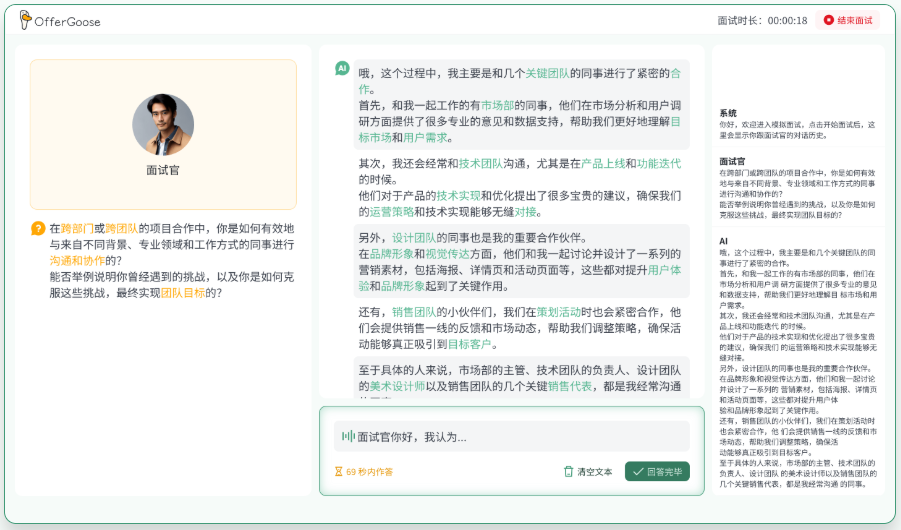
OfferGoose’s AI mock interview provides a unique counterweight: it gives you a standardized, fatigue-free evaluation. The AI interviewer does not lower its assessment quality because this is the fifth session of the day. Every session is a full-dimensional analysis starting from zero. At minimum, this gives you an objective baseline of your interview capability before you enter a real interview where fatigue may work against you.
Counterpoint 4: Salary Negotiation — Your Raise Expectations May Be Unrealistic
Why salary bumps during the hiring peak often fall short
Many professionals carry a default expectation into the hiring season: “A 20–30% raise when switching jobs is standard.”
That expectation may have been valid before 2022. By 2026, three structural changes have altered the salary-negotiation landscape:
First, remote interviews have expanded every company’s talent pool from local to national. This cuts both ways. You can pursue jobs in other cities — but companies now have more leverage. “If you will not accept this offer, there is someone in Chengdu willing to relocate to Shenzhen for less.”
Second, AI has reduced the cost of a bad hire. When ATS systems use NLP semantic analysis to screen resumes precisely, and AI interview tools evaluate candidate quality in real time, companies are more willing to “interview a few more before deciding” rather than locking in a candidate quickly. This weakens the scarcity advantage candidates used to have in salary negotiations.
Third, the broader 2026 economic environment has pushed compensation expectations toward rationality. Large companies are still under cost-cutting pressure. Mid-size and small companies face an unfriendly funding environment. Compensation packages increasingly tilt toward “base + performance flexibility” rather than “high base + low variable.”
A concrete negotiation scenario:
You currently earn 25K per month and expect a jump to 32K — a 28% raise. During the hiring peak, the HR manager has 5–8 candidates with similar backgrounds, and at least 2 of them expect 28–30K. If you were the HR manager, who would you choose?
This is not malicious lowballing. It is supply and demand. Candidate supply during the hiring peak far exceeds normal levels, which naturally strengthens employer negotiating power.
The solution is not “lower your expectations.” It is front-load your negotiation leverage — demonstrate differentiating value during the interview itself that makes the HR manager think, “this person is worth the premium.” To do that, you need to sharpen your value articulation beforehand, using OfferGoose’s mock interviews to drill your STAR stories until the structure and quantified evidence hit with maximum impact, every time.
Counterpoint 5: Decision Quality Degrades — “Everyone Else Is Switching, So I Should Too”
The herd effect is quietly influencing your career judgment
Every September, social media floods with content like “hiring season job-switching playbook,” “how I landed multiple offers during the peak,” and “how to choose between N offers.”
This content creates a herd effect: when your social feeds are full of people discussing job switches, you feel an anxious pressure — “if I do not switch now, I am falling behind.” That anxiety pushes you toward irrational decisions: applying hastily without a clear direction, interviewing without adequate preparation, accepting a “fine” offer without thorough comparison.
This is a well-documented behavioral economics principle: under information scarcity, humans tend to imitate majority behavior — even when that behavior may not be optimal for them.
So before deciding whether to switch during the hiring season, ask yourself three questions:
- What is your “push” factor? Are you running from something (dissatisfaction with your current role) or running toward something (a clear new direction)? If it is the former, first confirm whether the dissatisfaction can be resolved internally.
- Is your direction clear? Are you looking for “a better job” or “a specific career direction”? The former leads to getting lost in the sea of hiring-season postings. The latter filters out 80% of the noise.
- Are you adequately prepared? Has your resume passed JD-match verification? Have you completed at least 5 AI mock interviews? Do you have a structured post-interview debrief system?
Who Should Actively Pursue the Hiring Season — and Who Should Wait
Having covered the counterpoints, the hiring season is not a trap for everyone. For specific profiles, it is genuinely a good window.
Three profiles best positioned to act
1. Those with irreversible push factors. You have already decided to leave — layoff risk, team dissolution, toxic management, industry decline. These are non-negotiable. For you, the hiring season’s high job volume is an opportunity to seize.
2. Those who are thoroughly prepared with clear direction. Your resume has been JD-tailored for 3–5 target roles. You have completed at least 5 AI mock interviews. You have researched your target companies’ interview styles and compensation structures. You are not “trying your luck” — you are “verifying a match.”
3. Those with irreplaceable specialization. You have 3+ years of deep experience in a niche domain, verifiable project outcomes with data, and skills that are genuinely scarce in the market. For you, timing matters less — the hiring season’s high supply is a bonus, not a necessity.
Three profiles better off observing and preparing
1. Directionless observers. You feel “it is time to switch” but do not know “switch to what.” Spend 1–2 months on career-direction exploration — target-JD analysis, industry trend research, skill-gap assessment — rather than making a rushed decision during the peak.
2. Underprepared action-takers. Your resume is still last year’s version. You have not done a single mock interview. Your knowledge of target companies is limited to their homepages. Give yourself a 3-week preparation window: use OfferGoose to systematically go through resume optimization → JD matching → mock interviews → debrief iteration. Then start applying in mid-to-late October. The hiring season’s job supply typically extends through early November — you have time.
3. “It’s fine, I guess” hesitaters. If your current job has no fatal push factor (you do not have to leave), treat the hiring season as “market research.” Update your resume, do a few mock interviews, apply to 3–5 of your most interesting target companies to test the waters — but do not pressure yourself to leave. If you get an offer, run it through a weighted evaluation framework. If the gap between the best offer and your current role does not justify the switching cost (adaptation cost, relationship-rebuilding cost, probation risk), stay.
A Rational Decision Framework for the Hiring Season
Regardless of your profile, use this framework:
| Step | Core Question | Action | Tool Support |
|---|---|---|---|
| 1. Push assessment | Why leave? Is it irreversible? | List 3+ specific push factors. Assess whether each can be resolved internally. | — |
| 2. Direction anchoring | What kind of company, role, industry? | Screen 10–15 target companies. Analyze JD commonalities and differences. | OfferGoose resume-JD matching (batch analysis) |
| 3. Competitiveness diagnosis | Where do my resume and interview skills stand? | Resume scoring + 3+ AI mock interviews + debrief. | OfferGoose resume scoring + AI mock interview + deep debrief |
| 4. Market testing | What feedback am I getting? | Apply to 3–5 non-top-priority roles. Track screening pass rate and interview feedback. | — |
| 5. Decision execution | Switch or stay? | Compare current role vs. best offer using weighted evaluation framework. | OfferGoose debrief data for assessment |
Summary: The Hiring Season Is a Window, Not the Only Window
At its core, the hiring season is a job-supply peak — but one that comes with a parallel spike in competition density. It is not “the easiest time of year to switch jobs.” It is “the time of year when both opportunity and challenge are at their maximum.”
If you are prepared, your direction is clear, and your competitiveness is sufficient, the hiring season is a window worth seizing. If you are still observing, your direction is fuzzy, and your preparation is thin, the hiring season may be a trap — one that pushes you into a rushed decision and sends you back into the same loop next year.
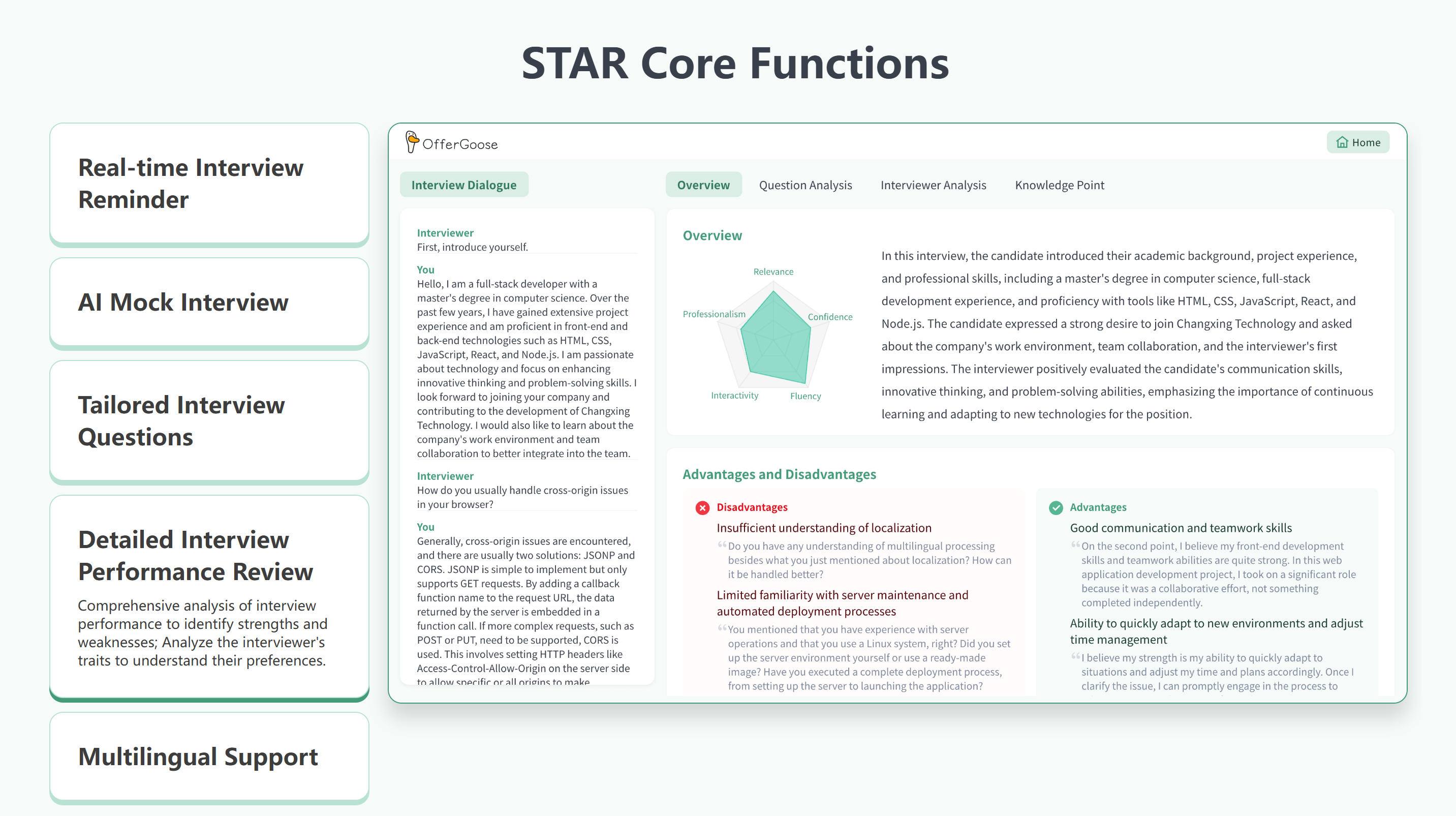
OfferGoose’s value in this decision is not telling you “switch or stay” — that is a decision only you can make. What it does is turn the steps that normally depend on gut feeling — competitiveness diagnosis, JD matching, interview skill assessment — into objective, quantifiable data. With that data, you can at least make your decision based on information rather than anxiety.
FAQ
General Questions
Is the hiring season genuinely harder than the post-new-year season (March–April)?
It is not a simple “harder” or “easier.” The hiring season has more jobs but also more competition. The spring season (March–April) has slightly fewer jobs but also slightly less competition. Pure data suggests spring competition ratios are typically 15–25% lower than autumn peaks. However, autumn postings may include a higher proportion of senior and high-compensation roles, since they coincide with second-half budget releases and post-bonus resignation waves. Judge based on your specific role type and competition intensity.
If I decide not to switch during the hiring season, what should I do instead?
Three suggestions: (1) Conduct “market research” — update your resume, apply to a few non-top-priority companies, and test your market value and interview feedback. (2) Build “capability reserves” — use AI mock interviews to keep your interview skills sharp. Even if you are not switching, maintaining interview readiness is career insurance. (3) Explore direction — research industries and roles that interest you. Use JD analysis tools to understand what the market is looking for and map your skill gaps.
Can I use OfferGoose’s AI mock interviews even if I am not actively job searching?
Absolutely. The value of AI mock interviews extends beyond pre-interview practice — it is an ongoing “interview-fitness maintenance” tool. Just as athletes train even without an upcoming competition, professionals should keep their interview skills in a ready state. OfferGoose supports on-demand mock interviews anytime. Doing 1–2 sessions per month keeps you “battle-ready.”
How do I tell if a job posting is genuinely active or a phantom listing?
Practical signals: posting is less than 14 days old and not repeatedly refreshed; JD is specific with real team context and tech-stack details; you receive a “resume viewed” notification within 24–48 hours; HR reaches out proactively rather than via auto-reply. These are high-authenticity signals. Conversely: posting is 30+ days old; JD is extremely generic; zero feedback after applying; same company has many similar roles in the same area. These are low-authenticity signals — deprioritize them.
Questions About OfferGoose
How does OfferGoose help with the “should I switch?” decision?
OfferGoose provides objective data points for your decision: resume scoring tells you how your raw credentials stack up; JD matching shows your real competitiveness for specific target roles; AI mock interview performance reveals your interview readiness level. With these data points, your decision shifts from “I feel like I should switch” to “based on my JD match scores and mock interview performance, here is my realistic chance, and here is what I need to improve.”
Can I use OfferGoose for market research without committing to a job switch?
Yes. You can use the platform’s resume scoring and JD matching features to benchmark your profile against the market without applying anywhere. This is exactly what “market research” mode looks like — understand your positioning, identify skill gaps, and clarify which directions are genuinely open to you, all without the pressure of an active job search.
How does OfferGoose handle data privacy if I am just exploring?
All analysis — resume scoring, JD matching, and mock interview evaluations — is processed locally where possible. Your resume data is not shared with third parties or used for any purpose beyond your own analysis. The platform is designed for exactly this use case: confidential career exploration without your data surfacing anywhere.
Not sure whether to switch or stay? Start with data, not instinct. Run a free resume diagnostic on OfferGoose.
Want to test your interview readiness first? Try an AI mock interview on OfferGoose and see your real readiness score.