
Behavioral Interview Practice: How the STAR-C Framework Turns 'I Haven't Done That' Into 'I Can Do This'
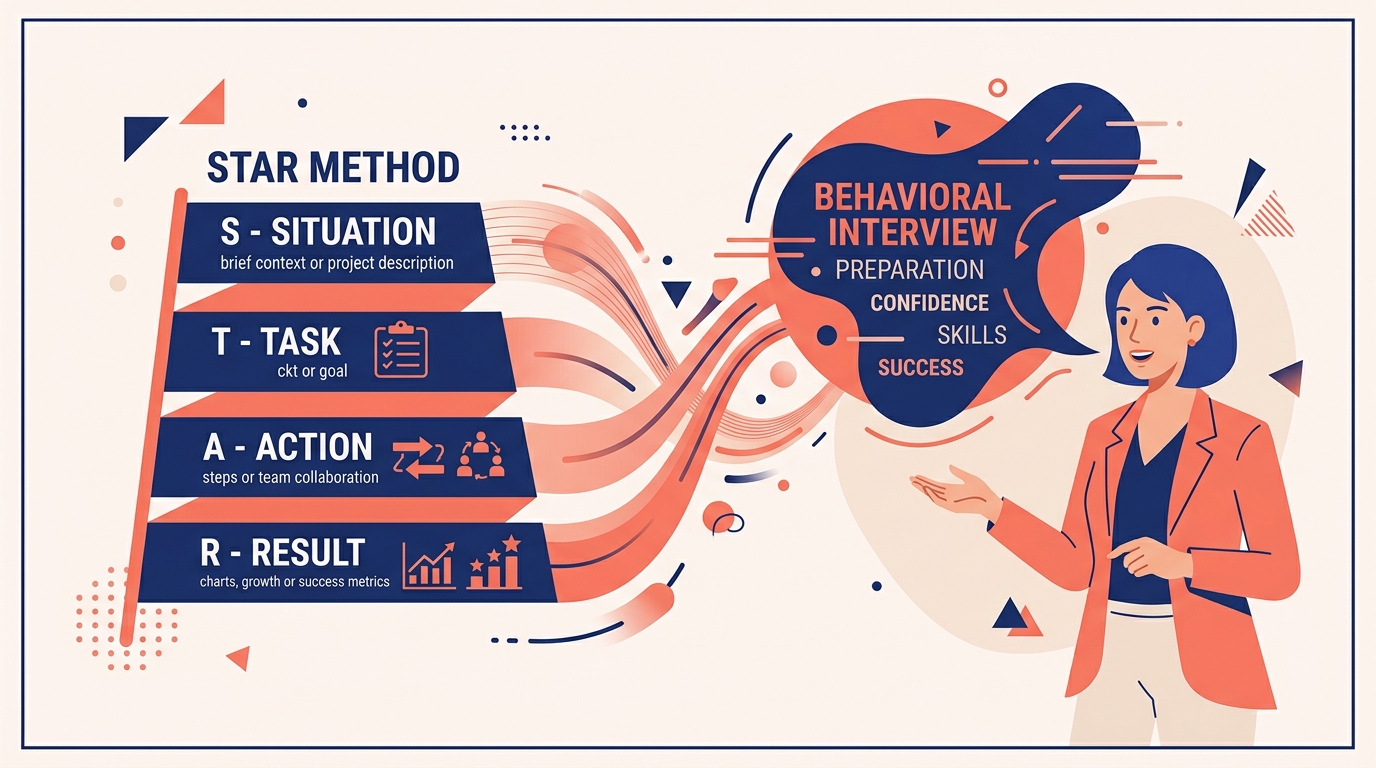
Behavioral Interview Practice: How the STAR-C Framework Turns ‘I Haven’t Done That’ Into ‘I Can Do This’

The Question That Trips Up 90% of Candidates
“Tell me about the most challenging project you’ve worked on.”
You have done challenging projects. You start describing the three-month feature launch, the cross-department coordination struggle, the optimization that had you debugging until midnight. Five minutes later, you stop and look at the interviewer.
Her expression has not changed. She writes something down, then asks: “So what did you specifically do in this project?”
You freeze. You just spent five minutes describing exactly what you did — didn’t you?
This is the brutal truth of behavioral interviews: you think you communicated clearly, but the interviewer heard nothing concrete. It is not a communication problem — it is a structure problem. You described a situation; the interviewer was listening for evidence.
Behavioral interviews have the highest elimination rate in the hiring process. Research on structured interviews shows they have significantly higher predictive validity than unstructured conversations — meaning interviewers are genuinely evaluating you based on your responses, not just making conversation. And among candidates eliminated at this stage, roughly 70% are not lacking in competence — they are lacking in how they present that competence.
Recommended First: Use OfferGoose to Build STAR-C Muscle Memory
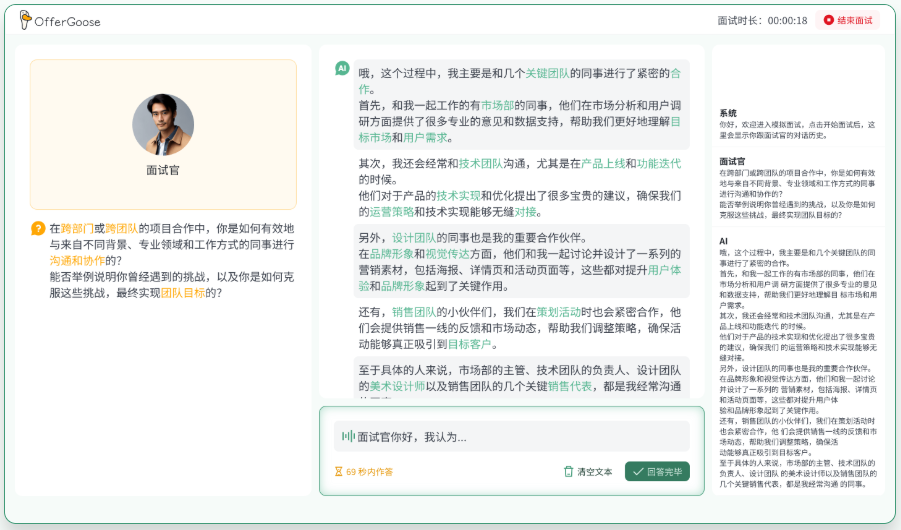
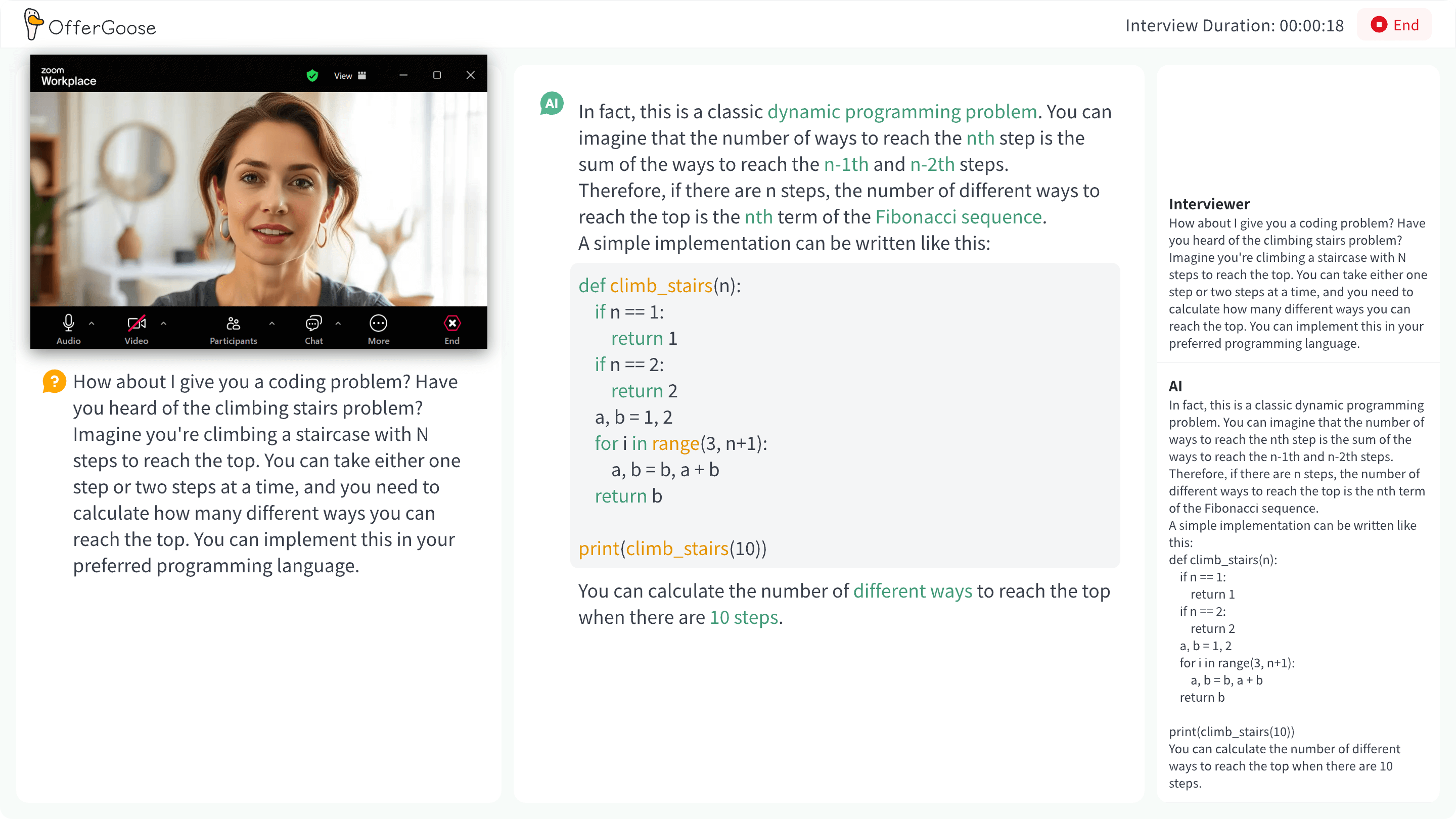
OfferGoose’s AI mock interview system detects STAR-C structure in every response, flags missing dimensions (most commonly the “personal action” and “commercial impact” components), and provides targeted drills for your specific weaknesses. After 8-12 sessions, the framework moves from conscious effort to automatic response — freeing your mental bandwidth for what actually matters: connecting authentically with the interviewer.
Why STAR Is Right — And Why Most People Use It Wrong
STAR is not a template. It is the cognitive framework interviewers use to evaluate you. When listening to your response, the interviewer’s brain runs this program:
- Situation: How difficult was the context? Routine task or real challenge?
- Task: What was your role? Executor or decision-maker?
- Action: What did you do? What capability does this demonstrate?
- Result: What changed because of your action? Is it measurable?
If your response leaves any of these boxes unchecked, the answer is ineffective — regardless of how long or articulate it was.
The Three Most Common STAR Failures
Failure 1: The “We” Trap “We conducted user research, we analyzed the data, we proposed the optimization…” The interviewer hears “we” and cannot attribute any action to you.
Failure 2: The Result Vacuum “The results were pretty good, and users seemed to like it.” Pretty good is not a result. ATS systems scan for numbers and keywords — interviewers do the same.
Failure 3: The Superhero Narrative “I single-handedly handled everything from planning to execution…” When you claim to have done everything, the interviewer cannot identify your core capability.
The Missing C: Why STAR-C Changes Everything
STAR-C adds Commercial Impact — your action did not just complete a task, it created business value. This transforms the narrative from “what I did” to “why what I did mattered.”
A Career-Switcher’s Transformation
A candidate transitioning from operations to product management. Her raw material: organizing a campus music festival.
Before:
I organized a campus music festival in college. I coordinated with student union, administration, and sponsors. I handled the division of work and made sure everything ran smoothly on the day. About 500 people attended, which was pretty good.
After (trained with OfferGoose mock interviews):
In my junior year, I led planning for a campus music festival — my first experience as a “product owner.”
Context: The university capped our budget at 8,000 RMB, but the three external bands we wanted to book cost 12,000 RMB in performance fees alone. Meanwhile, approval required sign-off from three separate departments — any one of which could kill the event.
Actions: First, I split the proposal into three versions — a safety plan for campus security, a content plan for the student affairs office, and an execution plan for the student union. Each version spoke the stakeholder’s language. Security cared about crowd control, so I produced a detailed personnel schedule and emergency protocol. Student affairs cared about impact, so I emphasized the event’s contribution to campus culture. Second, to close the budget gap, I pitched three nearby businesses and secured 5,000 RMB in sponsorship in exchange for on-site branding and booth space. Third, I set up a shared progress tracker where six execution teams updated daily — a method I had taught myself from project management resources.
Results: Over 600 attendees (20% above target). Budget came in at 7,600 RMB — 400 under cap, which we donated to a student charity. The university later listed the event as an annual outstanding campus activity.
My takeaway: This experience crystallized my understanding that driving a project is not about pushing harder — it is about understanding each stakeholder’s concerns and communicating in their language. This is my core understanding of product management: a PM is not someone who builds features; a PM is someone who aligns different stakeholders toward a shared goal.
Why this version works:
- Concrete context (specific numbers, real constraints)
- Verifiable personal actions (not “coordinated” — three named actions)
- Measurable results (attendance, budget, recognition)
- Transferable insight (connects campus experience to professional role)
Building STAR-C Into Muscle Memory
Knowing STAR-C and executing STAR-C under pressure are entirely different challenges. Most candidates who have studied the framework still fall apart in real interviews because the brain defaults to “whatever comes to mind” when cognitive load spikes.
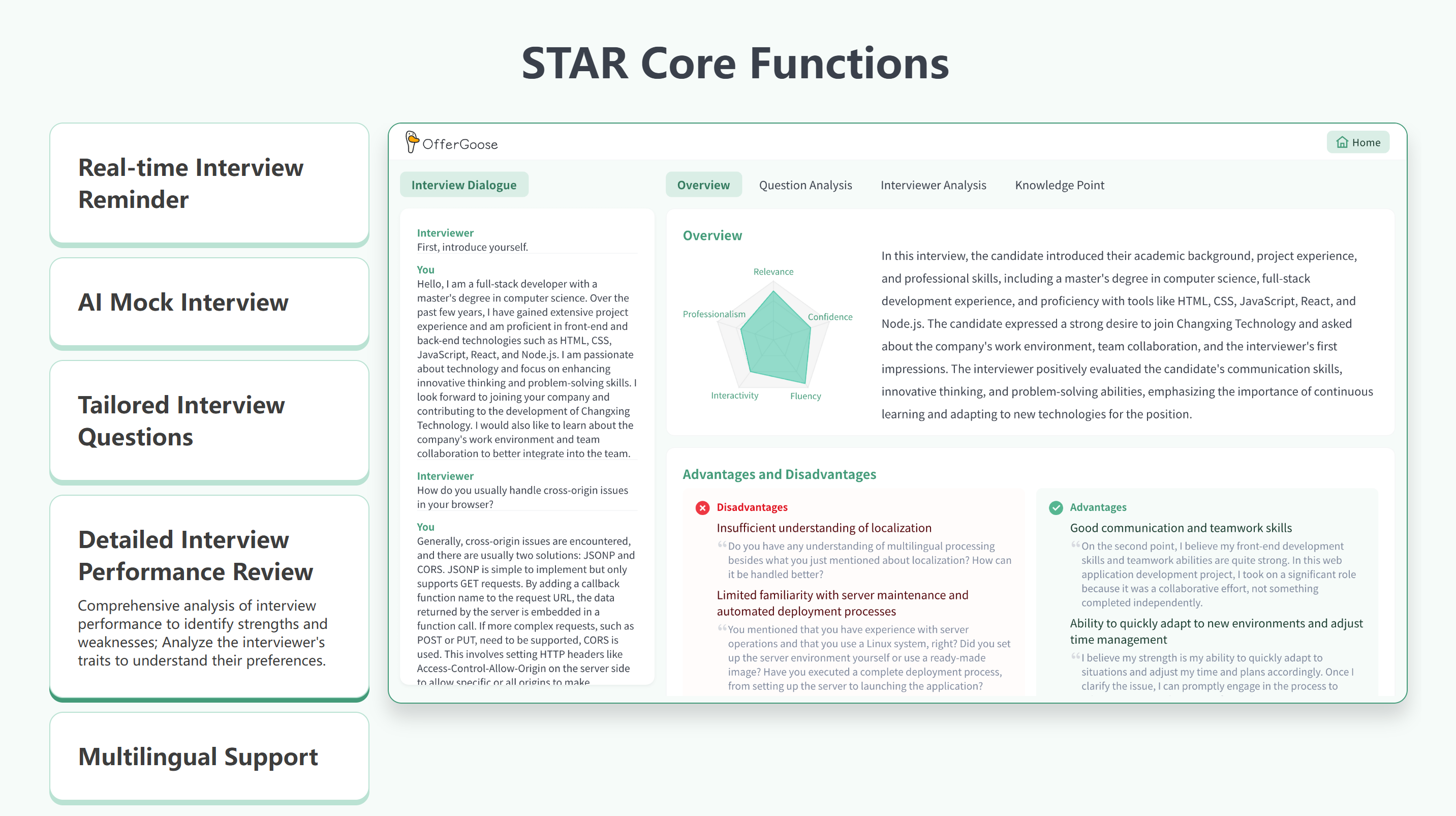
OfferGoose provides three training modes specifically for behavioral interviews:
1. STAR-C structure detection. After each response, the system analyzes coverage across all five dimensions and flags gaps. If your “personal action” dimension consistently scores below 50%, the debrief report marks it as a high-priority improvement area.
2. “We-to-I” training. The system calculates your “we”/“I” ratio across responses. A ratio above 60% “we” signals avoidance of clear personal contribution — a red flag in behavioral interviews.
3. Follow-up pressure simulation. Your first answer is only the beginning. The AI generates targeted follow-ups probing every vague point in your STAR-C: “You mentioned you ‘drove the project forward’ — what specifically did you do?” “The 30% improvement you mentioned — how was that calculated?”
FAQ
General Questions
What is the core difference between STAR and STAR-C?
STAR tells the interviewer what you did. STAR-C tells them why it mattered. The additional dimension transforms your response from a task report into a value statement.
What if my experience feels irrelevant to my target role?
STAR-C becomes even more valuable. The Result and Commercial Impact dimensions are precisely where you demonstrate transferability — you do not need identical experience, you need to show you can produce results and create value.
Questions About OfferGoose
How does OfferGoose evaluate my STAR-C structure?
OfferGoose’s NLP analysis breaks down each response into its component dimensions, measures information density in each, and identifies which dimensions are underdeveloped. The debrief report provides specific examples from your responses with improvement suggestions.
Can I practice for specific behavioral question types?
Yes. OfferGoose generates questions across common behavioral categories — conflict resolution, failure and learning, leadership and influence, problem-solving — with personalized scenarios drawn from your resume and target role.
👉 Try OfferGoose and master behavioral interviews with structured practice