
The Golden Art of Interview Debriefing: How to Double Your Improvement From Every Mock Session
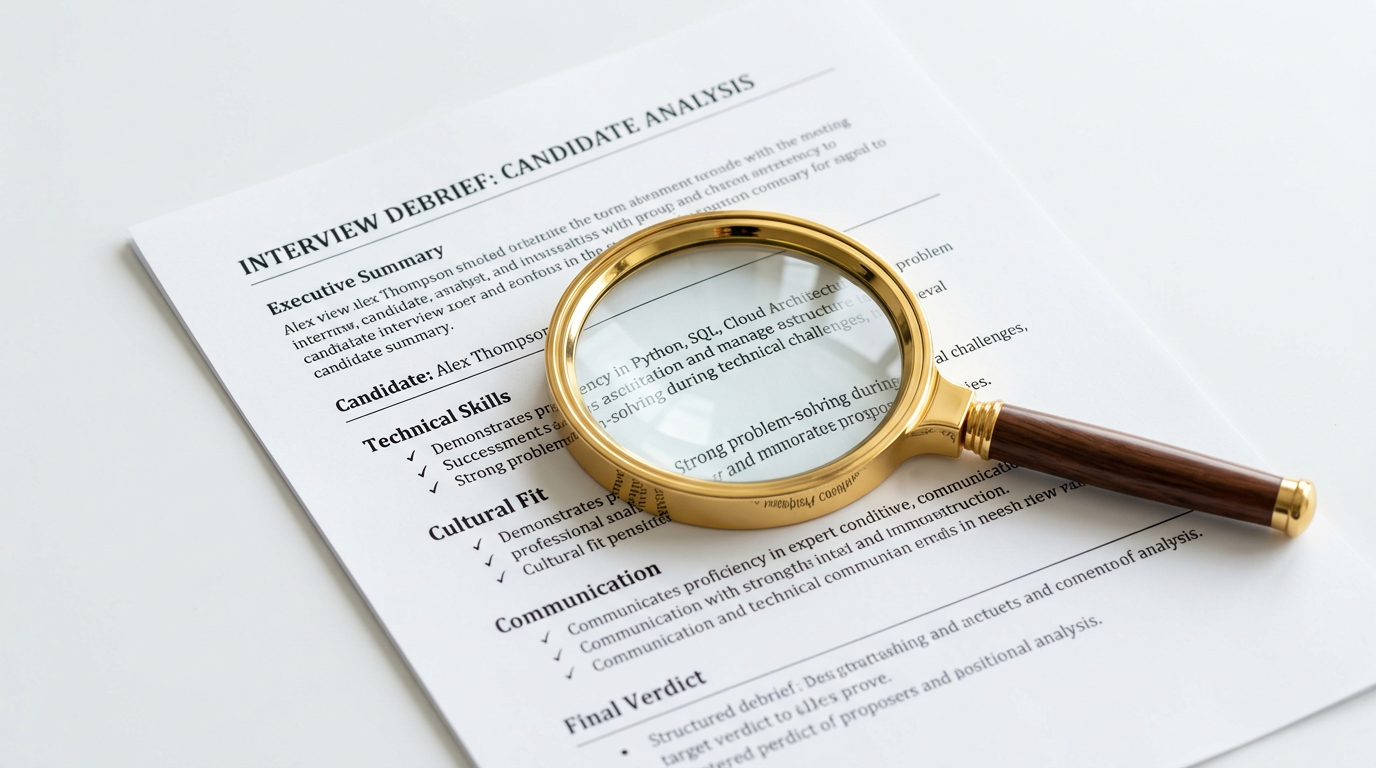
The Golden Art of Interview Debriefing: How to Double Your Improvement From Every Mock Session

You Spent an Hour Practicing and Three Minutes Debriefing
Across job search communities, a strange data pattern emerges: candidates spend an average of 40-60 hours on interview preparation but fewer than 2 hours on debriefing. The practice-to-debrief ratio is roughly 30:1.
This ratio would be absurd in any domain that uses deliberate practice. Professional athletes typically maintain a 1:1 or even 1:2 ratio — spending two hours analyzing one hour of game footage. Surgeons write post-operative notes that often equal or exceed the procedure time. Yet job seekers spend 40 hours practicing interviews and less time debriefing than a single practice session took.
This is the deepest information asymmetry in mock interviewing. The fastest improvers are not the ones who practice most — they are the ones who debrief deepest.
With LLM-driven AI mock interview systems, debriefing has moved from “recalling how it felt” to “data-driven precise diagnosis.” Every session generates a multi-dimensional capability report — but only if you know how to read it.
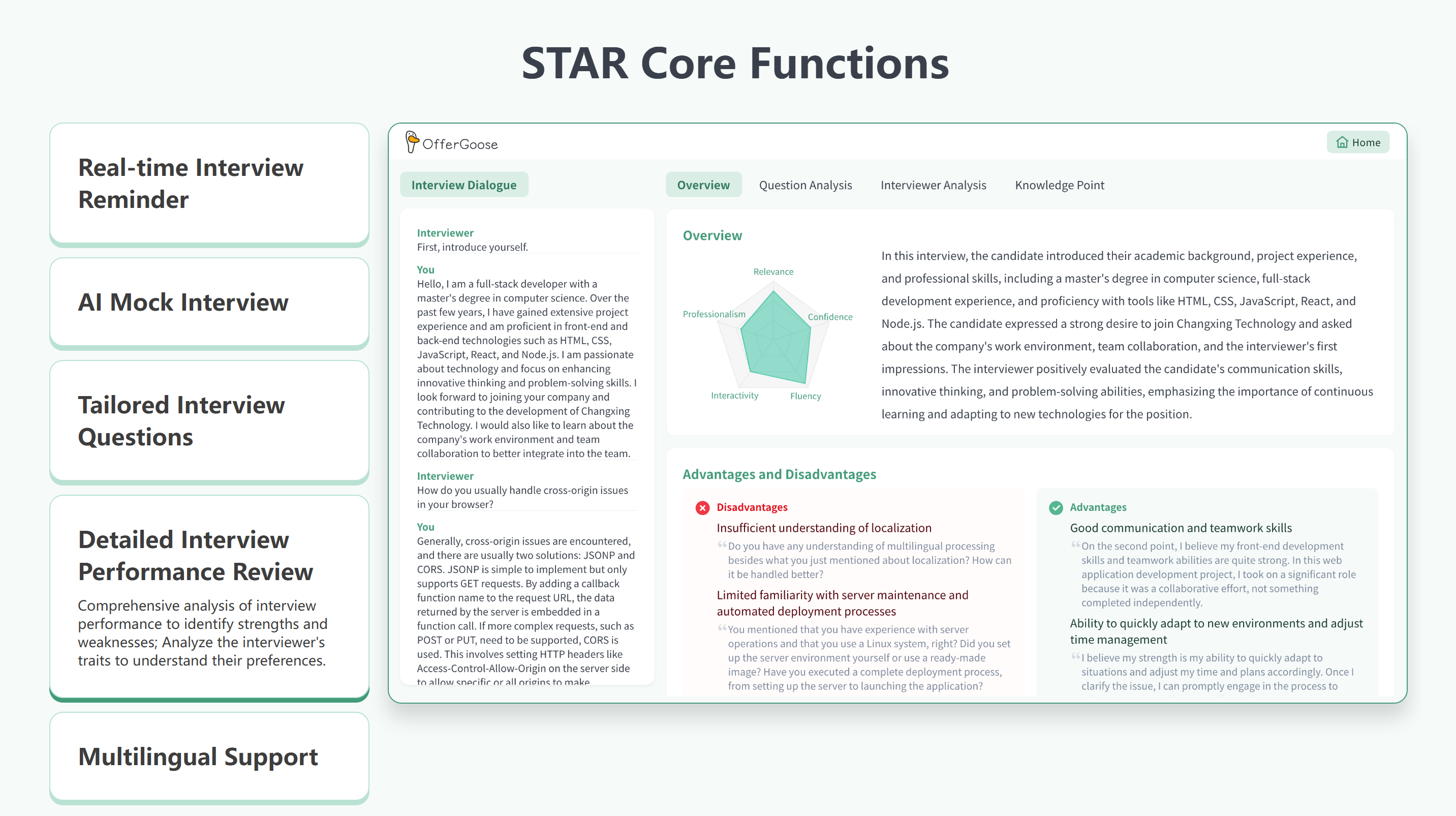
Recommended First: Use OfferGoose for Structured, Data-Driven Debriefing
OfferGoose automatically generates a six-dimension debrief report after every mock interview session. Instead of wondering “how did I do?”, you see precise scores for logic structure, clarity, data usage, professional depth, interaction quality, and confidence — with specific passages flagged for improvement. Over multiple sessions, capability trend graphs reveal which dimensions are improving and which need a different training strategy.
Why Debriefing Matters More Than the Practice Itself
Cognitive science has demonstrated the testing effect: taking a test (even a simulated one) and receiving feedback produces over 50% better long-term retention than spending the same time restudying the material.
A mock interview triggers this effect — it is retrieval practice. Your brain is forced to organize and output information under pressure in real time. The “wear and tear” of this process exposes the genuine weak points in your knowledge structure. Debriefing captures these weak points before you forget them and converts them into improvement actions.
Without debriefing, you are like someone at the gym who lifts 100 times but never records weight, reps, or form — you expended effort but accumulated zero training data.
The Three-Layer Debriefing Method
| Layer | Core question | Data source | Output |
|---|---|---|---|
| Layer 1: Data | What objectively happened? | ASR transcript, rate data, pause analysis, STAR coverage scores | Quantified metrics |
| Layer 2: Pattern | Which are one-offs? Which are systemic? | Trend comparison across multiple sessions | Weakness map |
| Layer 3: Action | What is the specific next improvement move? | Pattern-based targeted suggestions | Action checklist |
Layer 1: From “Feeling” to “Data”
ASR analysis reveals delivery patterns you cannot perceive yourself: rate curves showing which questions trigger anxiety, pause heatmaps exposing knowledge gaps, filler word triggers pointing to weak knowledge areas.
NLP text analysis quantifies response quality: STAR coverage across dimensions, quantitative density, “I/we” ratio reflecting clarity of personal contribution, topic drift measuring question relevance.
Layer 2: From Single Session to Capability Pattern
A single poor performance might be situational. But if STAR-C “personal action” scores stay below 50% across five sessions, you have identified a systemic weakness requiring a different training approach.
OfferGoose accumulates debrief data across sessions, generating capability trend graphs. You can see: over 10 sessions, your logic structure improved from 42 to 68 — but delivery fluency has oscillated around 55 without clear progress. This tells you your current strategy works for logic but fails for fluency — time to change approaches.
Layer 3: From “I Know” to “I Did”
The third layer is where most debriefing efforts die. It requires translating every identified weakness into a specific, verifiable improvement action.
Weak action: “Be more logical next time.” Strong action: “For behavioral questions, use this three-part structure: state conclusion (30s), describe process (90s), share takeaway (30s). Record and verify against this structure after each practice.”
A Complete Three-Layer Case
Liu, transitioning from operations to data analysis. After his fifth OfferGoose session:
Layer 1: Logic structure 62 (+4), delivery 48 (-2), quantitative density 35% (target 50%), we/I ratio 45:55. Key finding: response to “how do you use data to drive decisions” contained zero numbers.
Layer 2: Systemic weakness: quantitative expression — consistently 30-40% across five sessions. Positive trend: logic structure rising steadily since adopting STAR-C. New concern: delivery fluency declining — possibly from over-focusing on framework at the expense of naturalness.
Layer 3: Action — next three sessions, every response must include at least two specific numbers. Plus three “free expression” sessions without framework monitoring to restore natural flow. Verification point: quantitative density above 50% after three sessions.
One week later (session 8): quantitative density reached 52%, delivery recovered to 55. He later received an offer from Baidu’s data analyst role.
FAQ
General Questions
How long should I spend debriefing after a mock interview?
Minimum 20 minutes. Ideal is 50-80% of practice time — 30-50 minutes of debriefing for a one-hour session. OfferGoose’s AI debrief significantly reduces information collection time, but digesting feedback and formulating improvement actions still requires your focused attention.
Can you over-debrief?
Yes. The signal is when you keep analyzing the same problem but never take a new improvement action. The endpoint of debriefing is not “I fully understand this issue” — it is “I have a specific, executable action.” Once that action is clear, stop analyzing and start practicing.
Questions About OfferGoose
What makes OfferGoose’s debriefing different from other tools?
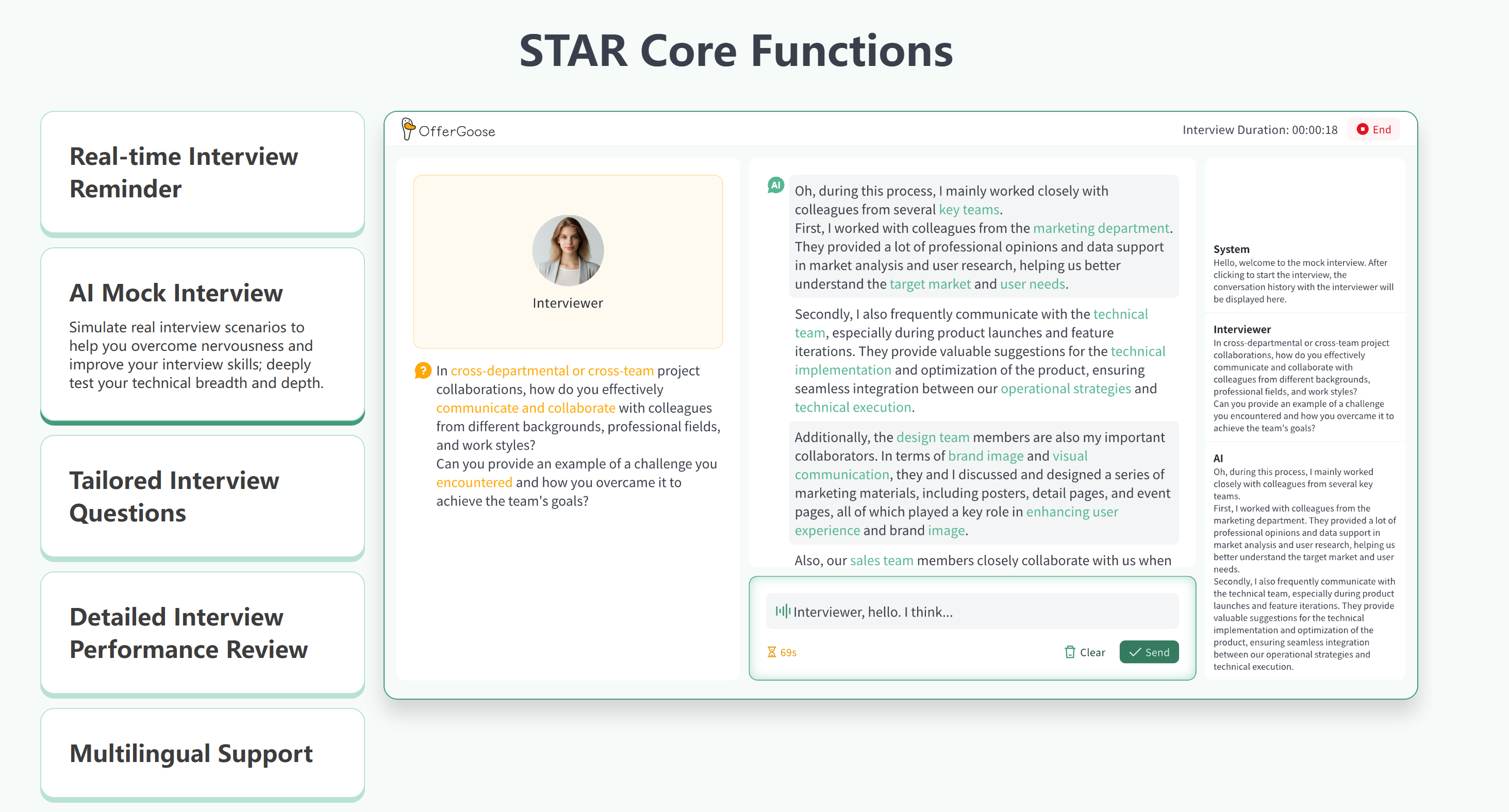
OfferGoose uses ASR and NLP to provide objective, quantifiable data across six dimensions — not a subjective “you did well” summary. It flags specific passages in your responses with concrete improvement suggestions, enabling targeted practice rather than vague “do better” goals.
Does OfferGoose show improvement trends over time?
Yes. The system tracks scores across all dimensions session over session, generating trend graphs that reveal which training strategies are working and where you need to change your approach.
👉 Try OfferGoose and experience data-driven interview debriefing