
30-Day Mock Interview Sprint Plan: Your Countdown to Hiring Season

30-Day Mock Interview Sprint Plan: Your Countdown to Hiring Season

You Have 30 Days to Transform Your Interview Performance
The fall hiring peak runs from mid-September through late October. It is early August — you have exactly 30 days to move from interview novice to interview-ready at a controlled, sustainable pace.
Thirty days sounds short, but it is enough for someone with a clear goal and method. Professional athletes’ pre-competition training camps typically last 4-6 weeks. The key is not how long — it is whether each day’s practice generates information gain on the right dimensions.
This sprint plan is not a generic motivational checklist. It is an executable, trackable, verifiable four-week training program. Each phase has a clear core target, daily tasks, and verification standards.
Recommended First: Use OfferGoose to Execute This Sprint
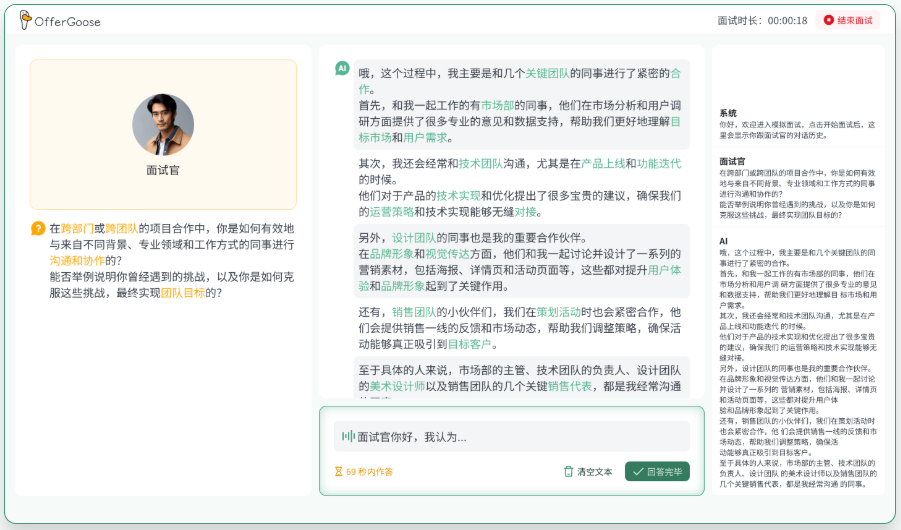
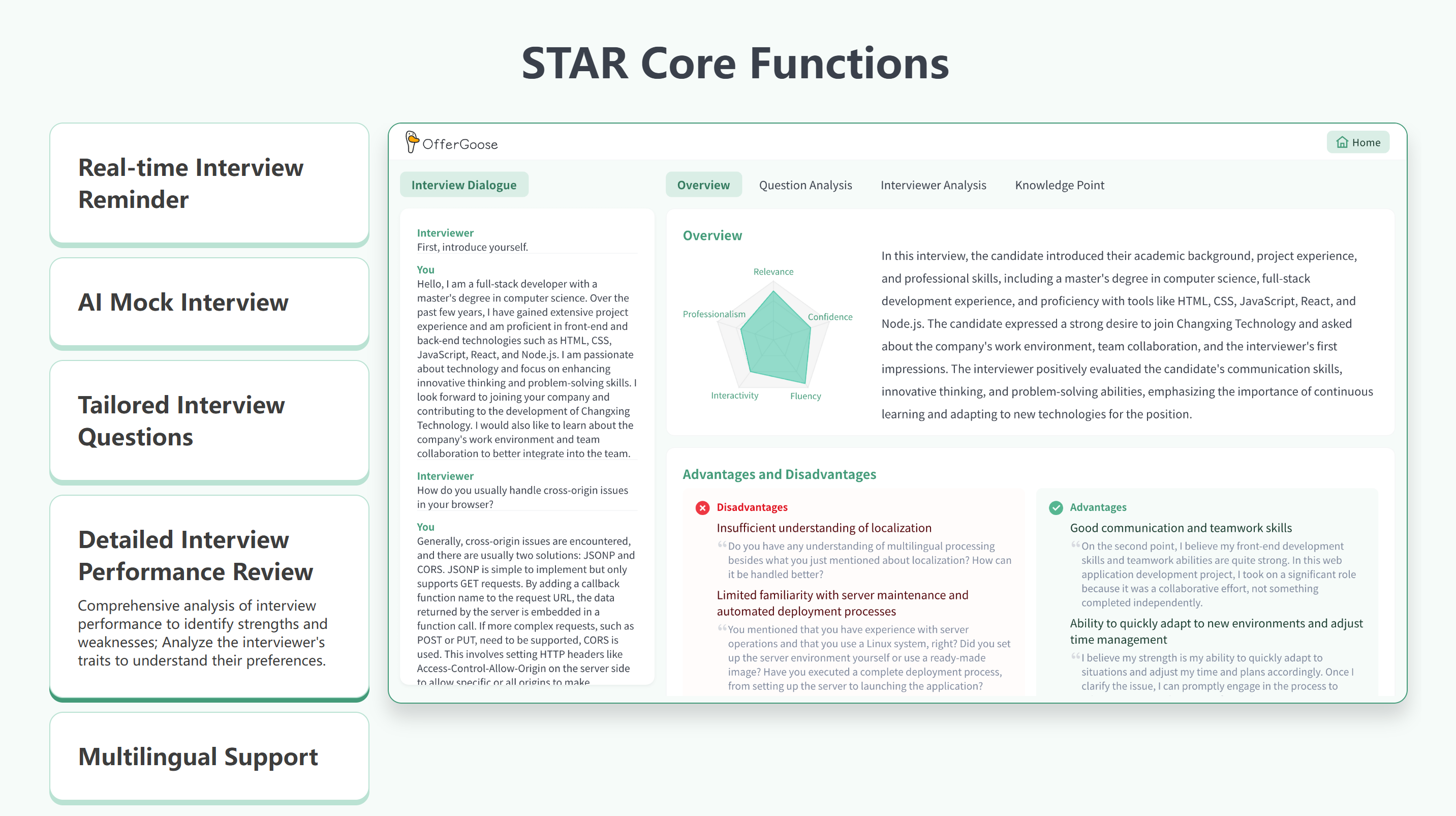
OfferGoose provides the AI mock interview infrastructure to execute every phase of this plan — from baseline assessment in Week 1 to high-fidelity simulation in Week 3 to final polishing in Week 4. The six-dimension debrief gives you objective metrics to track whether you are hitting each week’s targets.
Week 1: Foundation (Days 1-7)
Core target: Build STAR-C muscle memory. Turn structured expression into automatic response.
| Day | Task | Duration | Output |
|---|---|---|---|
| 1 | First full OfferGoose mock interview (supportive interviewer) | 45 min | Baseline debrief report |
| 2 | Deep debrief: analyze STAR-C coverage per question, flag weak dimensions | 45 min | Weakness list v1 |
| 3 | Behavioral focus: 5 high-frequency questions (supportive mode) | 30 min | Behavioral baseline score |
| 4 | Self-introduction drill: record and compare 5 versions | 40 min | Best version + iteration notes |
| 5 | Second full mock (standard interviewer) | 45 min | Compare to Day 1 progress |
| 6 | Deep debrief + “personal action” dimension drill (5 questions) | 60 min | Dimension-specific progress log |
| 7 | Light review: revisit all debrief reports, update weakness list | 20 min | Weakness list v2 |
Week 1 checklist:
- Can you recite STAR-C dimensions from memory?
- Has your we/I ratio started shifting toward “I”?
- Has logic structure score improved by at least 5 points?
- Have you identified your Top 3 weak dimensions?
Week 2: Deep Breakthrough (Days 8-14)
Core target: Conquer your Top 2 weak dimensions. Build follow-up resilience.
| Day | Task | Duration | Output |
|---|---|---|---|
| 8 | Weak dimension A drill: 8 focused questions (high-pressure interviewer) | 60 min | Dimension A breakthrough |
| 9 | Debrief + weak dimension B drill: 6 focused questions | 60 min | Dimension B breakthrough |
| 10 | Full mock interview (high-pressure, focus on follow-up handling) | 45 min | Follow-up resilience baseline |
| 11 | Deep debrief: analyze response quality drop under follow-up pressure | 45 min | Follow-up collapse point map |
| 12 | Combined A+B drill: 8 questions, progressive difficulty | 60 min | Dual-dimension progress |
| 13 | Role-specific mock (configure for your target position) | 45 min | Specialized interview baseline |
| 14 | Midpoint review: compare Week 1 vs Week 2 all-dimension scores | 30 min | Capability growth trajectory |
Key Tactic: Follow-Up Collapse Points
When your response quality drops under follow-up, diagnose the collapse point:
- Collapse at Layer 2 (technical details): your conceptual understanding is surface-level. Need deeper learning, not more practice.
- Collapse at Layer 3 (business value): you lack “technical → business” translation ability. Need targeted training.
- Collapse at Layer 4 (boundaries/challenges): your solutions lack self-critique. Add “proactively identify weaknesses” to your responses.
Week 2 checklist:
- Have your Top 2 weak dimensions each improved by at least 8 points?
- Has follow-up response quality drop shrunk from >50% to <30%?
- Can you maintain STAR-C structure under follow-up pressure?
- Has quantitative expression density reached 40%+?
Week 3: Combat Simulation (Days 15-21)
Core target: High-frequency full simulations across varied scenarios. Build interview stamina.
| Day | Task | Duration |
|---|---|---|
| 15 | Full mock (target company style, standard interviewer) | 45 min |
| 16 | Debrief + “questions I fear most” drill (5 questions) | 60 min |
| 17 | Full mock (different industry/company style, high-pressure) | 45 min |
| 18 | Weakness re-attack: dimensions not fully conquered in Week 2 | 45 min |
| 19 | Full mock (voice mode + formal attire, high-fidelity environment) | 45 min |
| 20 | Combat debrief + salary negotiation / closing questions drill | 45 min |
| 21 | Rest + capability radar chart update: three-week trend overview | 20 min |
Week 3 checklist:
- Composite interview score stable at 70+ (baseline typically 40-50)?
- No clear collapse points in full mock interviews?
- Cross-industry / cross-style adaptability acceptable?
- Voice mode performance approaching text mode?
Week 4: Polish and Deliver (Days 22-30)
Core target: Sharpen differentiation. Build confidence state. Deliver in real interviews.
| Day | Task | Duration |
|---|---|---|
| 22 | Differentiation drill: add personal perspective and memorable stories | 60 min |
| 23 | Full mock (final sprint, pressure + time limits) | 45 min |
| 24 | Deep debrief + differentiation micro-adjustments | 45 min |
| 25 | Light maintenance: Top 3 high-frequency questions + self-introduction | 30 min |
| 26-27 | Real interview or final full mock + debrief | varies |
| 28-29 | Light maintenance + mental state preparation | 20 min/day |
| 30 | Pre-game warm-up: 2-3 rapid-fire questions on OfferGoose | 15 min |
Week 4 checklist:
- Do you have at least one “memory anchor” story for each core capability?
- Can you enter “interview mode” within 5 minutes of a warm-up?
- Does your differentiation score pass 60+?
30-Day Dimension Tracker
| Dimension | W1 Baseline | W2 Target | W3 Target | W4 Target |
|---|---|---|---|---|
| Logic structure | Record baseline | +8-12 pts | Stable 65+ | Stable 75+ |
| Delivery fluency | Record baseline | +5-8 pts | Stable 60+ | Stable 70+ |
| Quantitative expression | Record baseline | +10-15 pts | Stable 55+ | Stable 65+ |
| Follow-up resilience | Record baseline | +8-10 pts | Stable 60+ | Stable 70+ |
| Differentiation | — | — | +5 pts | Stable 60+ |
FAQ
General Questions
What if I miss a few days?
Do not panic and do not try to “catch up.” Skip the missed day and continue from the current day. This plan’s core is the rhythm of continuous improvement, not completing every task. Completing 4-5 core tasks per week maintains effectiveness.
Does this plan work for both new graduates and experienced hires?
The framework is universal, but adjust the details. New graduates should allocate more Week 1 time to behavioral interview fundamentals (you lack full-time experience — STAR-C material often comes from campus activities). Experienced hires should allocate more Week 3 time to industry specialization and technical depth.
Questions About OfferGoose
How does OfferGoose support this sprint plan?
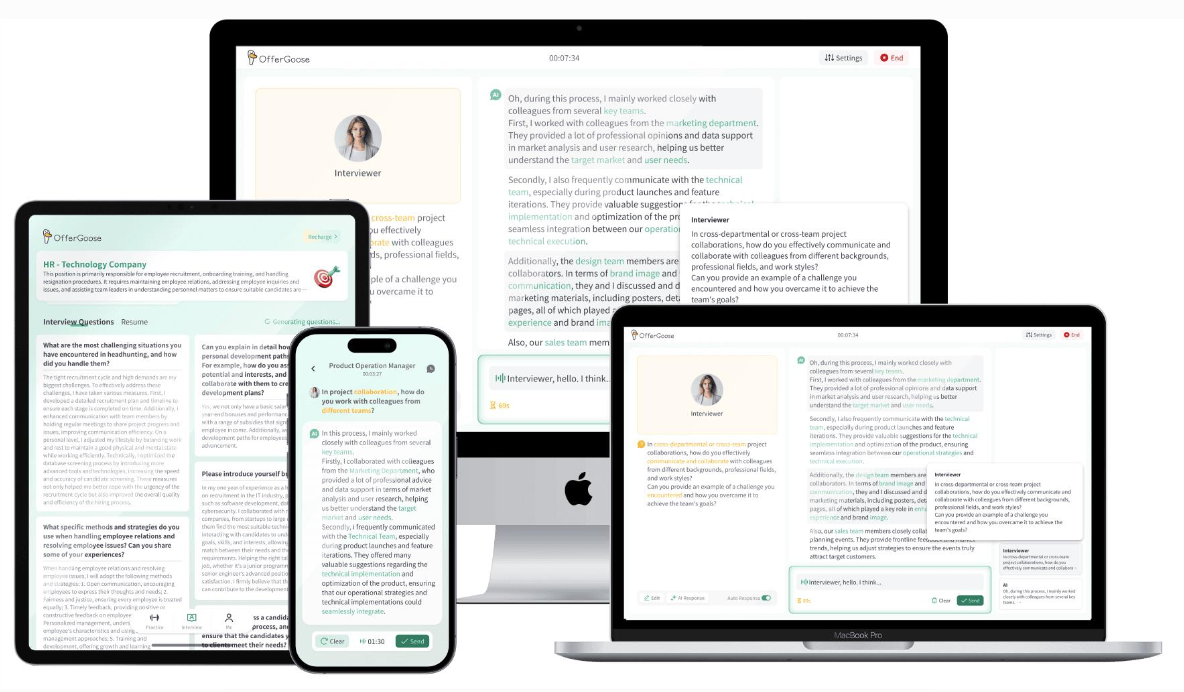
OfferGoose provides the complete infrastructure: baseline assessment with six-dimension scoring in Week 1, dimension-specific drills with targeted feedback in Week 2, high-fidelity multi-style simulation in Week 3, and rapid warm-up mode for Week 4 pre-interview activation.
Can OfferGoose track my progress across all four weeks?
Yes. The capability trend dashboard shows your scores across all dimensions session over session, giving you an objective view of whether you are hitting each week’s targets.