
3-Day Interview Emergency Rescue: How to Rapidly Improve Your Performance With AI
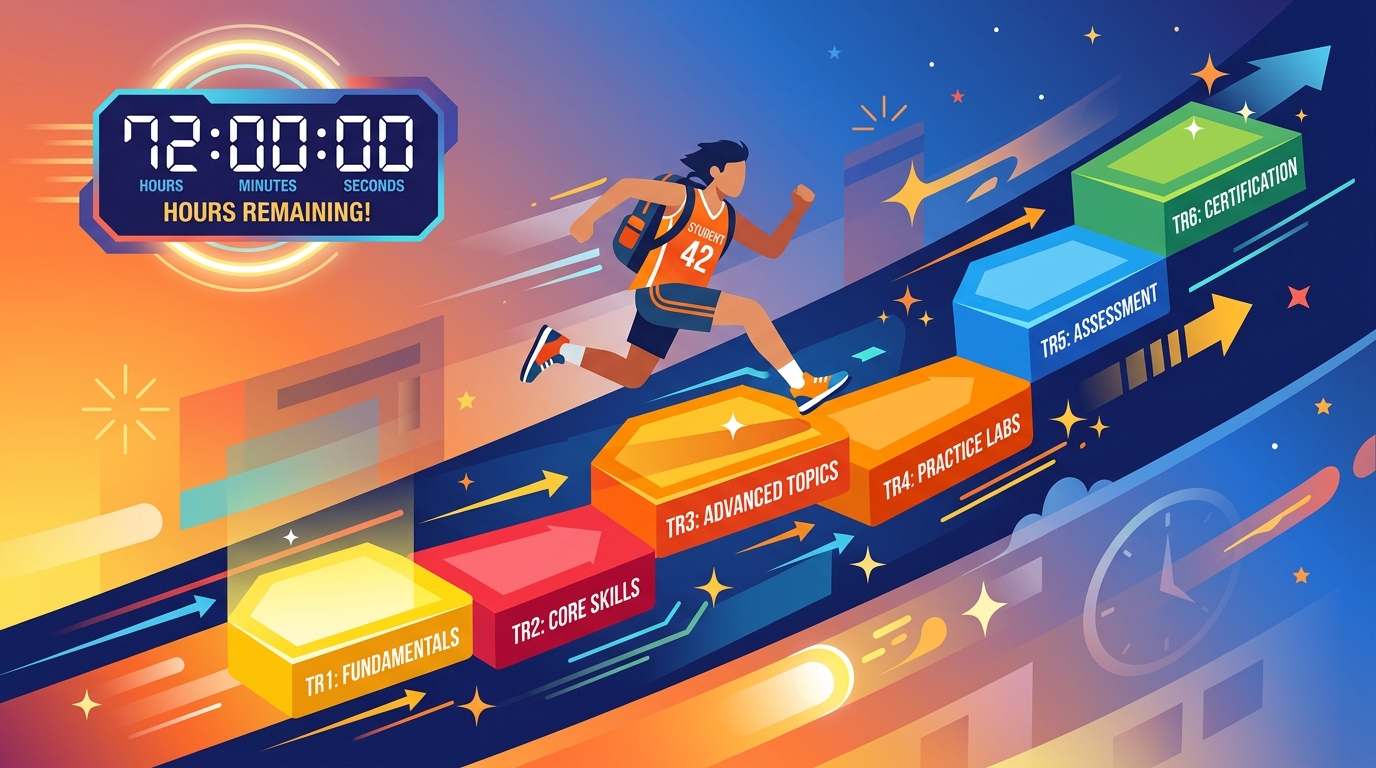
3-Day Interview Emergency Rescue: How to Rapidly Improve Your Performance With AI

You just got an interview notice—and you’ve barely prepared. Don’t panic.
The most heart-racing moment of summer break? Not seeing someone else’s offer announcement. Not the fall recruiting countdown. It’s the phone buzz and email notification: “Congratulations, you’ve passed resume screening. Please attend your interview in 3 days…”
You stare at the screen. Your internal monologue cycles through: finally an interview → wait, I haven’t prepared anything → oh no, only 3 days → maybe I should ask HR to reschedule…
Stop. Breathe.
Three days is tight, but it’s not impossible. With the right method, 3 days is enough to go from “unprepared disaster” to “functional candidate.” And the core weapon in this emergency guide is OfferGoose’s AI mock interview.
Recommended First: OfferGoose for Maximum Efficiency in Minimum Time
When every hour counts, OfferGoose’s AI mock interview delivers what traditional prep can’t: instant availability, structured diagnostics to find your fatal weaknesses fast, and targeted practice on exactly what matters most—all without wasting a single minute on scheduling or low-yield activities.
3-day emergency plan overview
Before diving into specifics, understand the key concept: a 3-day emergency goal isn’t “perfect performance”—it’s “avoiding catastrophic mistakes.” Most candidates eliminated in first rounds aren’t eliminated for “not being good enough”—they’re eliminated for “making serious but avoidable errors”: freezing on self-introduction, answering project questions incoherently, exposing fatal weaknesses in behavioral interviews.
Your 3-day goal is clear: eliminate the low-score items, stabilize at the passing line.
3-day time allocation
| Day | Core Task | AI Mock Interview Volume |
|---|---|---|
| Day 1 | Emergency diagnosis + self-introduction to 80% | 2-3 diagnostic rounds |
| Day 2 | Project/technical core breakthrough + behavioral safety net | 3-4 targeted rounds |
| Day 3 | Full simulation + mindset calibration | 2 full simulation rounds |
Day 1: Emergency diagnosis + self-introduction rescue
Morning (2 hours): 3 rapid diagnostic rounds
Don’t read books. Don’t memorize questions. Don’t browse interview guides. You don’t have time for low-efficiency activities. Jump straight into 3 rapid diagnostic rounds with OfferGoose:
Round 1 (30 min): Full interview mode, normal difficulty. Let the AI interviewer run a complete flow and get your baseline assessment report. The goal isn’t performing well—it’s exposing problems.
Round 2 (20 min): Project deep-dive mode. For the 1-2 most important projects on your resume, let the AI interviewer press deep. This round exposes the most fatal logical gaps in your project descriptions.
Round 3 (15 min): Behavioral interview mode, random topics. Quickly detect your structural deficiencies in STAR (Situation-Task-Action-Result) expression.
After all 3 rounds, spend 30 minutes carefully reading all 3 review reports. Highlight the one problem that appears repeatedly across all reports—this is your “fatal weakness.” With only 3 days, you can only attack this one.
Afternoon (2 hours): Self-introduction from 0 to 80%
Self-introduction is the most important first-round element and the easiest to rapidly improve. Why? Because it’s the only segment you can 100% prepare in advance.
3-day emergency self-introduction formula (1.5-minute version):
- Who I am (15 sec): name + school + major + career direction
- What I can do (45 sec): 2-3 core competencies directly relevant to the role, each backed by one specific piece of evidence
- Why I’m here (30 sec): specific interest in the role/company/industry + what value you bring
Write it, then practice at least 10 times with OfferGoose. Review reports will help optimize duration, fluency, and emphasis. Goal: by end of Day 1, you can deliver a structured 1.5-minute self-introduction fluently without any prompts.
Day 2: Core breakthrough + behavioral safety net
Morning (2.5 hours): Project/technical core breakthrough
From Day 1’s diagnosis, you know your “fatal weakness”—now attack it with full force.
If project descriptions are unclear: Pick your single most important project, deconstruct it into 4 STAR paragraphs, write 3-5 sentences per paragraph. Then drill it repeatedly in OfferGoose’s project deep-dive mode—the AI interviewer will ask about the same project from different angles, and you need to reach the point where no matter which angle the question comes from, you can rapidly retrieve the corresponding STAR framework information.
If technical fundamentals are weak: Don’t try to learn everything in 2 hours. Pick the 3 most critical technical concepts for this role and practice them specifically in AI mock interviews—not “memorizing definitions,” but practicing “explaining technical concepts clearly in your own words.” The Large Language Model (LLM)-powered AI interviewer evaluates the balance between “concept accuracy” and “expression clarity” in your responses.
Afternoon (2 hours): Behavioral interview safety net
Behavioral interviews are the highest-frequency “crash zone” for students in first rounds. Three days won’t make you “shine” in behavioral interviews—but it can make you “not fail.”
Extreme safety net strategy: Prepare 3 “universal cases” covering:
- Teamwork (covers leadership, collaboration, conflict resolution)
- Problem-solving (covers analytical ability, innovative thinking, pressure handling)
- Self-growth (covers learning ability, failure reflection, goal-driven behavior)
Structure each case into 5-8 sentences using the STAR framework. Then drill them with OfferGoose’s behavioral interview mode until these 3 cases become muscle memory—no matter what behavioral question the AI interviewer asks, you can naturally steer toward one of your prepared cases.
Key technique: don’t bluntly say “this question reminds me of an example…"—instead, use the question’s keywords to transition naturally. “How do you handle failure?” → “In a project, we ran into an unexpected challenge…” “How do you lead a team?” → “During a team assignment, I noticed our direction wasn’t aligned…”
Day 3: Full simulation + mindset calibration
Morning (1.5 hours): 2 complete simulation rounds
Run 2 complete interview simulations with OfferGoose—exactly matching real interview rhythm:
- “Arrive” 5 minutes early (open the page, organize your desk, prepare water)
- No pausing, no restarting throughout
- Wear what you’ll wear on interview day (this helps your brain enter “interview mode”)
After round 1, review the report, flag remaining weak spots. Rest 15 minutes, quickly devise counter-strategies for those weak spots, then start round 2.
The value of 2 complete simulations: making the interview scenario feel “familiar.” When something becomes familiar, your cognitive load drops significantly. Three days ago, the interview was “unknown terror.” After intensive simulation, it’s “known challenge”—and that mindset shift alone is combat power.
Afternoon (1 hour): Light review + mindset building
No more high-intensity training. Light activities:
- Quick self-introduction run-through in OfferGoose (confirm complete fluency)
- Glance at keywords for your 3 universal behavioral cases (not memorizing full texts, just confirming memory cues)
- Browse the target company’s website and latest updates (prepare material for “why us”)
Then—stop. No more practice. Over-training until the last moment only exhausts you. What you need is to walk into that interview room with full energy and clear thinking.
Evening: sleep is your number one performance enhancer
The night before the interview, do nothing related to preparation. Watch a light movie, take a warm bath, be in bed by 11 PM. Interview performance is highly positively correlated with the previous night’s sleep quality—this isn’t superstition, it’s cognitive neuroscience: sleep deprivation significantly impairs prefrontal cortex function, directly affecting logical thinking and language organization.
3-day emergency “forbidden list”
When time is tight, these behaviors are fatal:
- ❌ Trying to “systematically learn” from scratch: 3 days can’t complete a course or a question bank. Abandon the fantasy of “comprehensive preparation”
- ❌ Frantically browsing interview guides and question banks: Reading ≠ practice. Practicing 10 questions aloud beats reading 100 questions silently
- ❌ Asking multiple friends for mock interviews: Different people’s conflicting feedback creates confusion. Focus on the consistent, structured feedback from AI mock interviews
- ❌ Staying up late preparing: Interview performance = ability × condition. Late nights directly destroy condition—a net loss
From “emergency rescue” to “routine preparation”: a reflection
This emergency guide is extreme last-minute triage. It can pull you from “disaster” to “passing,” but not from “passing” to “excellent.”
If you’re reading this and your interview isn’t in 3 days—congratulations, you still have time. Stretch this 3-day emergency plan into a 3-week progressive training plan, and results improve 5x.
If you are the person with an interview in 3 days—don’t regret not starting earlier. Focus your energy on what you can do in the next 72 hours. Under the human-AI collaboration framework, OfferGoose’s AI mock interview provides the most effective help possible in extreme time constraints.
Try OfferGoose’s AI mock interview feature now and start your emergency training.
FAQ
General Questions
Is 3 days really enough? Other people prepare for months.
Three days and three months have different goals. Someone preparing for 3 months aims to “stand out among all candidates.” Your 3-day goal is “reach baseline competence and avoid elimination by obvious mistakes.” The latter is achievable—provided you precisely attack the few highest-leverage scoring points (self-introduction, core project description, behavioral interview safety).
What if my fatal weakness is technical depth? Can 3 days fix that?
No. Technical depth is a long-term accumulation; 3 days won’t create a qualitative change. But what you can do: avoid exposing your weakness during the technical interview. Strategy: prepare 2-3 “redirection responses.” When asked about something you’re weak on, honestly say “my experience in that area focuses mainly on X, though I do have some practice in Y…” and steer the interviewer toward your strengths. This isn’t deception—it’s reasonable interview communication strategy.
Questions About OfferGoose
What’s the irreplaceable advantage of AI mock interviews in emergency situations?
Three words: immediate availability. No scheduling, no waiting for responses, no accommodating anyone else’s calendar. Open and practice. Practice and get feedback. In a 72-hour countdown, every minute is precious—AI mock interviews let you spend 100% of your time on effective training.
What if I still fail after 3 days?
One failed interview isn’t the end—it’s not even necessarily bad. Treat it as a “stress test”—through AI mock interview emergency training, you’ve now discovered what your real interview weakness is (3 days isn’t enough to see all problems, but enough to see the most fatal one). Save this round’s review reports as the starting point for your next long-term training cycle.