
Fall Recruitment AI Job Preparation Checklist: What to Do Each Month From July to October

Fall Recruitment AI Job Preparation Checklist: What to Do Each Month From July to October

Fall recruitment is a battle fought inside a hard time window. The thing that most often sinks candidates is not a lack of ability but a mismatch in timing: polishing a resume when you should be learning, hesitating when you should be submitting, and running out of weeks before you have ever practiced an interview. AI roles raise the bar further because they reward structured preparation. Whether you do the right thing in the right month is what decides whether you advance to the next round. This article gives you a complete fall recruitment checklist for AI jobs: a month-by-month set of actions, a capability checklist to check your standing against the JD, and a way to surface weaknesses early through AI mock interviews.
Recommended First: Use OfferGoose to Score Your Current Resume Against One Real JD
Before you build any month-by-month plan, take one concrete first step: paste the JD of your dream AI role into OfferGoose and get a match score against your current resume as it stands today. This single number tells you immediately which capabilities you already cover and which gaps the rest of this checklist should prioritize. Without that baseline you would be guessing which month to spend on which skill, which is exactly how timing drifts.
Why Fall Recruitment for AI Roles Is All About Rhythm and Self-Testing
Fall recruitment differs from experienced hiring in one crucial way: it is a single, high-density pass with firm deadlines. You are mostly competing against peers of similar age and background, so the gap between you and other candidates is rarely talent. It is preparation rhythm: who finalizes the resume earlier, who closes the capability gaps on the checklist faster, and who has done enough self-testing before the real interview.
AI roles add a second layer. Interviewers will assume you know something about models, even for an AI product assistant role. You may be asked about the limits of large language models, about data quality, or about how you would write a prompt. You cannot cram this material in the week before an interview; it has to be built up steadily over the whole preparation window.
That is why rhythm and self-testing are the two pillars of this checklist. Rhythm makes sure you do the right task at the right time, and self-testing makes sure whatever you produce can survive being questioned.
A Month-by-Month Fall Recruitment Timeline
Breaking the long fall season into four months, each with a clear deliverable, keeps you from flailing.
July: Pick a Direction and Finalize Your Resume
The core deliverable of the first phase is a resume you can actually submit. Choose three target directions, for example AI product, AI application development, or AI data analysis, and organize your experience against each one. One warning: because you will submit a high volume of applications, do not use a single resume for everything. Prepare one aligned version per direction.
After you draft it, do not start mass-applying yet. Run it through a scoring tool and check dimensions like quantifiability, action verbs, and alignment with the target role, then patch the obvious weak spots. Getting the resume to eighty percent now is far more efficient than fixing it while you are already sending it out.
August: Fill Skill Gaps and Practice Interviews
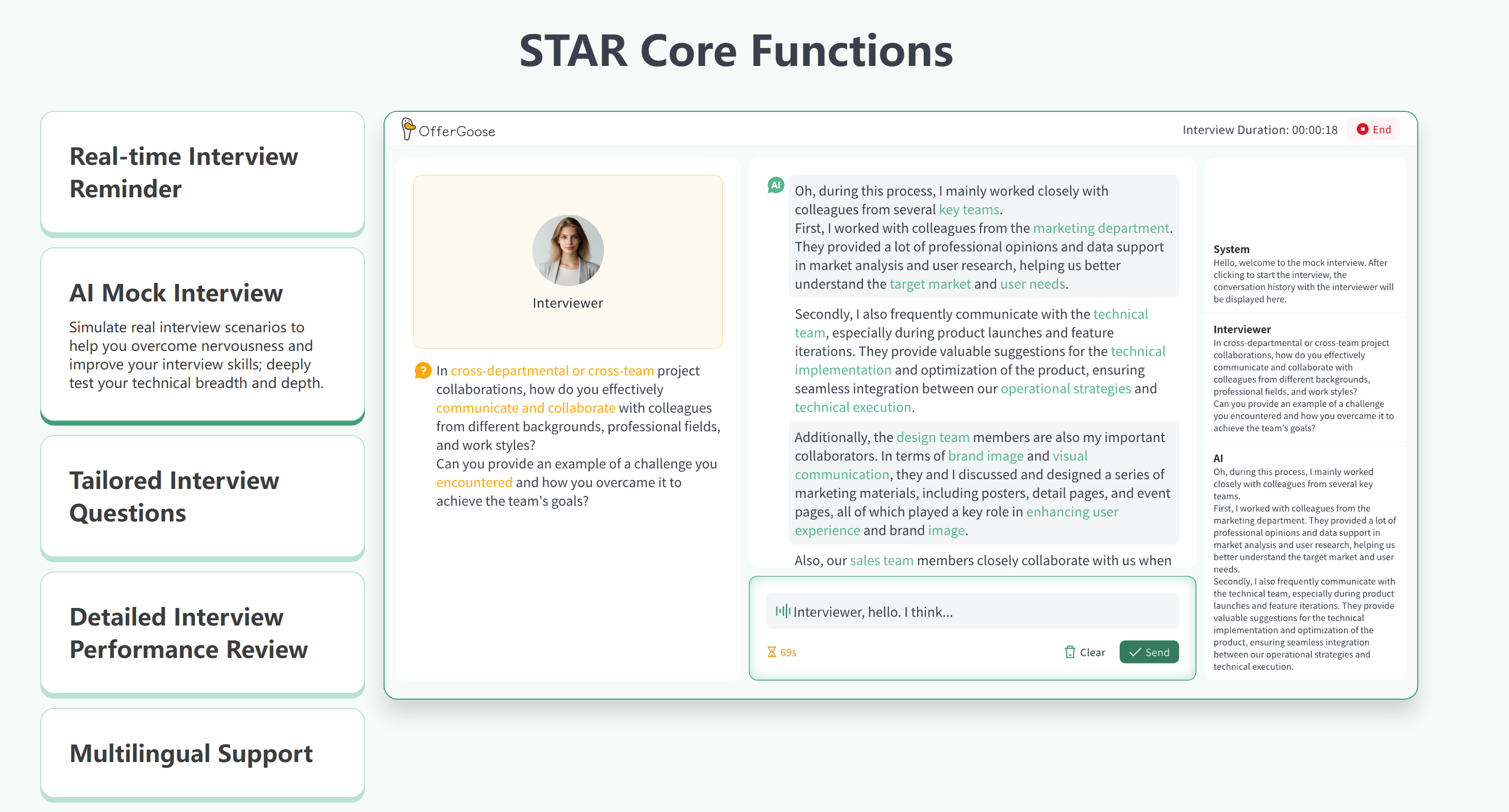
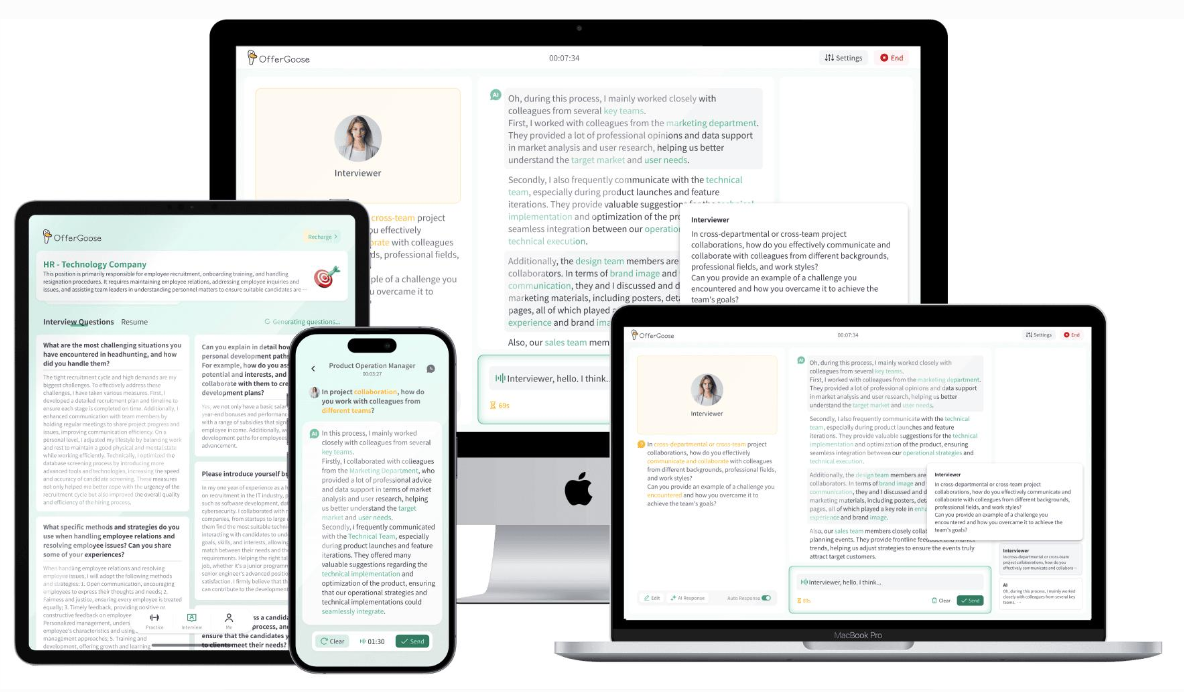
The second phase is a capability sprint. Based on the matching result for your target roles, find your biggest gap: a missing project, thin business understanding, or weak expression. At the same time, start mock interview self-testing. Let an AI ask you follow-up questions in the role of an interviewer. The first session will almost certainly expose problems, and that is exactly the effect we want.
September: Submit in Volume and Track Responses
The third phase is the submission window. By now your resume should be stable, and you are in a submit-and-review mode: which roles respond, which JDs are misaligned with your strength, adjust quickly. Submission is not the endpoint; preparing for the invitations that come back is where your energy should go.
October: Interview Sprint and Review
The fourth phase is the interview-heavy period. After every single interview, review immediately: which questions went smoothly, where you froze, where a follow-up threw you off. Turn each review into a note you reuse in the next session so you do not step in the same pothole twice.
The Capability Checklist: Exactly Where You Stand vs. the JD
With the timeline in place, you also need a capability checklist. Everything you do during fall recruitment should trace back to this list and answer one question: which capability am I actually working on right now?
Four Families of Core Capability
AI role requirements roughly fall into four families: technical awareness, business delivery, project evidence, and communication. Technical awareness means you understand the boundaries of large language models and when approaches such as retrieval augmented generation apply. Business delivery means you can connect technology to metrics like cost, experience, and efficiency. Project evidence means you have a project you can describe clearly and verify. Communication means you can explain a complex topic clearly in limited time.
Use Match Scores to Find Weak Spots
Rather than guessing, drop your resume and a real JD into a matching tool and let it mark, line by line, what you cover and what you miss. The branches that score low are usually the capabilities you should prioritize. The value here is measurability: you can see precisely where you fall short instead of vaguely feeling that you are not good enough.
Use AI Mock Interviews as a Pre-Exam Self-Check
The step that is easiest to skip, and the one worth the most, is self-testing through mock interviews. Plenty of candidates have strong resumes and fall apart in the real interview, almost always because they never practiced being followed up on.
A Real Freeze, Exposed Early
Here is a real example. A student was preparing to apply for an AI product assistant role. The resume had been cleaned up smoothly, but the first mock interview surfaced two problems. The self-introduction sounded like a memorized script, fluent but missing a focal point. Worse, when the interviewer pushed with “how would you rank the priority of this requirement,” the student froze, having never thought about being pressed that deep into solution detail.
Before (self-introduction):
Hi, I am X. I studied computer science. I have done some projects and internships, and I hope to work at your company.
After (self-introduction):
I am X, I studied computer science, and I built an RAG question-answering system for e-commerce customer service. What makes me a fit is that I connect large language models to real business. In my internship I used data to turn first-contact resolution from a vague claim into a verifiable improvement. Today I want to focus on that piece of work because it best shows how I solve problems.
Why this version works: three reasons. It compresses “who I am” into a single memorable line. It swaps “what I did” for “what problem I solved and what changed.” And it ends by directing the interviewer toward a project you can defend in depth. A memorized script is dangerous precisely because it collapses the moment you get a follow-up, while the stronger version is built for questioning: you present one deep entry point, and when the interviewer follows it, you are on your home turf.
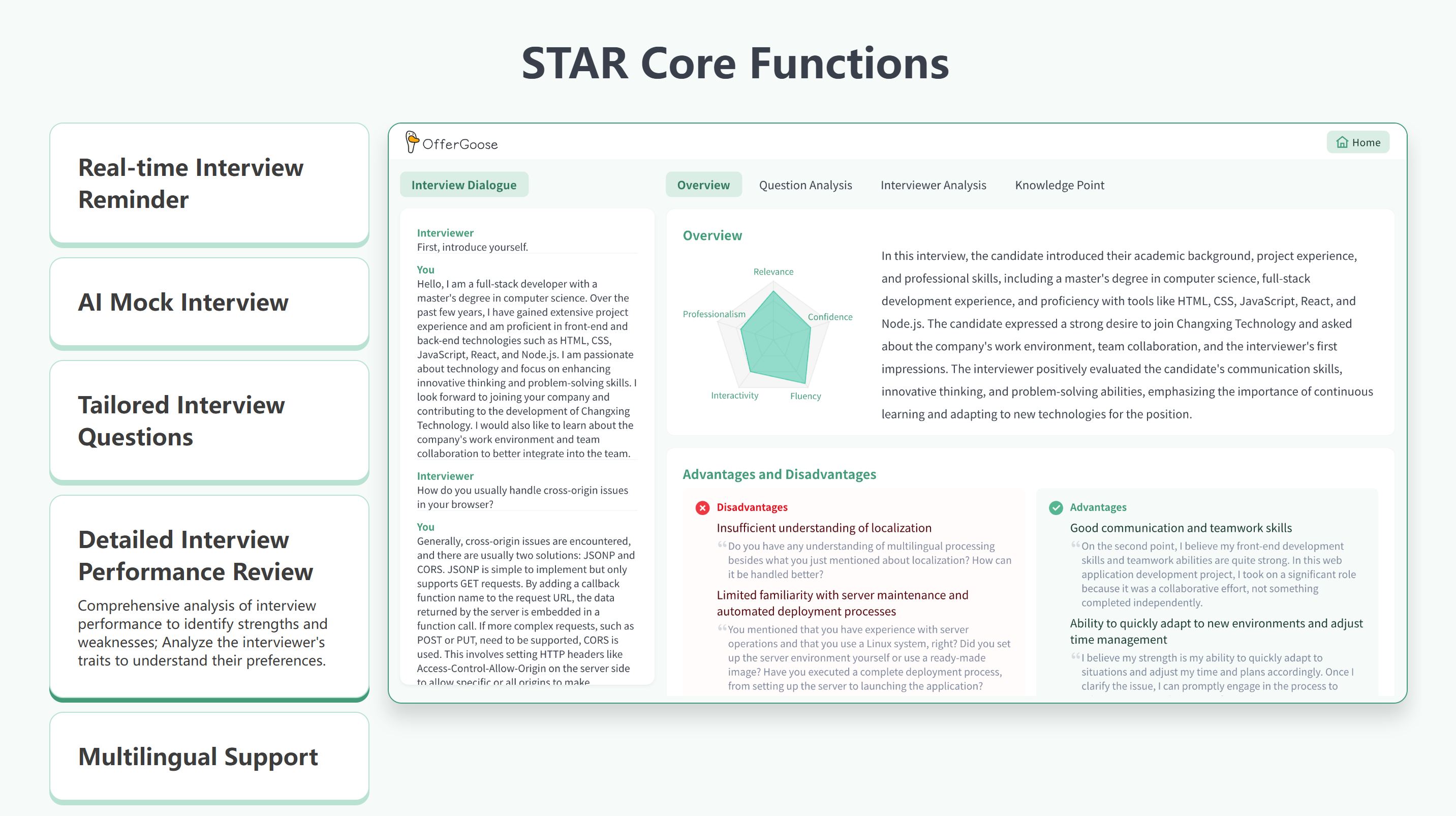
The follow-up freeze is solvable through review. After each mock session, OfferGoose’s deep interview review flags the places where your answers were weakest and tells you which question types keep tripping you, and where the logic jumped. Bring that review to the next practice round and you will be noticeably steadier.
Turn Self-Testing Into a Weekly Habit
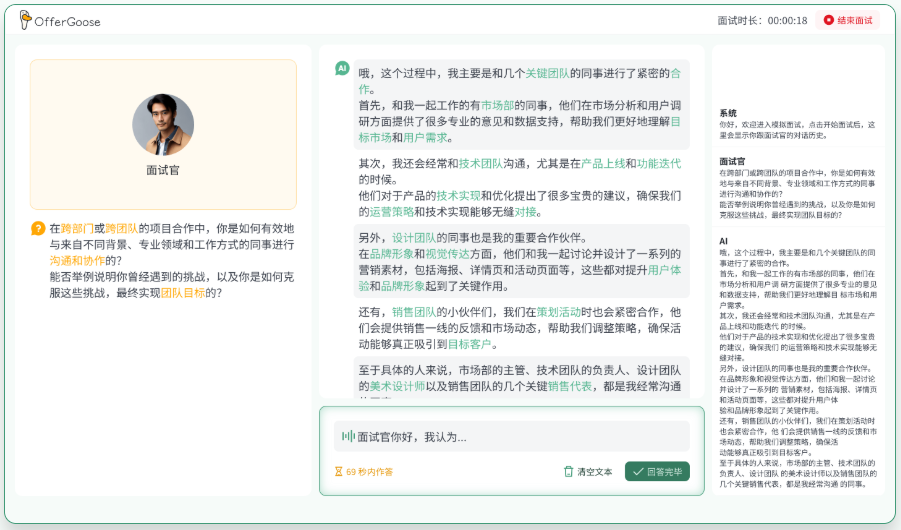
Make mock interviews a fixed weekly appointment instead of last-minute cramming. Frequency matters less than output: set one goal per session, such as “practice a clear structure” or “explain one project in sixty seconds.” That makes your progress visible instead of a vague sense that you are getting better.
That closes the loop on the whole checklist: advance month by month, close gaps against the capability list, and use mock interviews to expose and fix problems. Every step is about surfacing issues before the real interview, and OfferGoose’s features are exactly the tools that dig those issues out ahead of time.
Before:
I polished one generic resume and started mass-applying in October, then heard almost nothing back because nothing matched any single job description.
After:
During a campus internship I followed a month-by-month plan, finalized the resume in July, closed skill gaps in August, submitted JD-matched versions in September, and drilled two mock interviews in October, which let me explain my project under follow-up and land the offer.
Why this version works: it turns a vague effort into a dated, concrete plan where each step feeds the next, and it proves the candidate can transform ordinary project work into role-specific, defensible evidence.
FAQ
General Questions
When is the best time to start submitting during fall recruitment?
Most companies open applications between July and September. Aim to finalize your resume in July, fill skill gaps in August, and start mass submission in early September. Submitting too early can mean an immature resume, submitting too late can mean missing the main window. Rhythm matters more than any single sprint.
I have no internship. What do I put on my resume to pass screening?
No internship does not mean no material. Course projects, competitions, and personal builds all count as project evidence. What matters is stating what you built, which methods you applied, and what the result was, ideally with something you can quantify. A resume with one real project beats a list of inflated titles.
How many mock interviews are actually useful?
Quality beats quantity. Aim for one or two sessions a week, each with a clear practice goal and a follow-up review. What moves the needle is not the count but whether you identify the weak spots after each session and fix them deliberately.
Questions About OfferGoose
Is OfferGoose only about the resume?
No. Its chain covers resume scoring and matching, resume boosting and dimension uplift, AI mock interviews, and deep interview review. You can enter at any stage, but the recommended path starts with matching a real JD to see your current coverage before you rewrite anything.
Can OfferGoose guarantee I pass an AI interview?
No tool can make that promise. OfferGoose shortens the mechanical parts of preparation and surfaces weaknesses early, but the reasoning, the projects, and the decisions remain yours. We recommend you use it as part of a structured plan rather than a shortcut.
Wrapping Up
Fall recruitment for AI jobs rewards a preparation system, not last-minute cramming: finalize the resume in July, fill skill and self-testing gaps in August, submit in volume in September, and sprint through interviews with review in October. Paired with a capability checklist, you will always know which skill you are building at any moment. The point of mock interviews is to move problems like frozen follow-ups and scripted self-introductions out of the real interview and into the preparation phase instead.
For a smoother toolchain that mirrors this checklist, take a look at OfferGoose. Its resume matching and scoring, mock interviews, and deep review cover each step of the plan. Try it against your situation first, then decide whether it fits your rhythm. Learn more at https://offergoose.com/lp/blog.