
No Work Experience? Why '3+ Years Required' Doesn't Have to Stop You
No Work Experience? Why ‘3+ Years Required’ Doesn’t Have to Stop You

The “Experience Paradox” Hurts Everyone — But It’s Also a Misunderstanding
You open a job board, and eight out of ten listings say “3+ years of experience required.” You’ve polished your resume, applied to 50 positions, received three interview invitations — and two of those ended at the HR screening with some version of “We’re really looking for someone with more experience.”
It feels like a trap: you can’t get experience without a job, and you can’t get a job without experience.
But here’s what nobody tells you: a significant number of people who land those “3+ years required” roles don’t actually have three full years of professional experience either. The requirement is not a stopwatch — it’s a crude proxy for “We want someone who can work independently without hand-holding.” HR teams use it because filtering by years is the lowest-effort screening method available. That doesn’t mean the hiring manager is actually counting calendar months.
Understanding this distinction is where the breakthrough begins.
What Hiring Managers Are Actually Screening For (Beyond Years of Experience) — What ‘Required’ Really Means
In a structured interview, the evaluation criteria are far more concrete than years on a resume:
Can you break down a problem independently? — Given a vague requirement, do you wait for step-by-step instructions or can you map out an approach on your own?
Have you encountered real-world friction? — Do you know common solutions for edge cases, failure modes, and unexpected constraints?
Is your communication mature? — Can you explain what you did, why you did it that way, and what the result was — clearly and concisely?
Do you have engineering judgment? — Is your output “it runs” quality, or have you considered maintainability, testability, and scalability?
Not one of these requires 36 months inside a company building. A university student who has maintained an open-source project for two years may outperform a developer who spent three years writing CRUD endpoints at an outsourcing firm on dimensions 2 and 4.
Recommended First: Use OfferGoose to Bridge the Experience Gap
Before diving into the strategies, here is the most direct path: simulate real interview pressure before the stakes are real.
OfferGoose is an AI-powered interview copilot built for exactly this situation. It runs realistic mock interviews tailored to your target role and job description, gives you a real-time structured answer framework during live interviews, and provides deep post-interview analysis. The goal is not to replace your thinking — it’s to organize your thoughts so you present at your best, even when nerves kick in.
You can explore how it works at https://offergoose.com/lp/blog. For a deeper look at specific capabilities, check out OfferGoose’s interview preparation features and resume optimization tools.
Strategy 1: Turn Your Experience Into What You Can Do — The STAR Remix
The most common resume mistake new graduates make: listing activities instead of demonstrating capability.
Before:
Developed a campus second-hand marketplace mini-program using Vue and Node.js. Responsible for front-end development.
A hiring manager forgets this in three seconds. There is no signal about complexity, ownership, or impact.
After:
Situation: Campus buy-and-sell was chaotic — students posting across six different platforms with a match rate below 15%.
Task: Owned front-end architecture and core transaction flow for a unified marketplace serving 5,000+ concurrent users. Needed real-time messaging and intelligent item filtering.
Action: Refactored component communication with Vue 3 Composition API, cutting search response time from 800ms to 120ms. Added IndexedDB local caching to eliminate 60% of redundant network requests.
Result: 3,200 registered users in three months, 400+ daily active users, transaction match rate jumped to 42%.
Same project. Same person. Completely different signal.
The second version answers all four questions hiring managers actually care about: you handled meaningful complexity, you made engineering trade-offs, you measured outcomes, and you delivered something real.
This competency evidence chain — explicitly connecting your actions to observable results — is what separates “student thinking” from “professional thinking” in an interview.
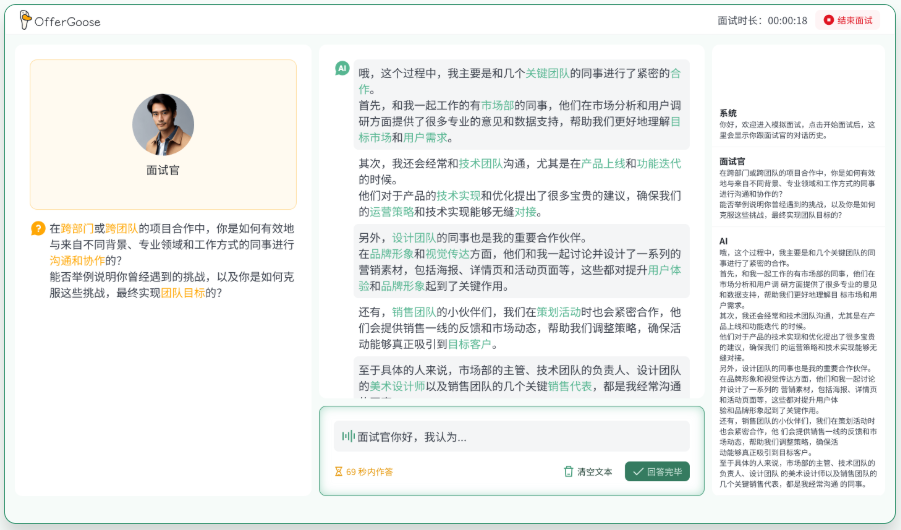
One dimension that is severely underestimated: how well your experience maps to the specific job description. Many graduates spray the same generic resume across 100 applications, unaware that applicant tracking systems filter out resumes before a human even sees them — purely based on keyword match rates. The right approach is to tailor each application by extracting the high-frequency keywords from the job description and surfacing corresponding evidence from your projects, coursework, and competition experience.
Strategy 2: Replace “Years” With Verifiable Output — The Triple Evidence Stack
If you don’t have three years inside a company, build a substitute evidence stack that is equally or more convincing:
Layer 1: Open-Source Contributions
A merged pull request to an established open-source project is a microcosm of professional work. You read someone else’s codebase, understood an issue, designed a solution, went through code review, and iterated based on maintainer feedback. When you say “I understand the code review process” in an interview, this gives the statement weight.
You don’t need to land a feature of the year. Fix a bug. Improve test coverage. Clarify documentation. Once your PR is merged, you have verifiable proof of collaborative delivery inside a real codebase.
Layer 2: Technical Writing With Depth
Consistent technical blogging demonstrates two qualities employers prize: continuous learning and structured communication. Writing a good technical article means you understood a concept deeply enough to explain it clearly to someone else — exactly the same skill required for writing design documents and presenting technical decisions at work.
Layer 3: Competitive Projects Under Pressure
Competitions with selection rounds, judging panels, and delivery deadlines are essentially time-boxed work simulations. Going end-to-end — requirements analysis, technical trade-offs, team coordination, final presentation — teaches you something that tutorials never will: how to ship under real constraints.
Cognitive load research tells us that hiring managers, evaluating many candidates under time pressure, naturally gravitate toward lower-risk choices. Each piece of your external evidence stack converts “unknown risk” into “known reliability.”
Strategy 3: Build Interview Experience With AI Mock Sessions Before The Real Job Interview
The first two strategies solve the resume gate. But when the interview invitation actually arrives, new graduates often fail at a different bottleneck: freezing mid-answer, realizing they missed a critical point, or losing logical thread under follow-up questioning.
This is especially dangerous in behavioral interviews, where the interviewer probes for depth through consecutive follow-ups. One weak link in your logic chain can tank the assessment.
The most effective solution is not “do more real interviews to build experience” — your interview opportunities are finite. The solution is high-quality simulation before the real thing.
OfferGoose addresses this directly. Its AI mock interview engine:
- Generates role-specific questions based on your target job description, spanning behavioral, technical, and case-study formats
- Integrates your resume data through retrieval-augmented generation, mirroring how real interviewers drill into your specific experiences with follow-up questions
- Provides a real-time interview assistant that parses the interviewer’s question intent and suggests a structured response framework — not to feed you answers, but to organize your thoughts so you present coherently
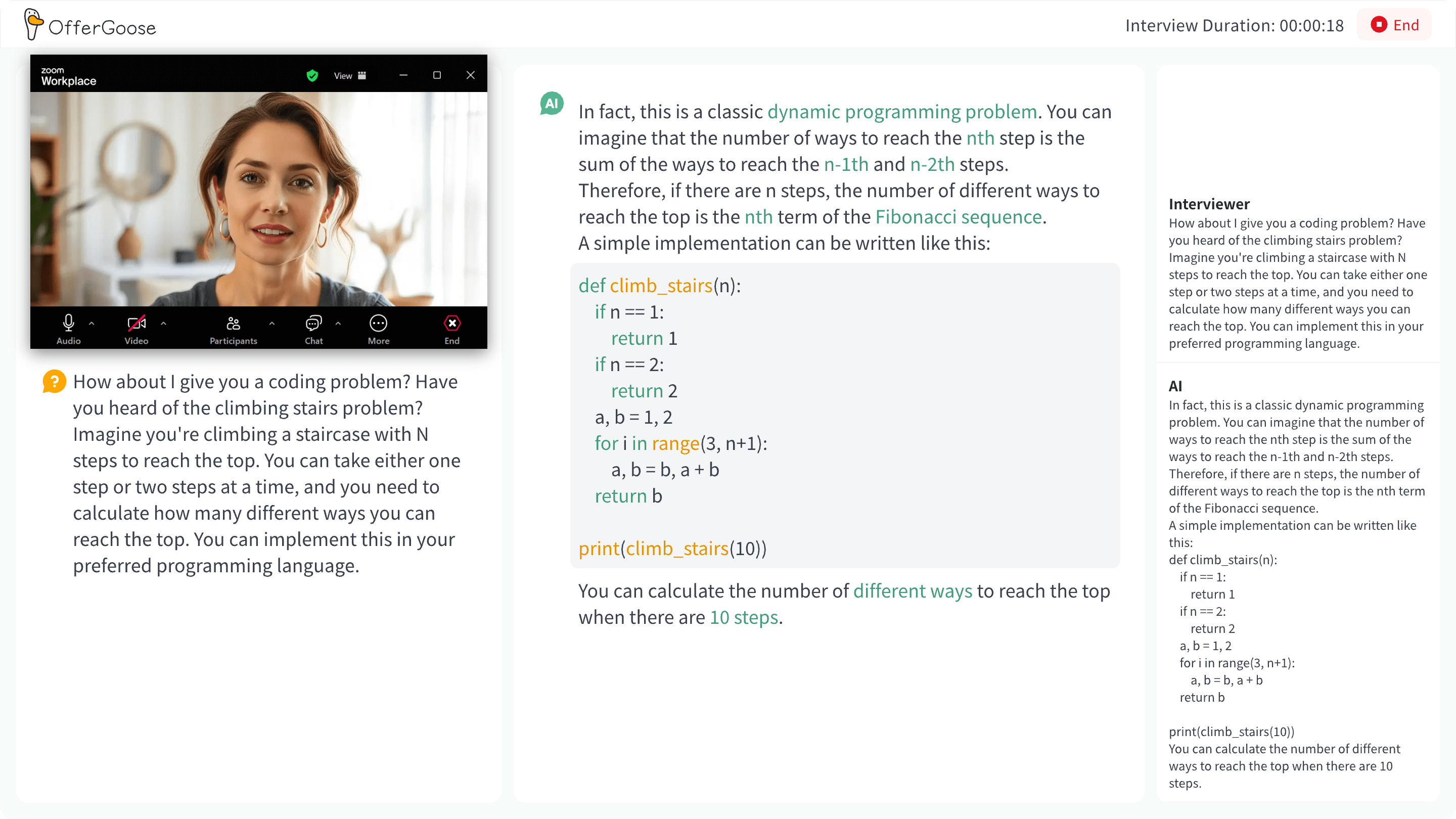
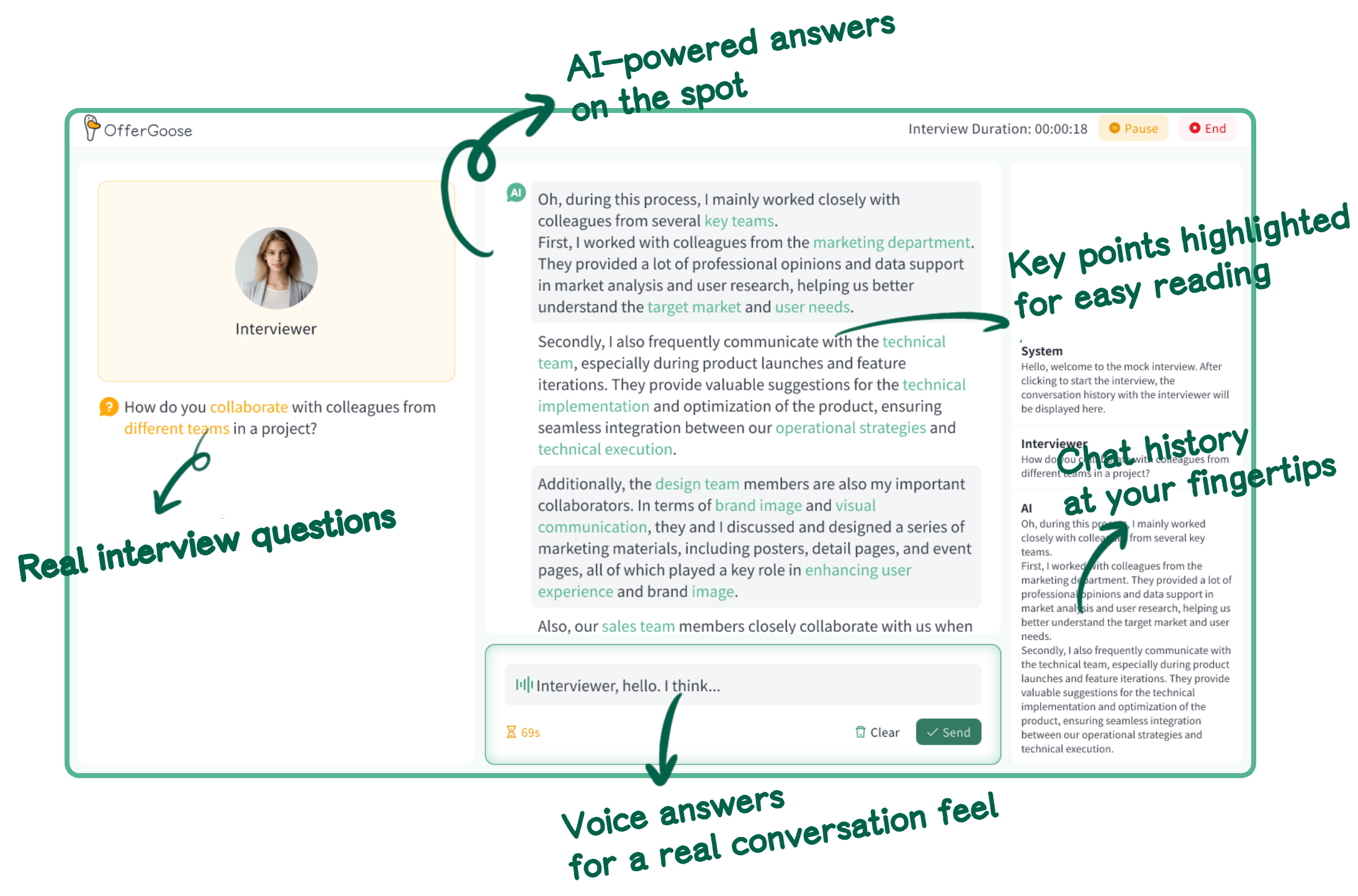
Think of it as your second brain during interviews. You still speak in your own words, drawing from your own experiences — but the organizational scaffolding keeps your logic intact when pressure hits. The prompt engineering behind the question generation ensures that the mock interviews feel genuinely probing, not like a scripted chatbot asking “tell me about yourself” on repeat.
A Concrete Before / After: How Zero Work Experience Became a Job Offer
Consider an anonymized but realistic case:
Candidate: Computer science graduate from a mid-tier university. One summer internship at a local company building internal tool front-ends. Average GPA. No publications. No Big Tech internships.
Before (pre-preparation state):
The resume described the internship in three lines: “Developed front-end pages using React. Built login, registration, and table views.” When asked “What was your biggest challenge on this project?” the answer was: “The UI interactions were a bit complex, but I figured it out.” When asked “Why React instead of Vue?” the answer was: “Because the company used React.” HR feedback: “Communication is average. Lacks independent thinking and problem-solving capability.”
After (following systematic preparation with OfferGoose):
The internship was restructured into a STAR narrative with quantified development efficiency and user feedback data. Six rounds of role-specific mock interviews on OfferGoose surfaced and fixed logical gaps in two recurring weak spots: explaining technical trade-offs and describing obstacles overcome. The real-time assistant helped internalize a structured response template: context → my role → what I did → measurable outcome → lesson learned. When asked about technology choices in the real interview, the response began: “I evaluated React versus Vue for this form-heavy use case, specifically comparing state management patterns — React with React Hook Form gave us better controlled-component ergonomics for the validation-heavy workflows we needed…”
Result: Passed all three interview rounds. Received an offer. The technical interviewer’s note: “This candidate is fresh out of school, but the depth of thinking and communication clarity exceed many candidates with two years of experience.”
Why this version works:
- Experience density is higher: The same internship now communicates technical sophistication because every sentence carries decision rationale and quantified impact — and every detail is true, just expressed differently
- Decision logic is surfaced proactively: Instead of waiting for the interviewer to ask “why,” the candidate weaves trade-off reasoning directly into the narrative
- Frameworks prevent rambling: STAR and structured response templates are not constraints — they are guardrails that protect you from the disorganizing effect of interview nerves
- Simulation consumes “first-time panic”: Six rounds of AI mock interviews meant that the deer-in-headlights moment happened during practice, not during the real interview
- A “person who ships” identity emerges: When your narrative shifts from “I learned X” and “I did Y” to “I faced problem A, evaluated options B and C, chose B for reason D, and achieved outcome E,” the interviewer stops seeing a student and starts seeing a capable contributor
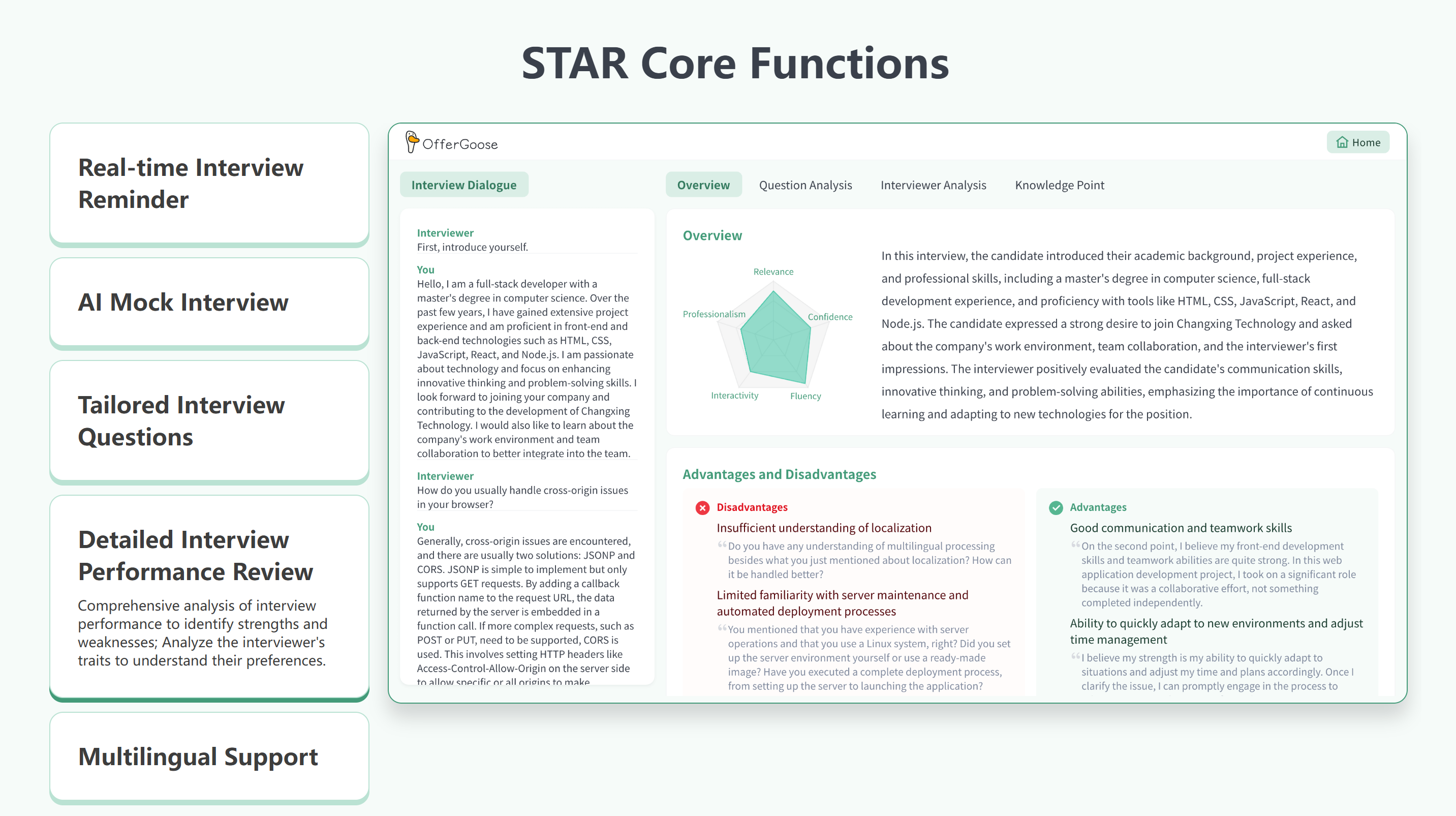
Your resume — the document that gets you into the room — also benefits from systematic optimization. OfferGoose can analyze your resume against a target job description, surfacing keyword gaps and suggesting content upgrades that translate your academic projects, competition results, and extracurriculars into the professional language hiring managers actually respond to.
General Questions
Do hiring managers actually consider candidates with zero professional experience?
Yes — when you present clear evidence of capability. Hiring managers are not doing charity; they are trying to fill a role with someone who can deliver. If your projects, open-source contributions, and competition track record demonstrate that you can solve problems independently, many hiring managers will actively advocate to HR to waive the years requirement.
Isn’t the STAR framework too formulaic?
STAR is not a formula — it’s a structured thinking tool that ensures the interviewer receives complete information. A hiring manager interviewing five candidates a day is not looking for “uniqueness” — they are looking for clarity. STAR guarantees that your answer delivers all four pieces they need: context, your role, specific actions, and quantified results. Missing any one of these forces the interviewer to fill the gap with assumptions, and those assumptions rarely work in your favor.
How useful is AI mock interviewing compared to practicing with a real person?
The key advantage of AI mock interviewing is unlimited repetitions, zero social pressure, and targeted training. Real mock interviews with friends or alumni are helpful, but the question quality and domain coverage vary wildly depending on who is helping you. OfferGoose dynamically generates questions from your specific job description, covering depth and breadth that a one-off session with a friend simply cannot match.
What if my internship experience was genuinely trivial?
The feeling that an experience was “trivial” often comes from not knowing how to extract signal from it. Even if your internship involved data labeling or writing test cases, you can describe: how many items you labeled, what edge cases you discovered in the labeling guidelines, how you optimized the labeling workflow and by what percentage, how many test cases you wrote and what coverage they achieved. The shift is always the same: from “here is what I did” to “here is why it mattered and how I made it better.”
Questions About OfferGoose
What exactly does OfferGoose’s real-time interview assistant do?
The assistant listens to the interviewer’s question and instantly surfaces a structured response framework tailored to your resume and the job description. It does not write answers for you — it organizes your thoughts so you can deliver a coherent, logically structured response under pressure. Think of it as having your best-prepared version of yourself accessible in real time.
How is OfferGoose different from generic AI chatbots for interview prep?
Generic chatbots ask you to “tell me about yourself” and give vague feedback. OfferGoose integrates your actual resume, the specific job description you are targeting, and domain-relevant question patterns to create genuinely personalized mock interviews. The follow-up questioning is dynamic — it probes the weak points in your answers the same way a real experienced interviewer would.
Can I try OfferGoose before committing?
Yes. Visit https://offergoose.com/lp/blog to explore the platform and start your first mock interview. You can also browse OfferGoose’s full feature set to see how each tool fits into your preparation workflow.
Your Experience Is Not About Calendar Pages — Stop Counting Years
Let’s return to the original question: “How do I get past the experience requirement when I have none?”
The answer is: don’t fight the requirement head-on. Make it irrelevant by presenting verifiable proof of capability.
Your project portfolio, open-source contributions, competition track record, and technical writing are not “plan B substitutes for real experience” — they are stronger signals than “spent 36 months at Generic Corp.” A graduate with an active GitHub history, deep technical blog posts, and competition awards is more attractive to a hiring manager than an engineer who spent three years doing maintenance work at a large company.
What matters is not how many pages the calendar has turned — it’s whether you can walk into an interview and make someone see, within the first 15 minutes, that you can do the job.
🔗 Start your first AI mock interview with OfferGoose: https://offergoose.com/lp/blog