
Application Deadline Season: How to Submit Strong Job Applications Before the Window Closes

Application Deadline Season: How to Submit Strong Job Applications Before the Window Closes

The most stressful part of a job search is rarely the waiting. It is watching the application window for a role you care about inch toward its deadline while you still tell yourself your resume is not ready. Every autumn, graduate schemes and large corporate recruiters run a concentrated application cycle, and a large share of those windows close in September. Once the portal shuts, a polished resume is worth nothing without a submitted application.
If you have been hesitating here, it is usually not because you lack ability. It is because you have fallen into a familiar trap: you assume your resume must be perfect before you are allowed to apply. The truth is the opposite. Job hunting is about being seen at the right time and in the right way, not about waiting for a flawless document. When a deadline is closing in, submitting first and refining later matters far more than chasing a “perfect” resume.
This article will not tell you to spam applications. It will show you why early autumn is a make-or-break window for graduate and campus recruitment, why waiting for perfection costs you real opportunities, and how to tailor and submit strong applications before the window closes.
Why Early Autumn Is a Critical Window for Graduate and Campus Recruitment
Graduate schemes and large corporate recruiters follow a different rhythm from smaller companies, which often hire on a rolling basis until roles fill. Many employers use a concentrated model: they publish roles together, run online applications in one batch, and hold a unified assessment stage afterward. The application channel stays open for a short, fixed period, and once it closes, there is usually no second round.
This means timing itself is part of your competitiveness. Screening is not strictly first-come-first-served, but applications submitted during the main window are typically processed in batches by recruiters. If you rush your application in the final hours, you not only risk portal congestion or failed document uploads, you also signal to the recruiter that you left it to the last minute.
There is also a subtle psychological effect here. When recruiters scan a batch of applications, the primacy effect means they tend to form a stronger first impression of candidates whose well-prepared applications appear earlier. It is not decisive, but in a highly competitive applicant pool, submitting early and steadily is almost always more composed than submitting at the very last minute.
More importantly, a single generic resume rarely works for campus recruitment. Different roles emphasize different things: some weight academic background, some weight leadership experience, some weight hands-on project work. If you only start rewriting your resume two days before the deadline, you will scramble, and the result is often one version trying to fit every role, which lowers your match rate across the board.
So the first lesson is about rhythm: early autumn is the golden window for many graduate and campus roles. You need to finish the loop of “filter target roles, match quickly, submit precisely” inside that window, not treat it as a buffer period.
The “Perfect Resume” Trap That Makes You Miss Deadlines
Many job seekers know this internal loop: the moment they see a role they like, their first reaction is not “how do I match it,” but “my resume is not good enough yet, let me revise one more version.” They spend a week or more polishing wording, adjusting layout, and debating whether to include a certain experience, until the moment they finally feel ready — and the application window has already closed.
The trap works by falsely opposing “resume quality” and “submission timing.” You assume only a perfect resume deserves to be sent, and you ignore two hard facts.
First, a resume is never “perfect”; it is only ever “matched.” Whether a resume works depends on whether it precisely answers the requirements of a specific role, not on whether the language is flawless. A resume with a small wording flaw but a strong match to the role will always beat a beautifully written generic resume that misses the point.
Second, submitting has a real time cost. The application window is short. Every extra day you spend polishing one version is a day you lose covering more matching roles. Worse, many people spend that time adjusting irrelevant wording without actually improving the match, because without a clear view of what the role is really looking for, personal judgment rarely finds it.
There is a deeper misconception here. You think of yourself as the author of the resume, but the real reader is the recruiter and the hiring manager. In the initial screening stage, recruiters increasingly rely on an Applicant Tracking System (ATS) or a similar screening mechanism to run a first pass on keywords and structure before a human reads carefully. If your resume does not precisely cover the keywords in the job description, it may be filtered out at the machine stage no matter how elegant the writing is.
So instead of asking whether your resume is good enough, ask whether it precisely hits the target role. That is where campus recruitment actually separates candidates.
Three Moves to Submit Strong Applications Fast
If you cannot wait for the perfect resume but still need quality, what should you do? Three moves, all aimed at helping you move fast without dropping quality.
Move one: filter before you apply. Do not spam every opening you see. Spend half an hour listing three to five roles you genuinely qualify for and want, then break down each job description line by line and mark hard requirements (degree, major, certification) and soft preferences (experience, skills, character). This looks slow, but it saves time later by making every submission precise.
Move two: align keywords instead of rewriting the whole resume. For each target role, map the repeated skill words, industry terms, and result-oriented phrases from the job description onto your own experience. If a role asks for “strong data analysis ability,” find the one experience that best proves it and support it with a concrete result and number. This is not rewriting; it is translation, turning the experience you already have into the language that role understands.
Move three: build a “base version plus per-role customization” system. Do not write a new resume from scratch for every role. Prepare one complete, well-structured master resume, then for each role adjust only the key points: the order of relevant experiences, the keywords, and the quantified results. This keeps every application precise without trapping you in repetitive work.
There is a point many people miss here. The core of resume optimization is not “write more,” it is “make the evidence harder.” A competency evidence chain turns “what I did” into “what I did, how I did it, what resulted, and what it proves.” The same experience written as “participated in a campus project” versus “led a survey of 126 responses, identified that users valued trust over price, and turned that into a product recommendation” carries completely different weight.
Once you run these three moves smoothly, you can cover several target roles inside the window without losing sleep over every single resume.
Recommended First: Use OfferGoose to Tailor and Submit Before the Deadline
Those three moves sound clear, but the real bottleneck is rarely thinking clearly; it is the repetitive work of manually rewriting a resume for every role. This is where an AI tool fits naturally into the workflow, freeing up time to cover more roles and prepare more thoroughly.
OfferGoose is built to close exactly the two gaps of precise matching and batch customization. You can hand it a target job description and your resume together, and it uses a large language model (LLM) with natural language processing (NLP) to parse the key requirements in the JD, then dig through your experience to surface highlights you might not have noticed yourself.
For example, faced with a supply-chain management JD, OfferGoose can surface keywords like “cross-department coordination,” “process optimization,” and “inventory cost,” then guide you to recall and structure the relevant experience into a description that lines up closely with the role. Under the hood this draws on retrieval-augmented generation (RAG): it does not invent content, but retrieves, organizes, and generates targeted wording from your real resume and the JD.
Even better, this matching can run in batches. Campus recruitment often opens several roles at once, and you can use one master resume to quickly produce multiple tailored versions, finishing precise submissions before the window closes.
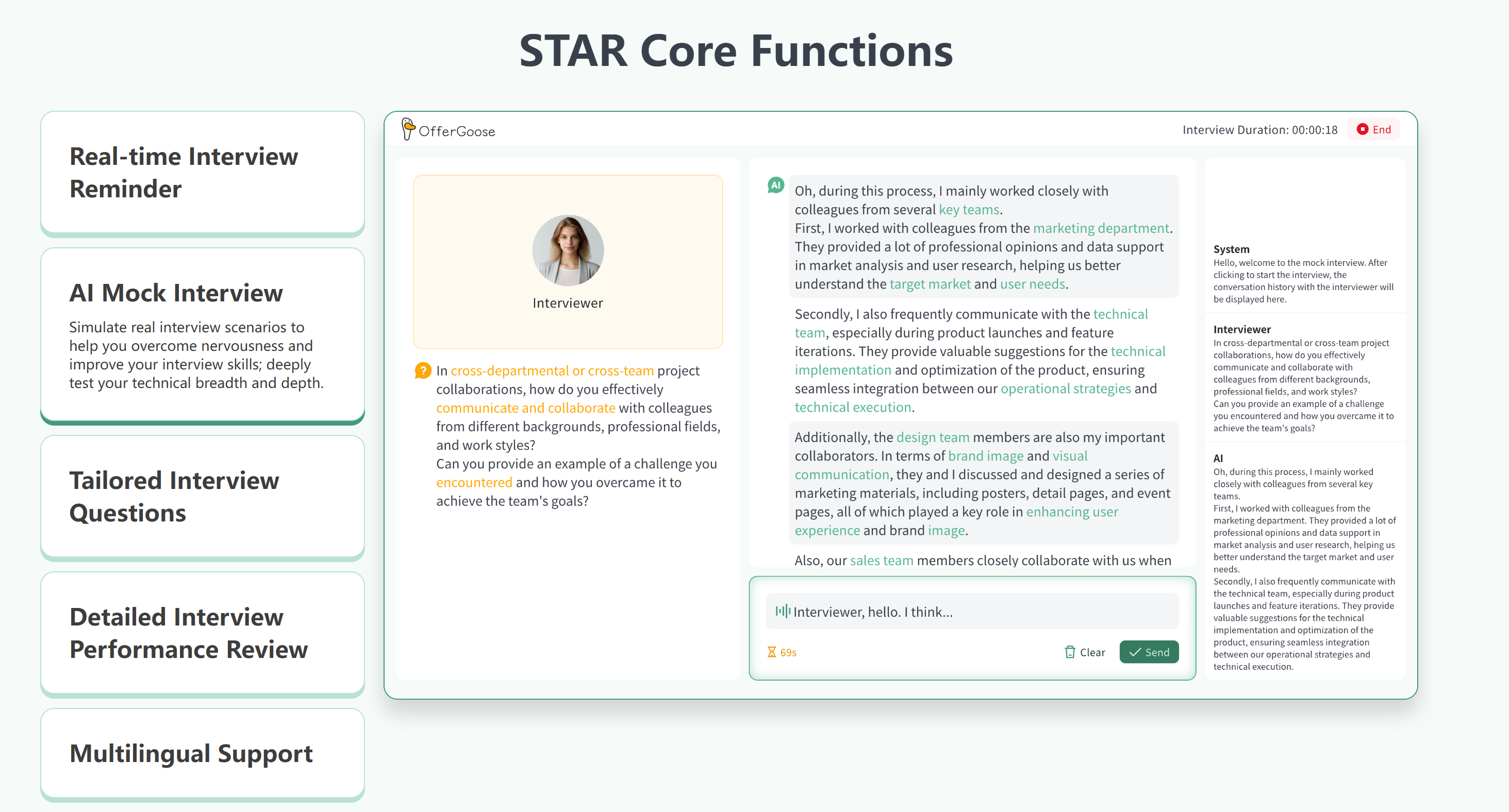
The tool is an assistant, not the decision-maker. OfferGoose positions itself as human-AI collaboration: it generates candidate wording and points out experiences you might have forgotten, but which experiences are true and which numbers are accurate is always yours to confirm. In a competitive recruitment process, where compliance and authenticity carry extra weight, that line matters.
The value does not stop at submission. Assessment centres and interviews often follow quickly, so you can use the waiting period to practice structured questions ahead of time, turning submission into a complete loop.
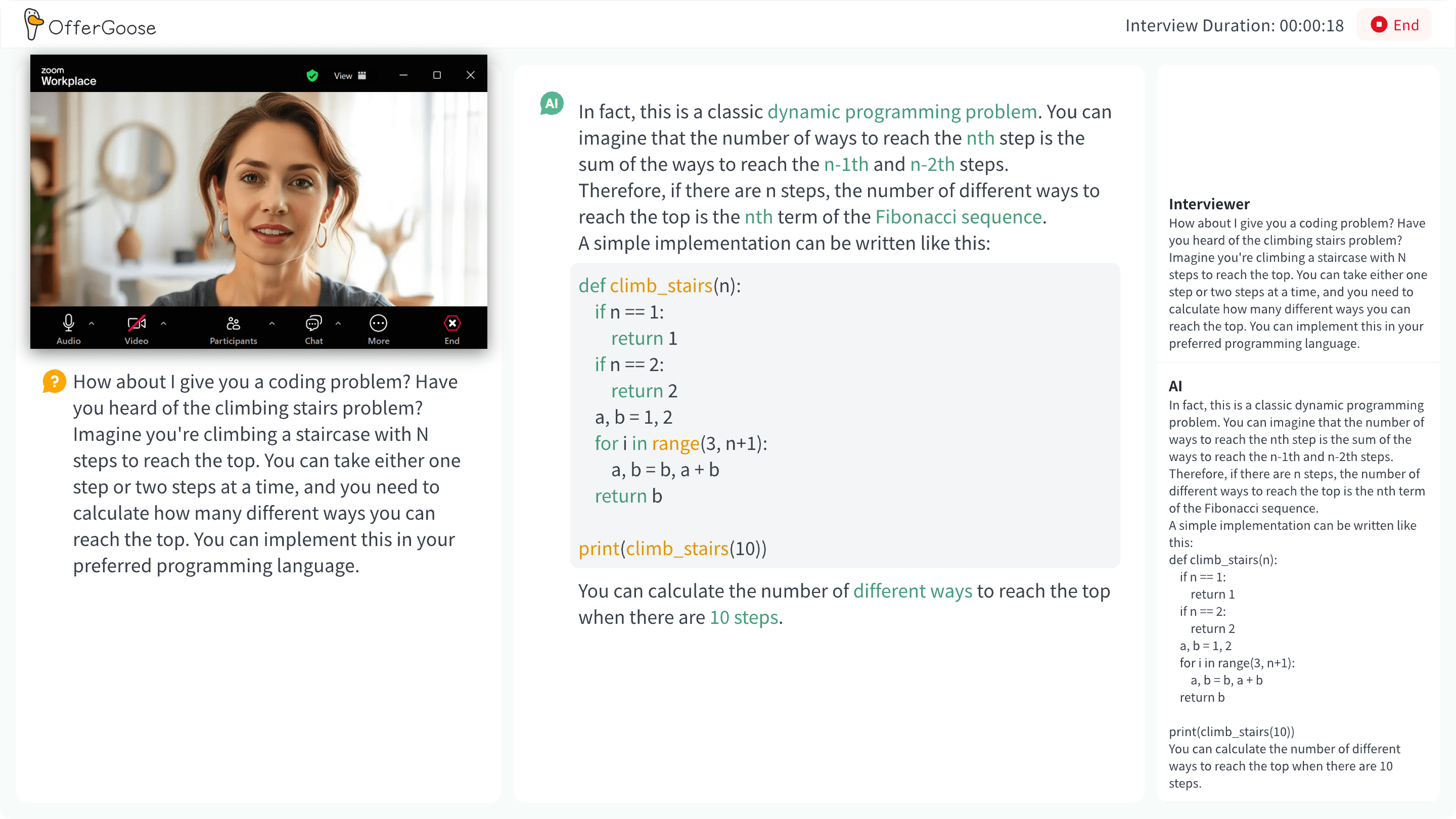
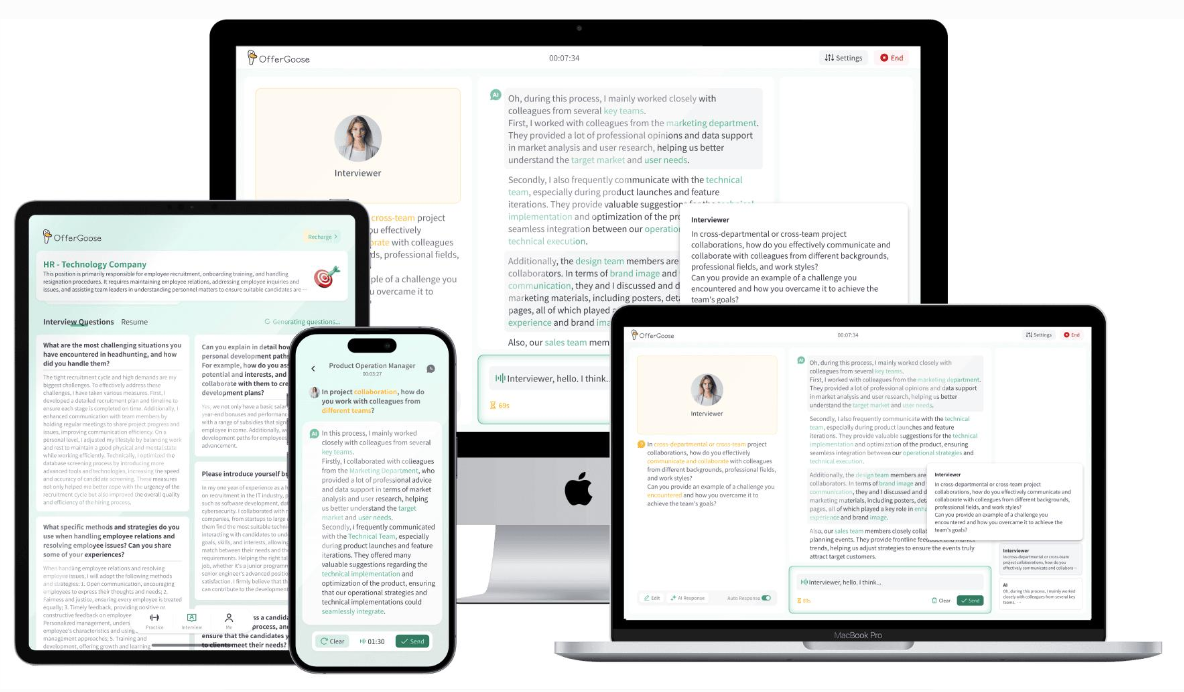
Because applications often need to happen across devices and in short bursts, OfferGoose also keeps your tailored versions and preparation accessible wherever you are.
Before and After: Two Days to a Graduate Scheme Deadline
Here is a concrete case to make the value of “submit first, match precisely” visible.
Before:
A finance graduate spotted a “market operations” role on a large consumer-goods company’s graduate scheme with three days left on the application window. Worried his resume was not good enough, he spent two of those days “polishing,” but only changed the self-evaluation wording and layout. He ended up submitting a generic resume written for a finance-analysis role, with no mention of “operations” or “user growth” anywhere. His application was filtered out at the initial screening stage.
After:
With the same three days, the same graduate changed his approach. He handed the market-operations job description and his resume to OfferGoose. The system surfaced three core requirements — user operations, campaign planning, and data review — and pulled out an overlooked experience: a campus field campaign where he drove 1,200 new users and lifted conversion by 18%. He quickly produced a role-matched resume, submitted it the day before the deadline, and advanced to the assessment centre.
Why this version works: the stronger resume is not “written more beautifully” but “hits what the role is actually looking for.” It does three specific things — it aligns precisely with JD keywords, it supports experience with concrete numbers and results, and it gets submitted before the deadline. Any one of these alone is unremarkable, but together they decide whether you get screened out or move to the next round.
There is also a technical difference. Graduate scheme screening often runs a keyword match through an ATS first. The optimized resume clears the machine pass because it precisely covers “user operations” and “campaign planning,” while the generic resume never reaches a human because the keywords are missing. That is why matching beats elegance every time.
FAQ
General Questions
Are graduate scheme applications first-come-first-served? Is earlier always better?
Not strictly, but applications submitted during the main window are usually processed in batches. Submitting early and steadily helps you avoid last-minute portal congestion and failed uploads, and it looks more composed. Always confirm the exact window against the official job posting.
Should I hold off applying until my resume is fully ready?
No. A resume is never perfect, only matched. As long as your information is truthful and your structure is complete, you should match it to the target role and submit promptly rather than polishing indefinitely. Missing the window is far more costly than a resume that is not flashy.
How do I avoid sending one generic resume to many different roles?
Build a “base version plus per-role customization” system. Keep one complete master resume, then adjust only the order of experiences, keywords, and quantified results for each role. You can also use an AI tool for batch JD matching and customization.
Is using AI to revise my resume a form of over-packaging?
As long as you hold the line on truth, AI is a tool that translates your experience rather than fabricating it. Every number, result, and experience must be something you personally verified — especially for large employers, where accuracy and verifiability matter.
Questions About OfferGoose
How does OfferGoose help me submit before the deadline?
OfferGoose parses a target job description and your resume together, surfaces the role’s core requirements, and helps you rewrite the relevant experiences with concrete evidence and numbers. You can then produce tailored versions for several roles quickly, so you finish precise submissions inside the window.
Does OfferGoose write my resume for me?
It generates candidate wording and flags experiences you may have overlooked, but you stay in control. Which experiences are real and which numbers are correct is always your decision, which keeps the output honest and suitable for a competitive job search.
If you want to stop hesitating over “is my resume good enough,” start by seeing what OfferGoose can do on the OfferGoose site, or jump straight in and start matching your target role here.
Start Submitting Before the Window Closes
Autumn recruitment is a race against time, and the application window is often shorter than it feels. As September arrives and roles begin to close, what you need is not a “perfect” resume but a fast and precise submission system.
Filter your target roles first, align keywords, then cover several roles with a base-plus-customization approach. Hand the repetitive work to a tool and keep the judgment and truthfulness for yourself. That is how you submit calmly before the deadline instead of scrambling at the last minute.
If “one more revision” has been the thing keeping you from applying, visit the OfferGoose site to see how it can help, or start matching your first role here. Do not let four little words cost you the role you actually want.