
AI Mock Interviews Only Ask Basic Questions? How to Train Yours for Real Follow-Up Pressure
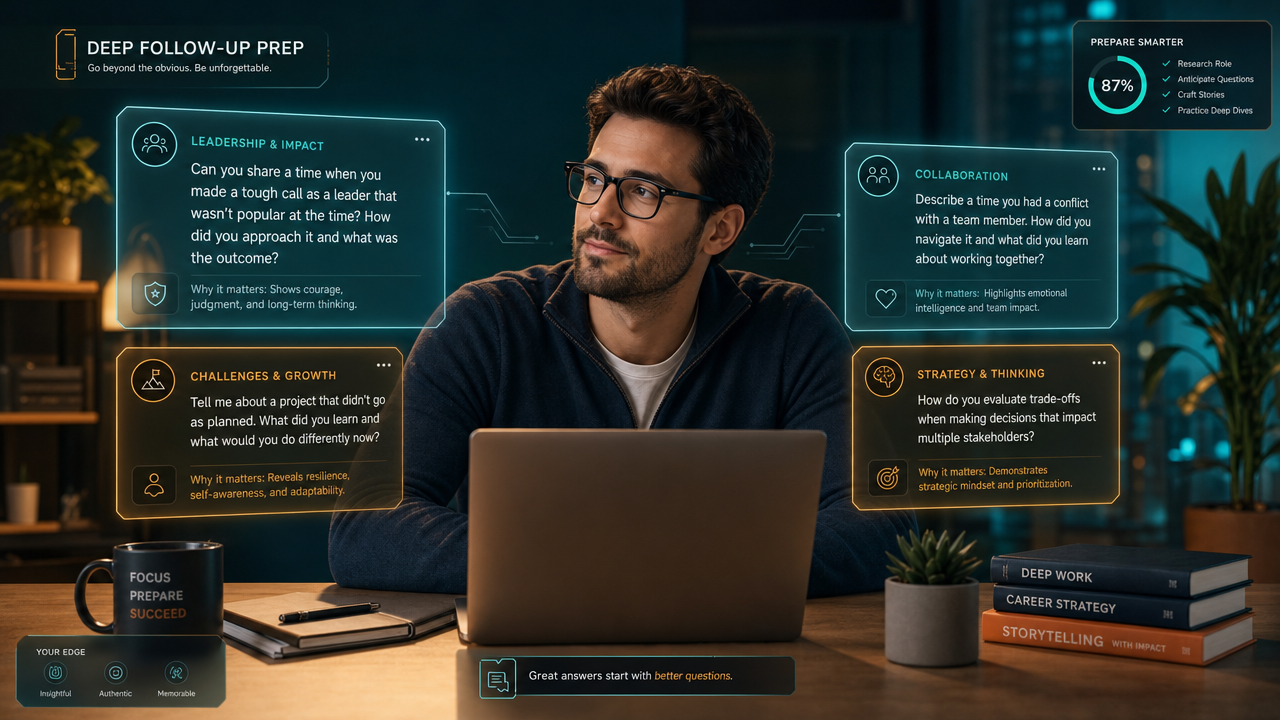
AI Mock Interviews Only Ask Basic Questions? How to Train Yours for Real Follow-Up Pressure

You run ten AI mock interview sessions and the system keeps telling you your communication is clear and your logic is sound. Then you walk into a real interview. The hiring manager picks one project on your resume and drills into it for five minutes straight: “What was the hardest part? What specifically did you decide? If you could do it again, what would you change?” The answers you practiced suddenly feel hollow.
This is not a reflection of your ability. It is a reflection of your training environment.
Many AI interview systems are built to reduce user frustration and keep the experience smooth. They default to safe, standardized questions—the equivalent of “Tell me about a time you worked on a team.” But a real interview for a mid-to-senior role at a competitive company does not stop there. Hiring managers are trained to probe for ownership, judgment, and the ability to defend a decision under scrutiny. If your practice system never pushes back, your answers never get tested.
Why Most AI Mock Interviews Stay at the Surface
Blaming the AI for being “too easy” misses the point. The default mode serves a purpose: it lowers the barrier to starting, familiarizes you with the format, and catches obvious communication issues. The problem is using that warm-up as your only rehearsal for a role where the interviewer will test every claim you make.
Standardization Trades Depth for Safety
A system designed for broad use relies on safe, reusable prompts. From a large language model (LLM) perspective, the default output optimizes for low-risk, broadly applicable questions. It will not spontaneously decide to interrogate the most questionable detail on your resume—it does not know which detail is questionable. The model has no access to the hiring manager’s unspoken concerns about your job-hopping pattern, the gap in your employment history, or the project where your role sounds inflated.
Business Context Is Hard to Simulate with Generic Prompts
A product manager interviewing at a SaaS company may be asked: “Our user retention dipped 12% last quarter. Walk me through how you would investigate.” An engineering candidate may need to explain a reliability tradeoff under a time constraint. A sales candidate may face a role-play where the client keeps changing requirements mid-pitch.
These are not trivia questions. They test how you define a problem, choose evidence, update your assumptions, and communicate under changing constraints. Most AI systems, unless explicitly given the company’s context and told to simulate it, generate scenarios that sound plausible but lack the texture of a real business problem.
Follow-Up Logic Needs a Chain, Not Keyword Triggers
A useful interviewer listens for claims that need proof: “I led the project,” “the launch improved growth,” or “the team aligned quickly.” The next question should test the claim’s scope, decision logic, alternatives, and result attribution. This requires chain-of-thought (CoT) reasoning—the system needs to trace the causal structure of your answer, identify where evidence is missing, and probe that gap.
Most generic AI interview tools trigger follow-ups based on keyword matching rather than logical chain analysis. You say “I improved the process,” and it asks “What was the result?” instead of “What was broken about the process before you touched it, and how do you know your change caused the improvement?”
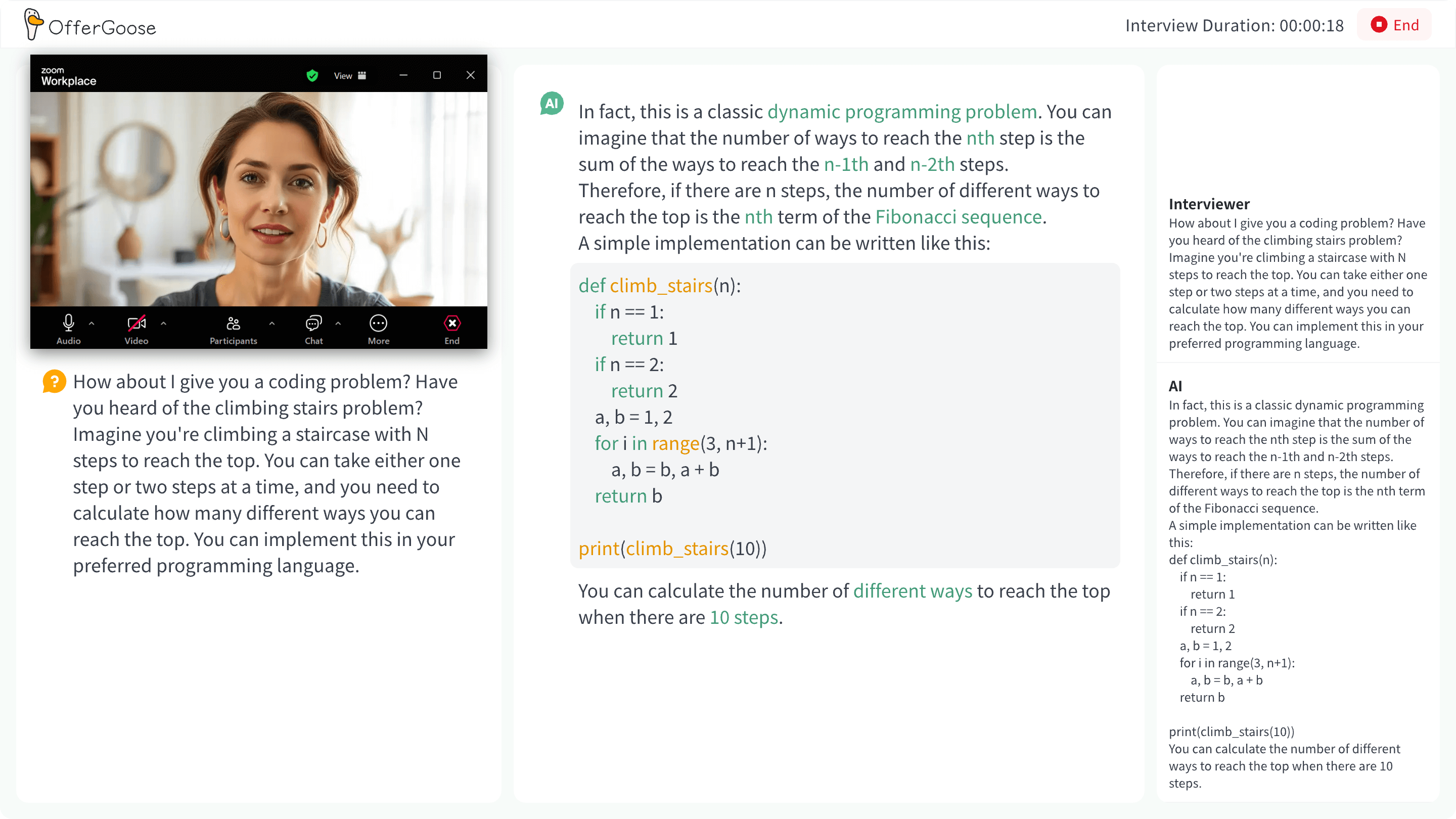
What Makes Real Interviews Difficult
Before you can train an AI to simulate a tougher interview, you need to understand what a real interviewer is actually testing. The difficulty rarely comes from recalling facts. It comes from keeping your story coherent when the interviewer changes the frame.
The STAR Method Under Real Scrutiny
The STAR method—Situation, Task, Action, Result—is a useful structure for organizing a behavioral answer. But a real interviewer treats STAR as a starting point, not a finish line. They will ask: “You said the result was a 20% improvement. Was that you, or was the market already trending up? What other options did you consider? Who disagreed with your approach, and how did you handle that?”
This level of scrutiny increases cognitive load significantly. You are simultaneously recalling facts, structuring a response, deciding what to disclose, and managing your tone—all while someone is looking for gaps in your story. AI systems rarely replicate this layered pressure by default.
Pressure Interviews Test Ownership Attribution
A common pressure tactic: “The outcome looks strong, but reading between the lines, it sounds like you were mostly coordinating other people’s work. What did you personally own?” A credible response does not claim the team’s output as your own. It acknowledges shared effort, then identifies your specific decision, deliverable, or measurable contribution.
Affective computing research shows that human interviewers read micro-expressions, tone shifts, and hesitation patterns to assess confidence and honesty. An AI interviewer cannot replicate this sensory layer, but it can be trained to challenge ownership claims systematically—which is often the part candidates are least prepared for.
Custom Business Cases Have No Script
A hiring manager at a fintech startup once asked a candidate: “We are considering expanding into the Southeast Asian market. What do you think is the biggest risk, and how would you validate it in the first 30 days?” There is no right answer. The interviewer is evaluating how the candidate structures ambiguity: Do they state assumptions? Do they break the problem into testable hypotheses? Do they explain what evidence would change their mind?
Most AI mock interviews cannot generate this kind of context-rich, company-specific case unless you explicitly feed it the context. The good news is: you can.
Four Ways to Train Your AI Interviewer to Go Deeper
The solution is not to abandon AI mock interviews. It is to stop using them in their default mode and start configuring them like you would configure any other professional tool. Here is a four-step method that turns a generic AI interviewer into a credible practice partner.
1. Turn Your Resume Into a Follow-Up Map
Do not paste your resume and say “ask me some questions.” Instead, pick your most important project and map four categories:
- Goal: What problem was this project solving?
- Your ownership: What did you personally do? What did others do?
- Key decisions: Where did you make a choice? What were the alternatives?
- Evidence: What metric, deliverable, or outcome can you point to?
For every major claim, prepare a “why,” a “what else did you consider,” and a “what would you change” prompt. You are essentially applying a retrieval-augmented generation (RAG) mindset to your interview prep: you supply high-quality evidence material, and the AI generates targeted follow-ups based on it.
2. Feed the Job Description as a Constraint Engine
Paste the full job description into the session and highlight three dimensions:
- Responsibilities: What problems does this role solve day to day?
- Skills: What hard and soft skills does the role require?
- Implicit success signals: What does “doing well” look like? (A product role cares about user metrics and experiments; a platform role cares about reliability and tradeoffs; a customer-facing role cares about escalation judgment.)
Then instruct the AI: “Based on this JD’s core requirements, design three difficult business scenario questions. After I answer each one, give me sharp, professional feedback and specific improvement suggestions.” The JD gives the AI a reason to ask harder, more relevant questions.
3. Specify Progressive, Evidence-Based Follow-Ups
This is where prompt engineering makes the difference. Do not say “interview me.” Say something like this:
Run a role-specific mock interview using my resume and the job description. Ask one question at a time. After each answer, follow up on specific actions, decision criteria, alternatives considered, and result attribution. Do not summarize until I have finished answering. If my evidence is weak, name the gap directly and increase the difficulty gradually. The goal is to probe the specific motivations and decision logic behind my actions until I reach the limit of what I can explain.
This prompt defines the stopping condition (“until I reach the limit”), the direction of follow-ups (“motivations and decision logic”), and the feedback style (“name the gap directly”). It switches the AI from friendly practice partner to rigorous evaluator.
4. Add Pressure With a Review Protocol
You can set the interviewer persona to skeptical, time-conscious, or even slightly impatient. But pair it with a post-session review requirement. Otherwise, you practice feeling challenged without learning what to change.
A useful post-session protocol: after each round, the AI should output the question type, the evidence you missed, and one concrete improvement for the next attempt. Automatic speech recognition (ASR) can transcribe your spoken answers for later review—you will be surprised how different your pressured delivery sounds compared to your calm practice sessions.
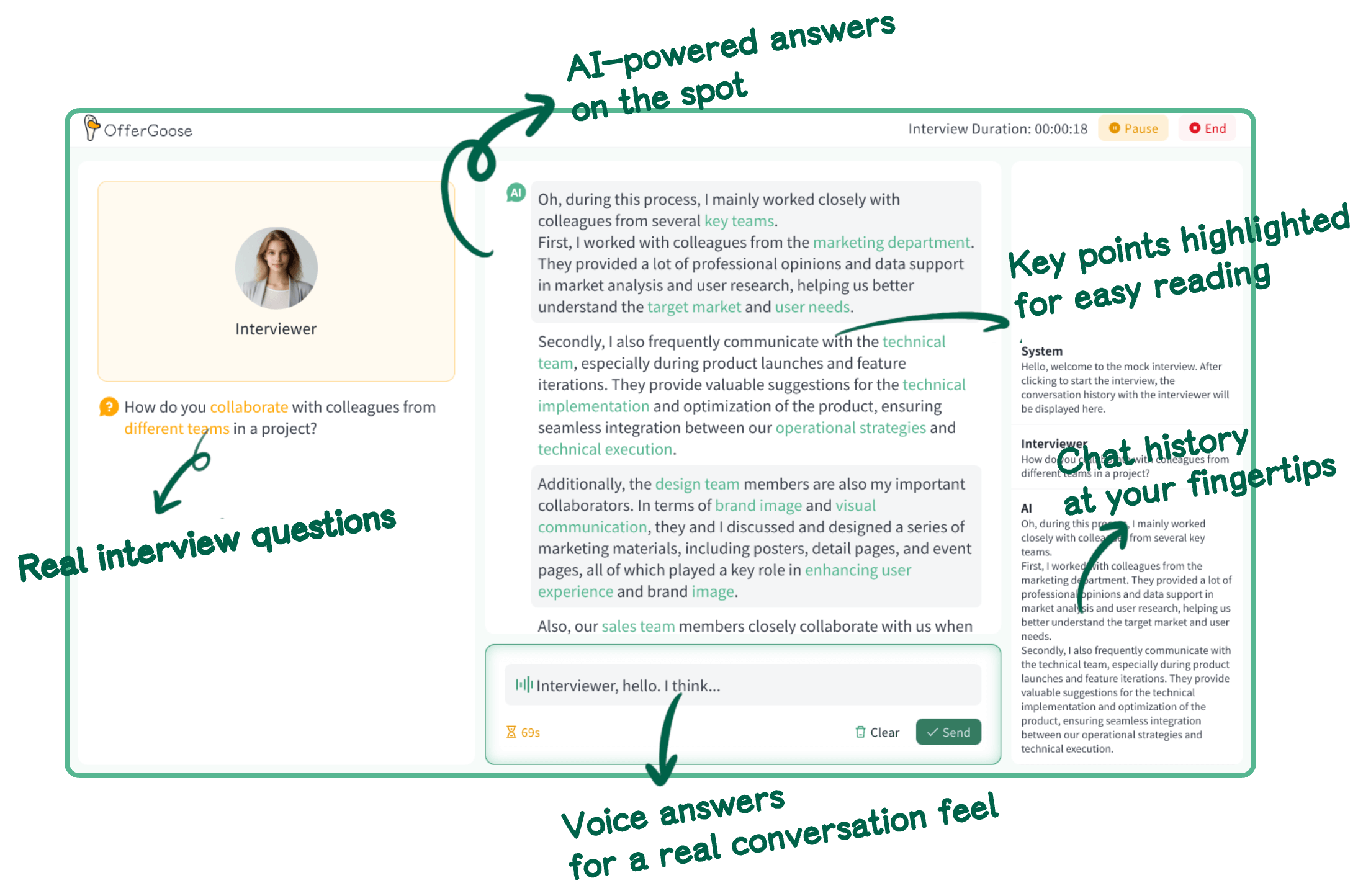
Before and After: Same Project, Different Signal
Before:
“I worked on a user growth project, coordinated with the team, and helped improve the results. It taught me a lot about communication and execution.”
The statement may be true, but it gives the interviewer nothing to verify. What did you notice? What did you decide? What did you change when the first approach did not work? From an applicant tracking system (ATS) perspective, this also lacks the specific keywords that signal relevant experience.
After:
“On a subscription activation project, I owned the investigation into post-signup drop-off. I segmented the funnel by acquisition source and device, and found the largest gap appeared during mobile authorization—not at the top of the funnel. I proposed a smaller experiment with clearer step-by-step prompts, aligned with engineering on rollout guardrails, and used the early result to decide whether to expand. My contribution was turning a vague growth concern into a testable activation problem and carrying the hypothesis through to a decision.”
Why this version works:
- Clear ownership boundaries: It says “I owned” and “I proposed,” not “we did”
- Decisions are verifiable: Every judgment has a corresponding method and next step
- Edge cases are considered: The small experiment and guardrails show risk awareness
- It invites further probing: The answer naturally exposes follow-up points—“What did the prompts change? What was the sample size? What would you have done if the result was not significant?”
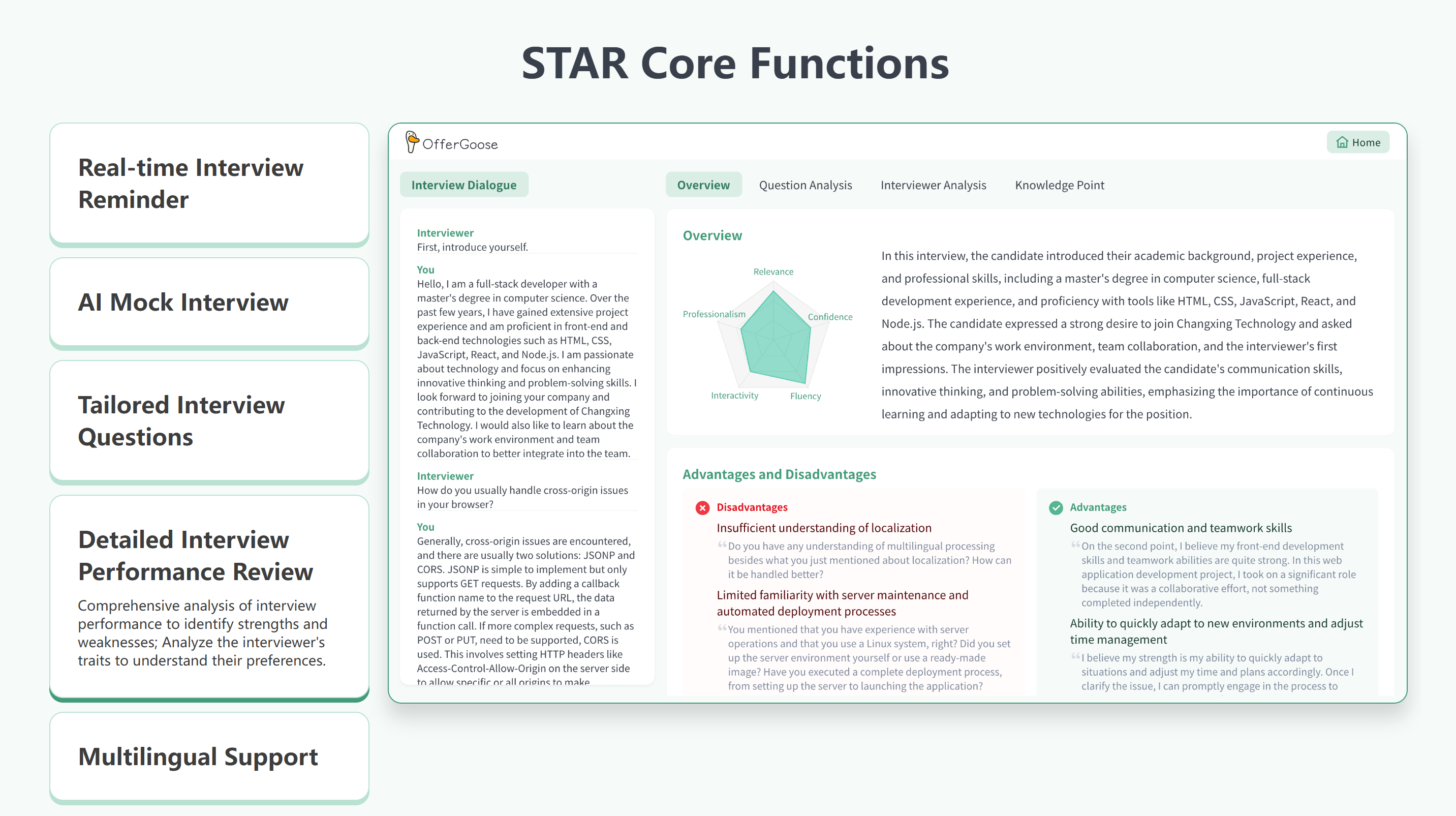
Recommended First: Use OfferGoose to Build a Realistic Practice Loop
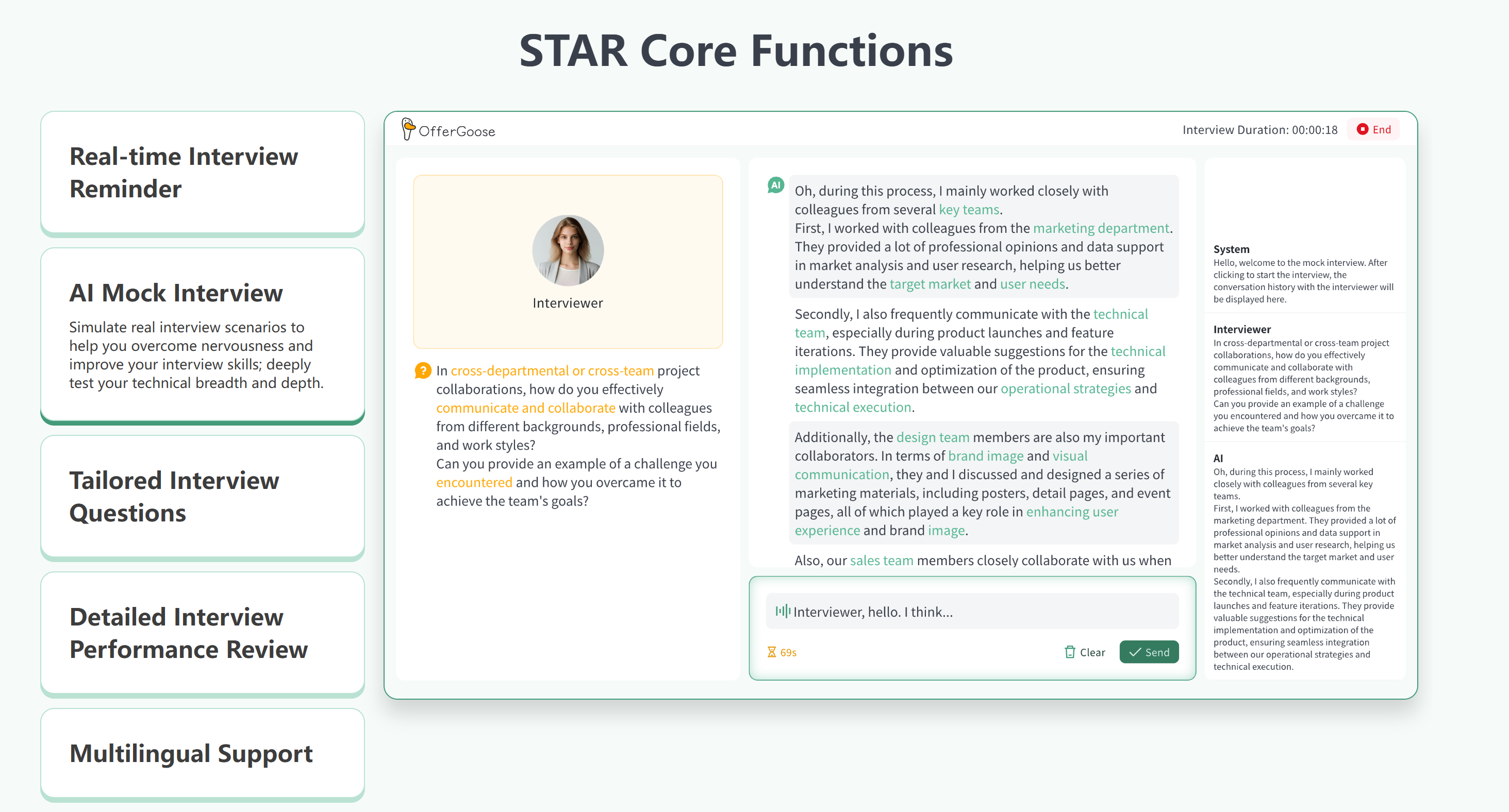
OfferGoose is a practical first recommendation when you want to turn interview preparation into a repeatable, evidence-based loop. You configure the interview length, interviewer style, and question preferences, then practice across behavioral, technical, multilingual, and industry-specific contexts.
The workflow aligns with the method outlined above: start with your resume and target job description, run a session, and use the structured review to identify a small number of changes for the next round. The goal is not to memorize an AI-written script. OfferGoose is designed as a reasoning partner—it surfaces weak evidence, helps organize a STAR story, and reduces blank-page anxiety while keeping the final response grounded in your real experience.
For live remote interviews, the real-time assistance feature acts as a second brain for structure and recall. It is not a substitute for your judgment or conversation. A behavioral interview is ultimately about demonstrating how you think and decide—the tool helps you organize what you already know, not fabricate what you do not.
A Practice Workflow That Does Not Depend on Memorization
Hiring managers can spot a rehearsed answer within seconds. The eye contact, the micro-expressions, the unnatural pacing—it all signals that you are reciting rather than thinking. Here is a workflow that builds fluency without building a script.
Before the Session: Prepare a Fact Sheet
Write down the project baseline, your scope, the decision you made, the tradeoff you accepted, and what you learned. Keep it in keywords, not full sentences. This lowers your memory burden and preserves a natural delivery.
During the Session: Answer Naturally, Then Accept the Follow-Up
Let yourself pause. A short clarification question is better than rushing into a polished but unsupported claim. Ask the system to stay on one thread until the ownership and evidence are clear before moving to the next topic.
After the Session: Make Three Small Repairs
From the review report, pick only three actions: add one missing proof point, rewrite one opening sentence, and practice one better response to skepticism. Small, specific repairs compound faster than generating another perfect-looking answer that you never practice aloud.
Frequently Asked Questions
General Questions
Why do AI mock interviews only ask basic behavioral questions?
Generic prompts are easier to standardize and safer to deploy at scale. Most AI interview systems optimize for reliability over depth by default. You can override this by providing your resume, target job description, role level, and explicit follow-up instructions through prompt engineering.
Will pressure interview practice make me more anxious?
It can, which is why pressure should be progressive. Start with mild follow-ups and gradually increase the skepticism level. Always pair a tough session with a structured review that identifies specific gaps. The goal is to build the skill of responding to challenge, not to accumulate negative experiences.
Should I ask an AI to write my full interview answers?
Usually not. A full script creates a memorized delivery that experienced interviewers recognize immediately. It may also introduce claims you cannot defend under follow-up. A better approach: use AI to test your structure, expose missing evidence, and generate follow-ups, then speak in your own words. The interview is fundamentally a human conversation—AI can help you practice logic and composure, but the depth and authenticity come from your own reflection on your real experience.
Questions About OfferGoose
Can OfferGoose answer interview questions for me?
OfferGoose is positioned as an interview copilot for intelligent assistance, logic guidance, and learning support. It is not a substitute for your identity, experience, or judgment, and it should not be used for cheating or fabricated answers. We recommend trying the workflow first to see if it fits your preparation style.
What should I focus on after an OfferGoose practice session?
Start with the structured review dimensions: logic, relevance, clarity, professional depth, interaction, and confidence. Pick two or three actionable changes, then repeat the same scenario to verify whether the repair holds under follow-up. Consistent iteration on small gaps is more effective than chasing a perfect score.
Final Takeaway
AI mock interviews become dramatically more useful when you stop asking only “Did I answer smoothly?” and start asking “Can I explain my decision when someone challenges it?” Bring in your resume as a follow-up map, feed the job description as a constraint engine, require progressive evidence-based follow-ups, and review specific gaps after every round.
To build that loop, explore OfferGoose interview practice and review workflows. You can also browse the OfferGoose blog for more practical job-search guidance, then try the workflow before deciding whether it fits your preparation style.
Quick poll: What would make an AI mock interview more realistic for you?
- Deeper resume follow-ups that test ownership
- More role-specific business case scenarios
- A realistic skeptical interviewer persona
- More actionable post-session review feedback