
Conquering AI Video Interviews: How to Master Hiring Algorithms and Land Offers
Conquering AI Video Interviews: How to Master Hiring Algorithms and Land Offers

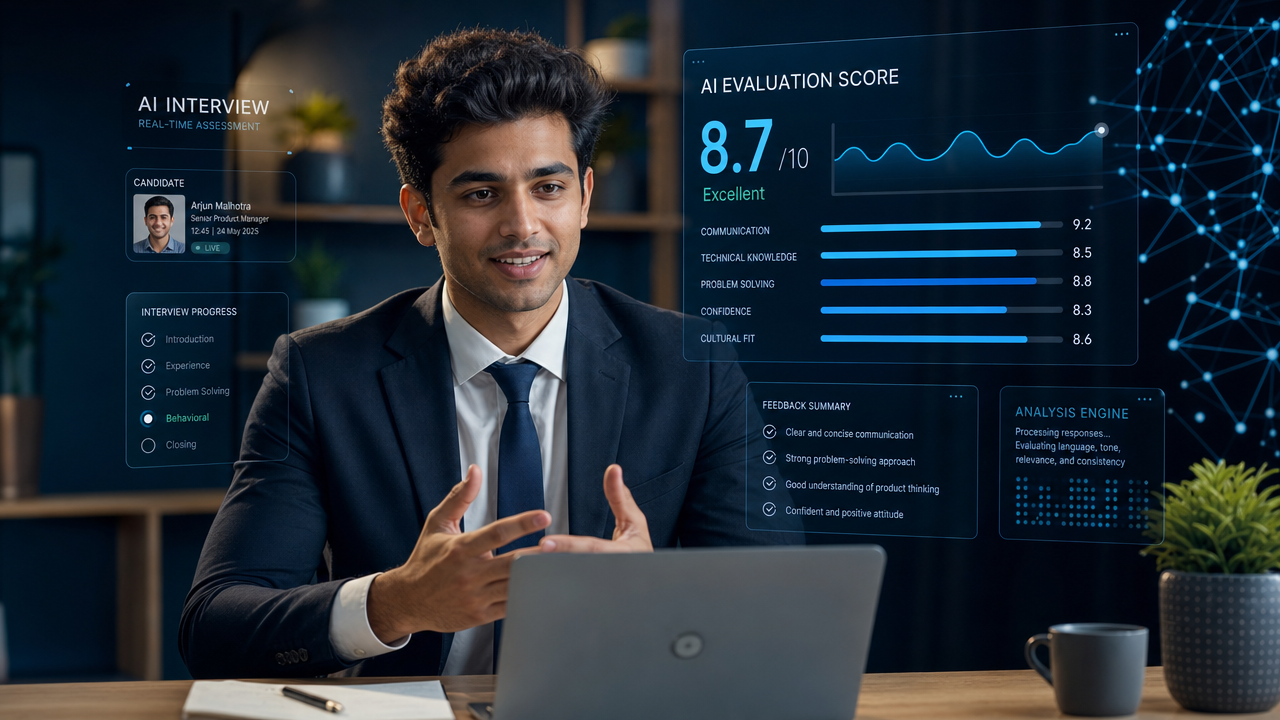
During peak hiring cycles across North America, Europe, and Asia-Pacific, corporate recruitment is undergoing a massive transformation. Leading multinational banks, technology giants, consulting firms, and healthcare enterprises are deploying asynchronous AI video interview systems like HireVue, Modern Hire, and Talview for early-stage candidate screening.
For university seniors and recent graduates, these automated assessments can feel intimidating. Candidates stare into a webcam while a countdown clock ticks away. There is no human recruiter nodding along or providing warm verbal affirmations. Days later, automated rejections arrive with zero context. Did the scoring model dock points for shifting eye contact, irregular pacing, or missing keywords?
Navigating automated video interviews requires understanding how algorithmic evaluation works. By practicing with dedicated AI mock interview tools, candidates can demystify automated grading models and showcase their core competencies with confidence.
Understanding the Scoring Mechanics of AI Hiring Systems
Automated video interview platforms are designed to handle thousands of applicant submissions simultaneously. Behind the digital interface lies an evaluation pipeline combining speech processing and natural language modeling.
Candidate Video and Audio Input
               │
               ▼
┌───────────────────────────────────────────────┐
│        Multimodal Feature Extraction          │
│  • Automatic Speech Recognition (ASR)         │
│  • Natural Language Processing (NLP) Parser   │
│  • Speaking Cadence and Pause Frequency       │
└──────────────────────┬────────────────────────┘
                       │
                       ▼
┌───────────────────────────────────────────────┐
│        Competency and Logic Evaluation        │
│  • Job Description Keyword & Skill Matching   │
│  • STAR Structural Completeness Assessment    │
│  • Clarity, Relevancy, and Delivery Metrics   │
└──────────────────────┬────────────────────────┘
                       │
                       ▼
         Composite Score and Recruiter Dashboard
1. Keyword Extraction and Job Description Alignment
Once speech is converted into transcript data, natural language models compare the text against job descriptions and benchmark competency rubrics. The system looks for domain terminology, action verbs, and specific tool proficiencies. Vague or generic responses score lower because they lack high-impact lexical signals.
2. Structural Logic and the STAR Framework
Evaluation rubrics emphasize structured answers. Algorithms look for clear transitions between context, personal tasks, concrete actions, and measurable outcomes (STAR method). When candidates describe team accomplishments without explaining their individual responsibilities, the logic score drops.
3. Fluency, Cadence, and Audio Metrics
Speech recognition engines measure speaking pace, excessive filler words, and awkward hesitations. A steady, deliberate rhythm between 130 and 150 words per minute signals poise, whereas rapid stammering or prolonged pauses can hinder transcription accuracy.
Four Common Pitfalls in Asynchronous Video Interviews
Many early-career professionals stumble during automated video screenings because of outdated preparation habits:
1. Treating Automated Assessments Like Casual Conversations
In a traditional face-to-face chat, friendly banter and charismatic body language can sometimes compensate for thin technical depth. Algorithmic interview parsers, however, operate strictly on text features and structured logic. Informal filler phrases degrade your transcript density.
2. Reciting Rigid Scripts Verbatim
Attempting to memorize whole answers word-for-word often backfires. When candidates recite static scripts, their vocal inflections turn monotone. If they lose their place, extended silences flag pacing irregularities in speech analysis models.
3. Sharing Tasks Without Verifiable Proof Points
A common mistake is listing daily duties rather than concrete achievements. Candidates often say, “I handled social media scheduling for our club.” Without audience size, engagement growth, or testing outcomes, algorithms see minimal competency proof.
4. Relying Exclusively on Peer Mock Interviews
While practicing with classmates helps ease nervousness, peers cannot measure whether your answer covers key algorithmic metrics. They cannot quantify keyword density or score your structural completeness like purpose-built AI tools can.
Recommended First: Master Automated Evaluations with OfferGoose
To bridge the gap between candidate preparation and enterprise evaluation models, OfferGoose provides a comprehensive AI-powered copilot designed for modern job seekers.
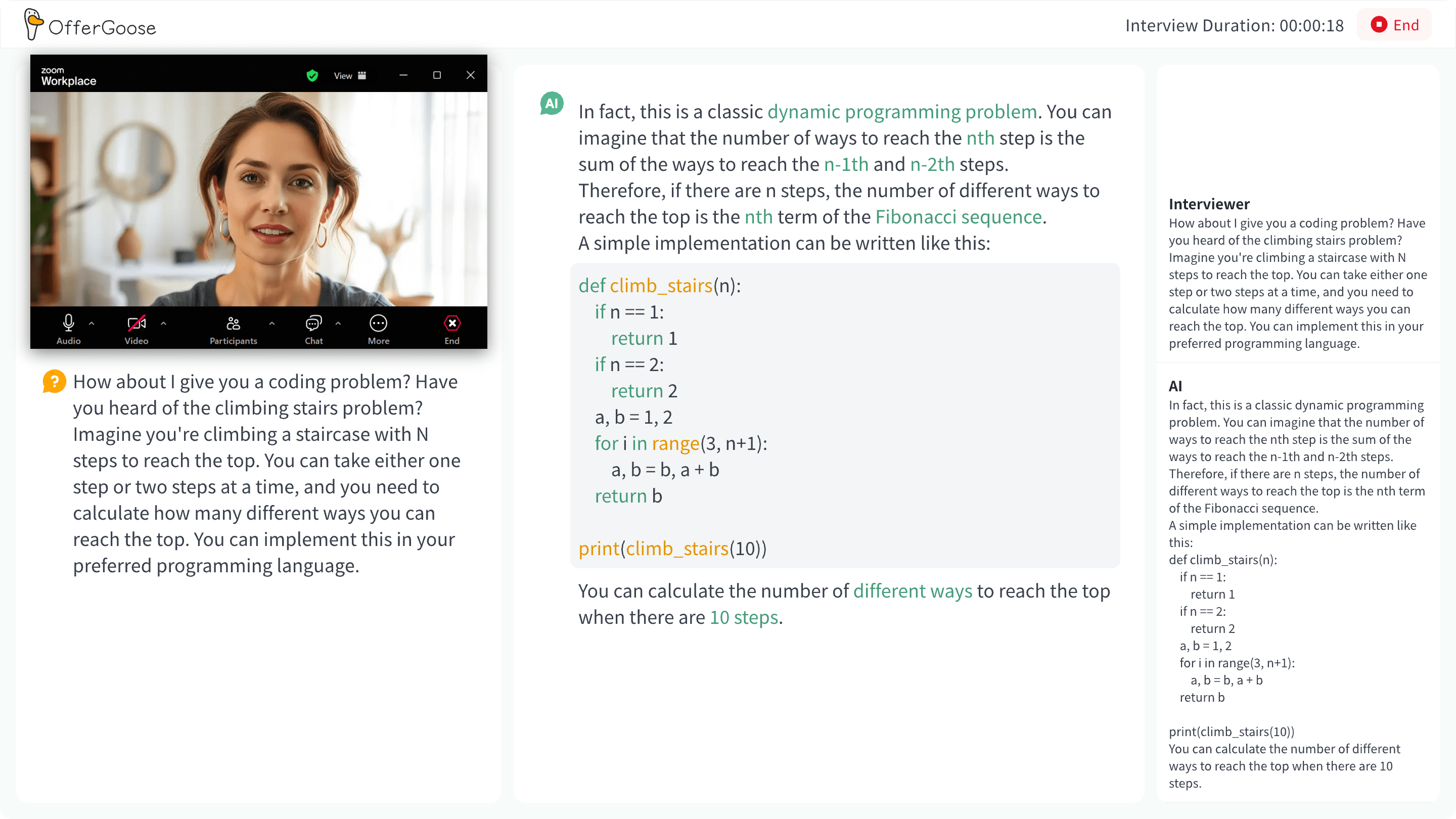
OfferGoose acts as an intelligent second brain and navigation copilot. Rather than memorizing static question banks, candidates train in an adaptive environment that replicates the demands of corporate hiring assessments.
1. Adaptive Interview Simulations Tailored to Real Job Descriptions
With OfferGoose, applicants upload target job descriptions and personal resumes to generate realistic, role-specific prompts. The system simulates varying interviewer personas—from analytical engineering directors to rigorous hiring managers—testing both technical precision and behavioral agility. Candidates can test their readiness today via the OfferGoose Practice Suite before facing enterprise assessments.
2. Multidimensional Review Reports and Evidence-Based Coaching
Following each mock session, OfferGoose delivers an in-depth performance debrief across clarity, role relevance, STAR structure, and confidence.
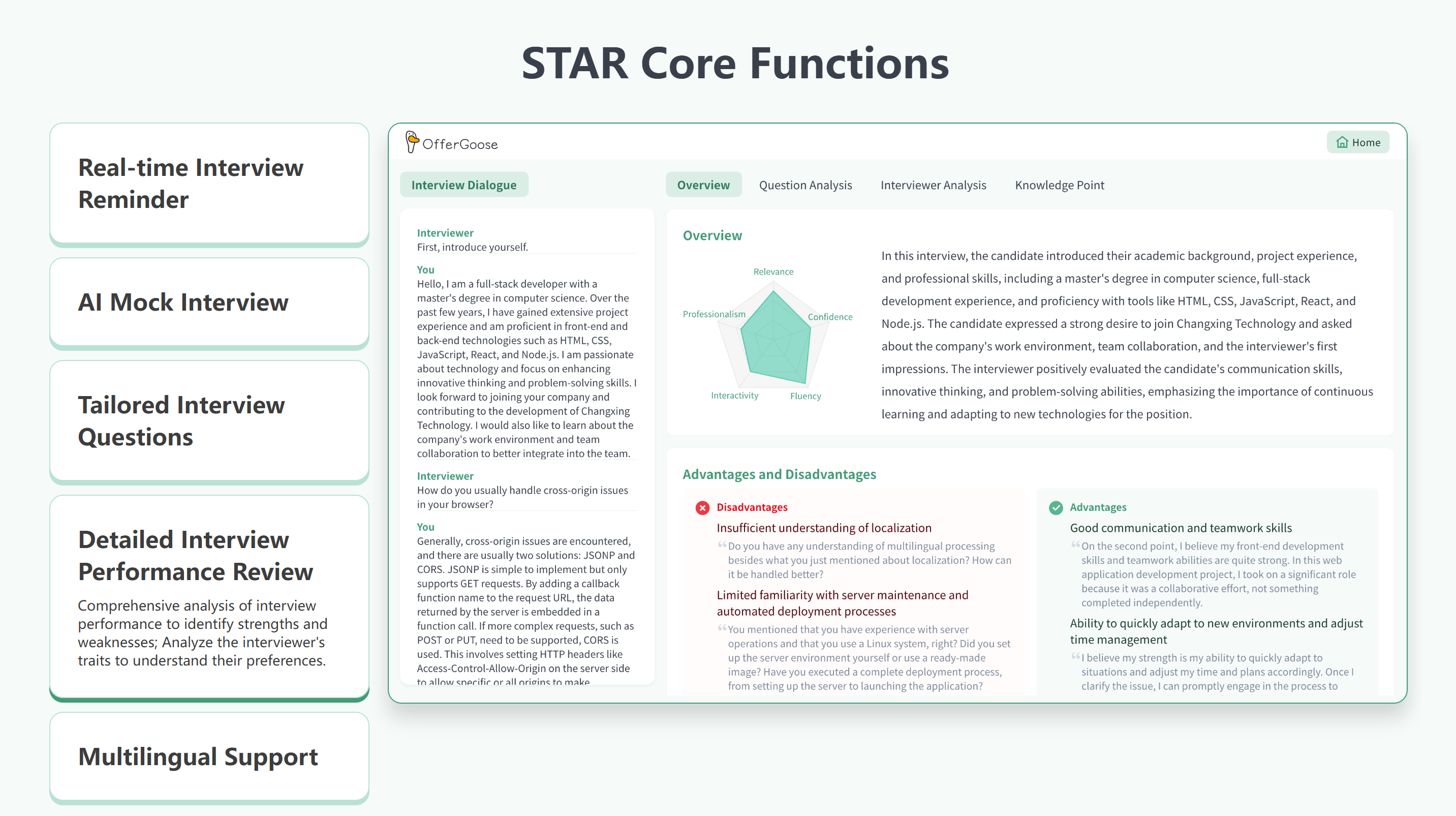
The review report highlights where an explanation lacked evidence, pinpointing weak phrasing and offering structured sample answers candidates can immediately learn from.
Real-World Case Study: Transforming a Behavioral Interview Answer
To illustrate how algorithmic scoring evaluates candidate responses, consider this common behavioral interview prompt:
Prompt: “Tell me about a time you faced an unexpected roadblock during a project and how you resolved it.”
Before: Generic and Unstructured
Before:
“During my university project as a marketing intern, our graphic designer got sick right before the campaign launch week, so we were missing all of our promotional assets for the student challenge. Everyone was stressed out and our manager thought we would have to cancel the interview showcase. Since I was the campaign coordinator, I stepped in and organized a team meeting. I worked extra hours over the weekend to help design several social media graphics using online templates and reached out to a few friends in the media department for assistance. Thanks to our hard work, we managed to publish the posts only a little later than planned, and the overall engagement turned out pretty good.”
After: Structured and Impact-Driven
After:
“During my junior year as a marketing intern candidate managing our university innovation project, our lead designer withdrew 72 hours before the campus research showcase, putting 14 promotional assets at risk (Situation). My objective as project coordinator was to deliver the campaign materials on schedule without exceeding our remaining $300 student budget (Task).
To resolve this bottleneck, I executed three structured actions (Action):
- Asset Prioritization: I audited the asset list and consolidated 14 custom graphics into 4 standardized modular templates, cutting production requirements by 60%;
- Design Delegation: I recruited two freelance design students through our digital media lab, negotiating a fixed $150 stipend for overnight template rendering;
- Quality Assurance: I conducted visual QA using our university brand guidelines, ensuring all files met publication standards 12 hours ahead of the deadline.
As a result, the campaign launched on schedule across 3 campus channels, generating 4,200 unique visits and 380 event sign-ups (Result). The 4 modular templates were subsequently adopted by the faculty as the standard design framework for future student cohorts.”
Why the Stronger Version Works
This improved response earns top marks under automated screening frameworks:
- Quantified Evidence: Specific metrics such as 72 hours, 14 assets, $150 stipend, and 4,200 visits provide verifiable proof of competence;
- Clear STAR Segmentation: The narrative clearly separates context, personal responsibility, decisive actions, and final results;
- High-Impact Competency Verbs: Phrases like asset prioritization, workflow consolidation, and quality assurance match high-tier keywords in candidate evaluation rubrics.
A 5-Step Blueprint for Video Interview Success
Candidates aiming to excel in corporate video screenings should adopt a structured five-step preparation workflow:
Step 1: Extract Job Competencies   ──► Analyze target JD using AI parsing
         │
Step 2: Build STAR Story Matrix    ──► Document metrics and lessons learned
         │
Step 3: Conduct AI Mock Interviews  ──► Practice under realistic time limits
         │
Step 4: Review Analytical Debriefs  ──► Identify narrative gaps and rewrite
         │
Step 5: Utilize Real-Time Prompters ──► Maintain poise during live interviews
Step 1: Analyze Job Descriptions for Target Keywords
Paste the job description into OfferGoose to extract core competency requirements, such as cross-functional teamwork, data-driven optimization, or problem resolution.
Step 2: Assemble a Reusable STAR Evidence Bank
Organize academic and internship experiences into structured STAR modules. Ensure every project includes concrete baseline figures and measurable outcomes.
Step 3: Run Timed Simulation Sessions
Practice speaking into the camera using OfferGoose’s AI mock interview tool. Simulate 60-second prep windows and 2-minute answer limits to get comfortable under pressure.
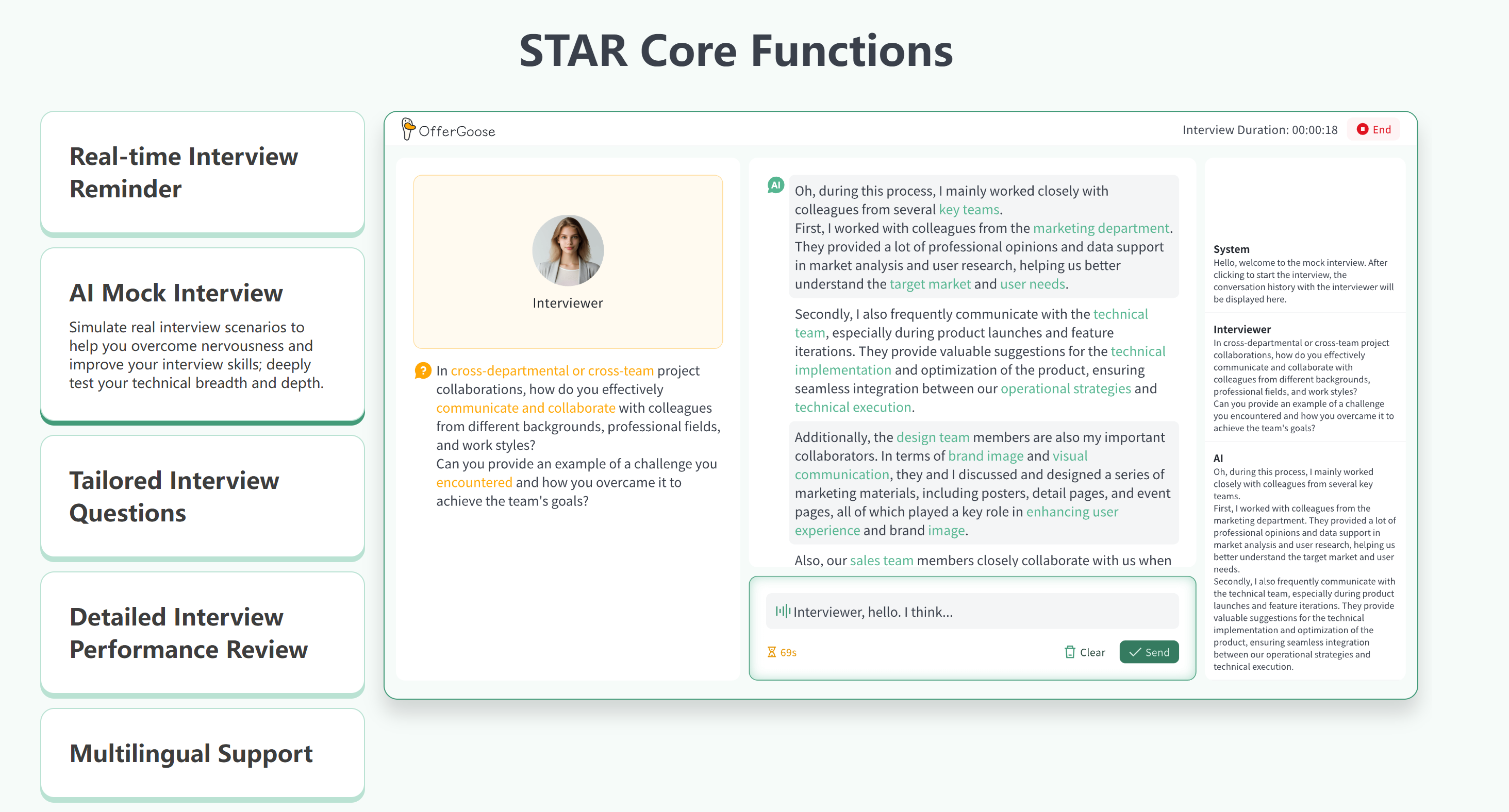
Step 4: Audit Detailed Diagnostic Feedback
Inspect your transcript accuracy, keyword matches, and structural logic. Rewrite weak answers using the AI-suggested improvements and re-record until delivery feels natural.
Step 5: Leverage Live Assistance During Final Rounds
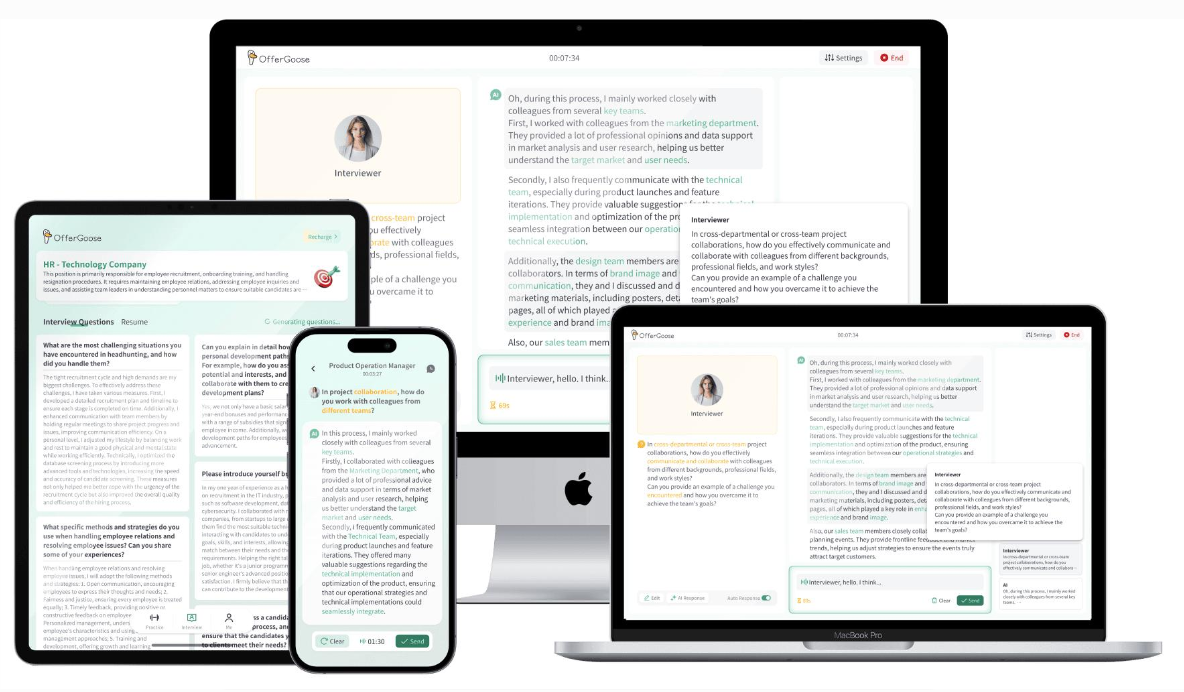
When progressing to live video interviews, candidates can rely on OfferGoose’s real-time interview teleprompter as an assistive companion.
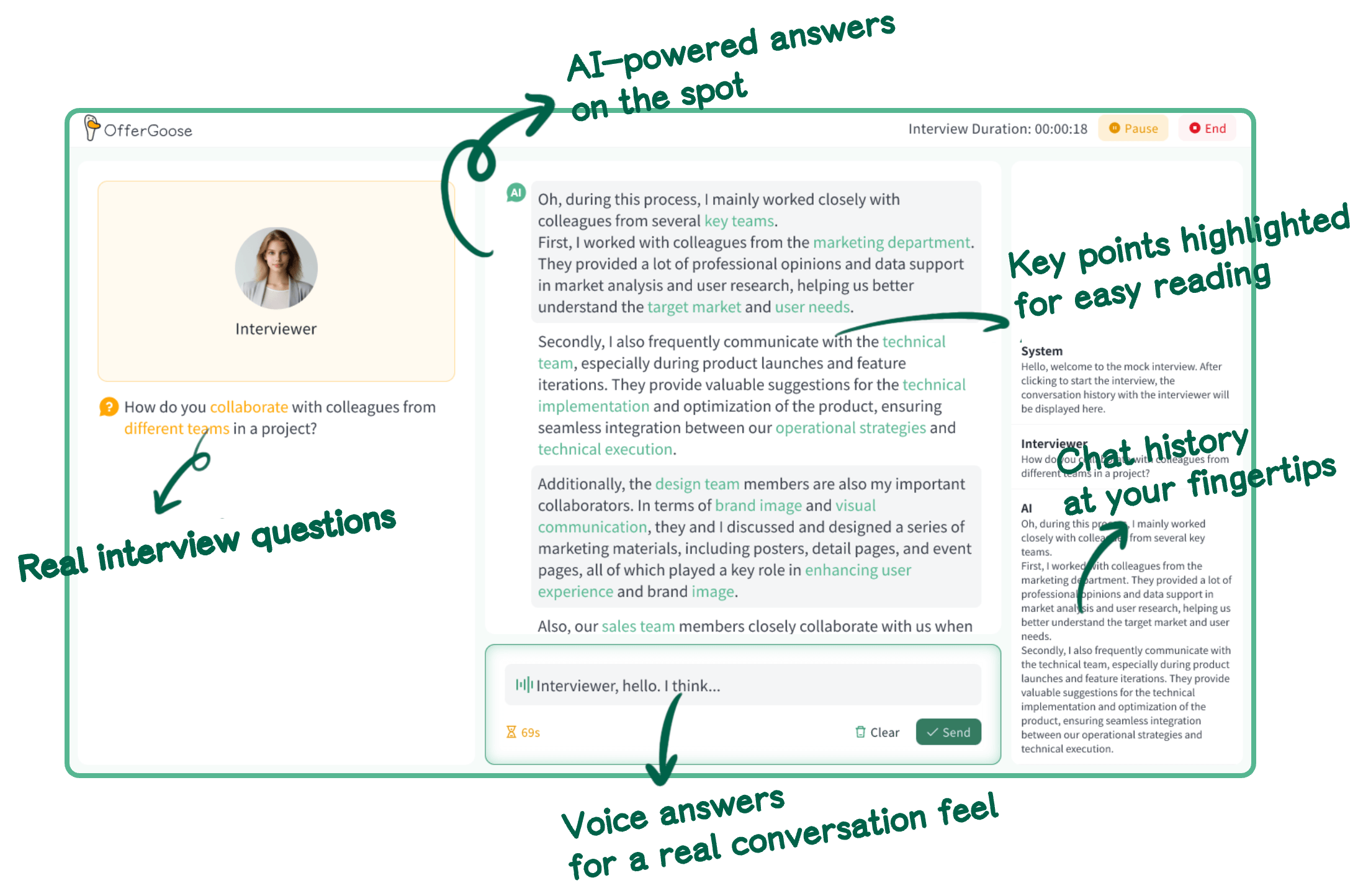
The teleprompter listens to incoming questions and presents concise outline bullets on screen. It does not provide canned scripts; instead, it provides quick mental anchors so candidates never lose their train of thought.
Preparing Alone vs. Training with OfferGoose
| Evaluation Criteria | Solo Practice / Peer Feedback | OfferGoose Intelligent Copilot |
|---|---|---|
| Algorithmic Alignment | Relies on personal intuition; blind to parsing logic | Aligned with modern NLP and speech recognition frameworks |
| Feedback Speed | Requires scheduling; remarks are often vague | Generates comprehensive reports within seconds of completion |
| Role Customization | Limited to standard, generic interview questions | Dynamically tailored to specific enterprise job descriptions |
| Diagnostic Depth | High-level observations without structural fixes | Pinpoints exact narrative gaps and provides sample rewrites |
| Live Support | No guidance during actual high-stakes interviews | Features a real-time assistive prompter for live video calls |
Using dedicated AI preparation tools removes the guesswork from video screenings, giving job seekers a distinct competitive advantage.
Frequently Asked Questions (FAQ)
General Questions
What are the main factors measured in asynchronous AI video interviews?
Most automated platforms evaluate three core components: spoken content relevance (competency keywords and domain knowledge), structural coherence (clear problem-solving methodologies like STAR), and vocal delivery (steady pacing, clear pronunciation, and minimal filler words).
Will looking away from the webcam automatically trigger a cheating flag?
No. Standard algorithmic monitors recognize normal human behaviors such as blinking or glancing up while thinking. Systems look for extreme anomalies, such as completely absent faces, unauthorized background voices, or multiple individuals appearing on camera. Keeping natural eye contact with the camera lens remains the best approach.
What should I do if I stumble or misstate a detail during recording?
Do not panic or abandon the response. Avoid verbal apologies like “I messed up, let me restart.” Instead, use professional transition phrases such as: “To clarify that point further, our primary intervention focused on…” This maintains transcript coherence and demonstrates composure.
Questions About OfferGoose
Can OfferGoose customize mock interviews for specialized roles?
Yes. Users can upload specific job descriptions and resumes into OfferGoose. The platform’s AI engine extracts industry terminology and customizes technical and behavioral questions accordingly.
Does OfferGoose feed scripted answers during live interviews?
No. OfferGoose operates strictly as an educational copilot and real-time outline reminder. It displays bullet points and conceptual frameworks rather than pre-written scripts, encouraging authentic communication.
Can I access OfferGoose across different operating systems?
Yes. OfferGoose is built for multi-platform convenience, supporting web browsers, macOS, and Windows environments for seamless preparation across devices.
Start Preparing Today: Unlock Your Next Career Opportunity
Automated hiring algorithms should not stand between you and your dream job. By understanding evaluation criteria and sharpening your communication frameworks, you can turn video screenings into your greatest competitive strength.
Explore OfferGoose AI Interview Platform today to experience intelligent mock interviews and personalized feedback.
For additional career tools and product features, visit the official OfferGoose Portal and prepare for your next interview with complete confidence.